Forever New Trail Day: A Pro Build at 50 Year and It’s Called Stone Cactus
Stone Cactus Trail is the newest addition in the 50 Year / Golder Ranch trail network—and the first professionally built singletrack in the area.
What was once a masochistic, once-a-year punishment ride is now smooth (mostly), rollable (with skills), and worth riding every day.
Quick Stats
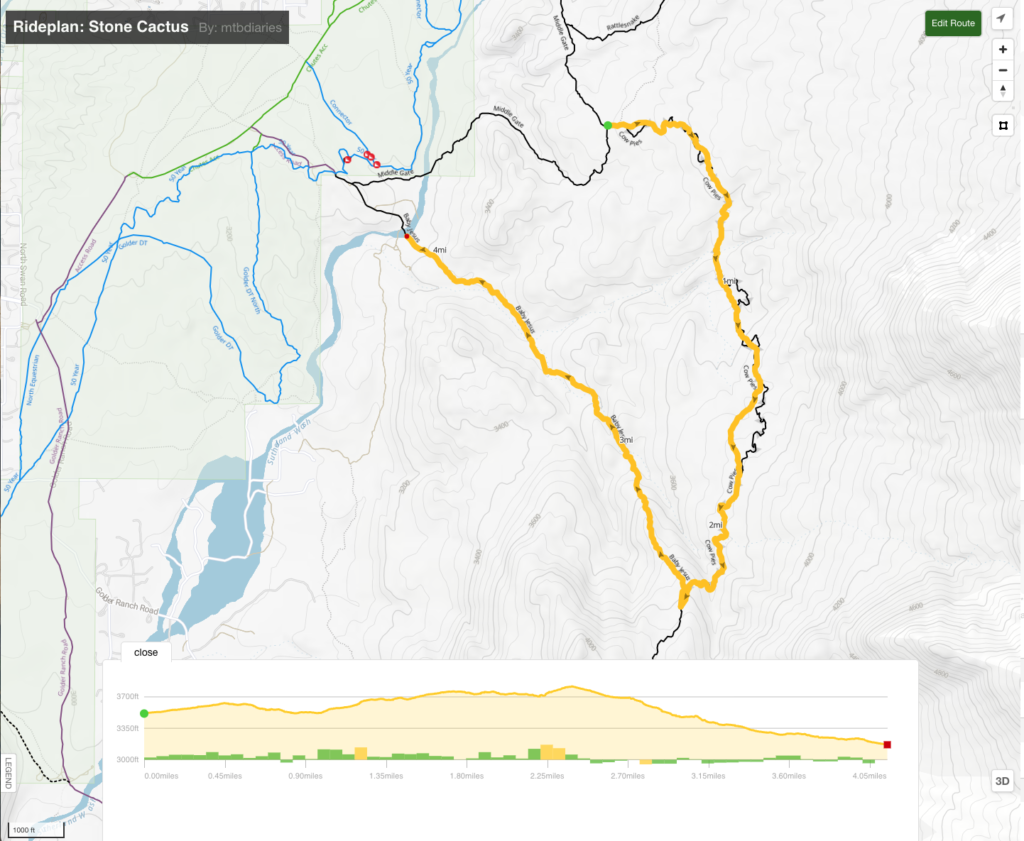
Distance: ~5 miles (combines Cow Pies and Baby Jesus sections)
Elevation Gain/Loss (clockwise): ~300 ft net gain (Middlegate to Cow Pies terminus), ~500 ft descent (Baby Jesus),
High Point: ~3,700 ft (flanks of Sanmaniego Ridge)
Difficulty: Intermediate to Advanced
Surface: Singletrack, mix of packed trail and embedded rock (still settling in places)
Direction: Bidirectional (clockwise recommended for gradual climb + fun descent)
Rebuilt: Winter 2025/2026 (USFS with contractor/volunteer crews)
Network: Golder Ranch/50 Year
Access: Via Middlegate Trail (north terminus) or bottom of Baby Jesus (south terminus)
The Ride
Stone Cactus Trail isn't what it used to be—and that's the whole point.
Built on the bones of two older trails (Baby Jesus and Cow Pies), the USFS-led rebuild rerouted the worst sections, addressed nearly unrideable drainages, and created the first professionally constructed trail in the 50 Year / Golder Ranch network.
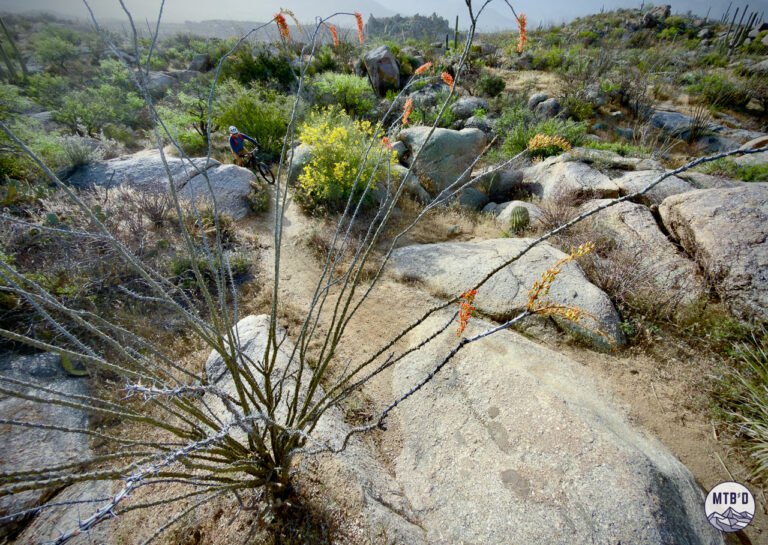
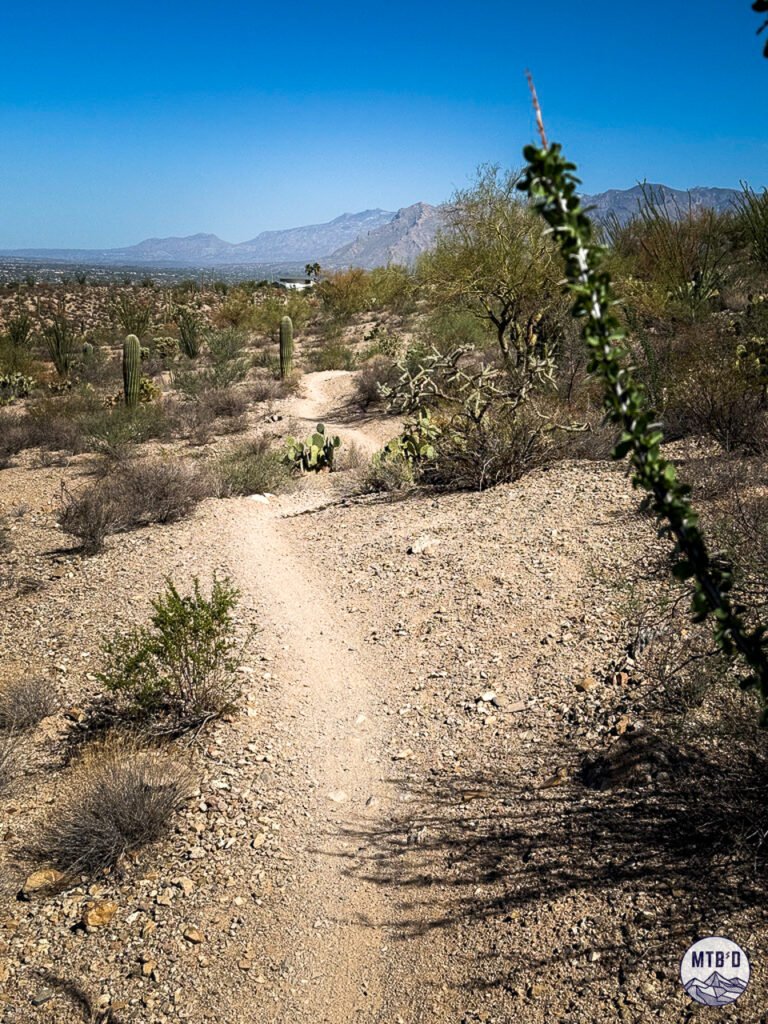
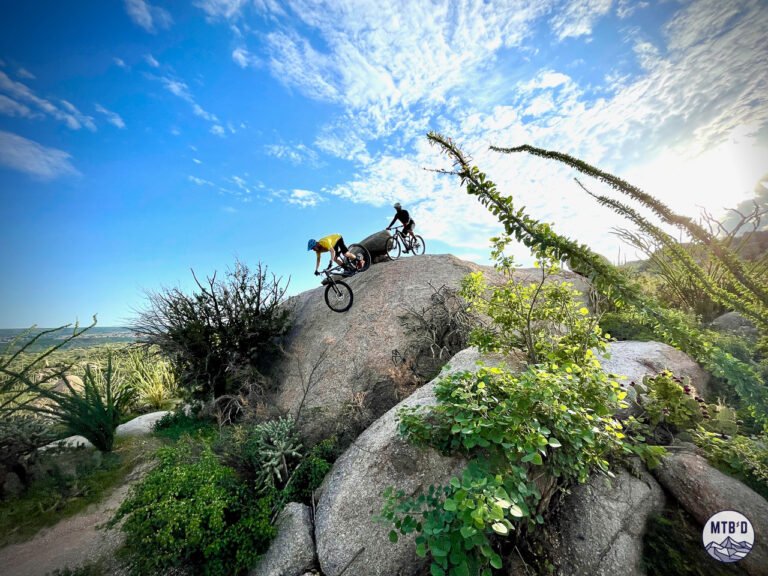
The result? A 5-mile foray through the Catalinas that's actually rideable—smooth traverses across granite boulder fields, stacked-stone drainage crossings, and a gradual ascent that tops out at 3,700 feet on the flanks of Sanmaniego Ridge.
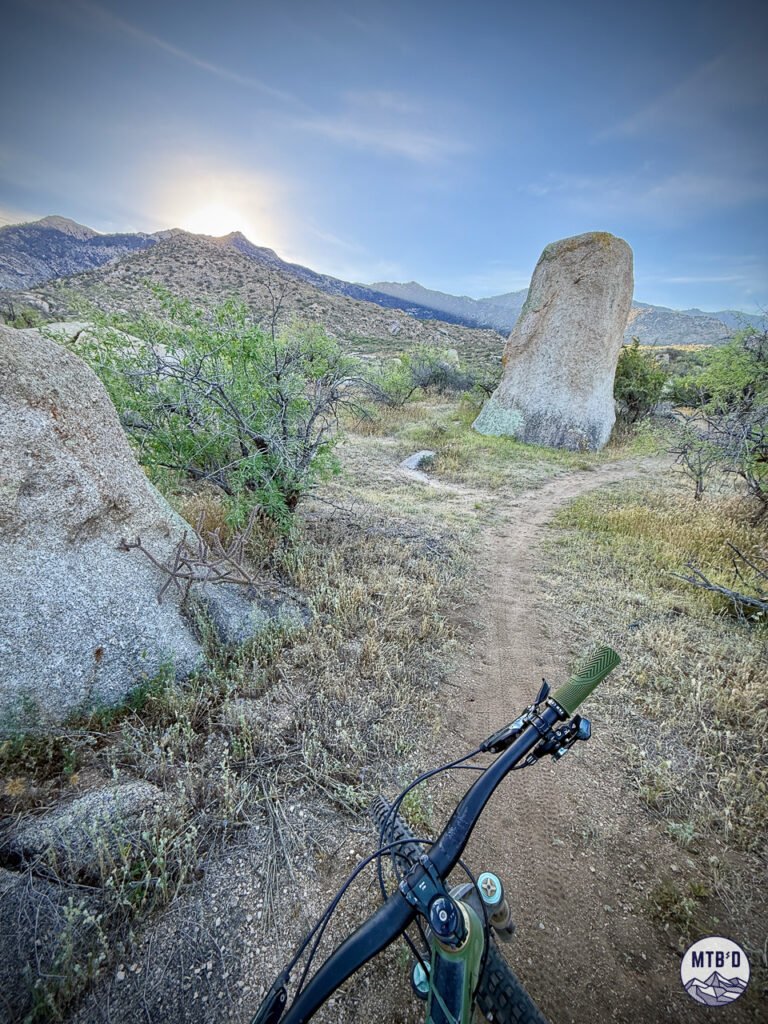
Ride it clockwise (recommended) and you'll climb gradually starting from the Middlegate/Cowpies intersection, working your way up through foothills dotted with granite uprights and desert vegetation. The new trail mostly avoids the old drainage-pounding route, instead traversing in and out with flow and purpose.
A few steep drop-ins and climbs-out keep things honest—you'll know you're earning elevation and you're out there—but for skilled riders, it's pretty dern rideable now. Near the top, you drop into one final drainage, climb around, and link into Baby Jesus for the descent.
Baby Jesus drops fast—500 vertical feet with continual twists, turns, and minor kicks to keep you honest. Technical features remain (rock gardens, ledges, steeps), and one loose, rocky chute near the top likely forces a walk whether you're climbing or descending.
But overall, this is now rollable, flowy, fun singletrack that rewards rhythm over brute-force bike handling.
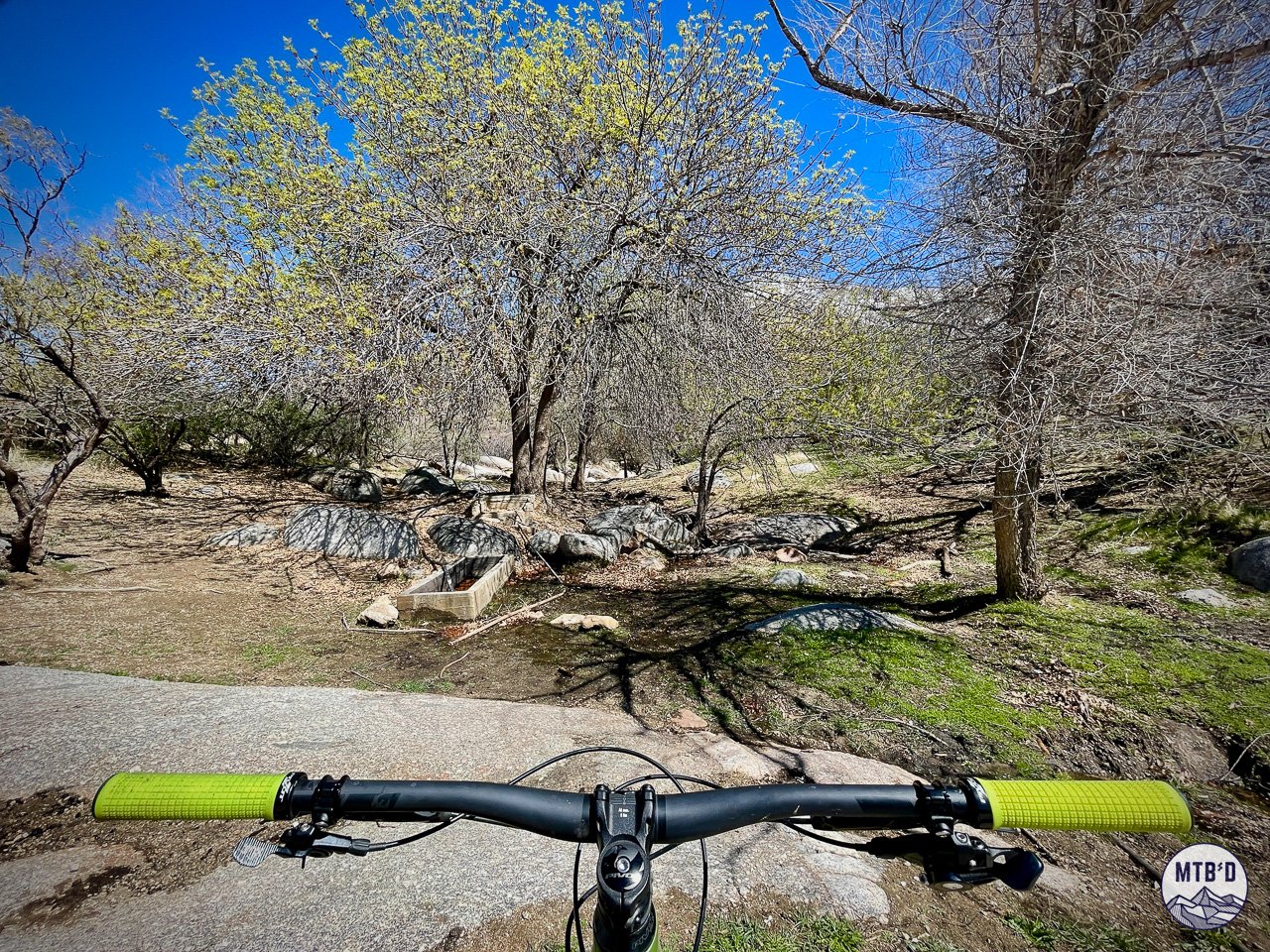
The professional build shows. Stacked-stone drainage crossings. Smart line choices. Trail that rolls instead of punishes. This is what happens when trail crews bring expertise to granite and desert.
The Good
✓ First professional build in 50 Year network — Stacked-stone drainage crossings, smart line choices, and trail that actually flows. You can see (and feel) the difference quality construction makes.
✓ High elevation payoff — Climbing to 3,700 feet on Sanmaniego Ridge puts you up in the Catalinas with big views and that "in the mountains" feeling. Not many 50 Year trails get you this high, this "easily."
✓ Gradual climb, fun descent (clockwise) — The rebuild turned a punishment route into something sustainable. Ride it clockwise and you earn the descent without destroying your legs first. But climbing Baby Jesus is great if you like a steeper climb.
✓ Rideable throughout (mostly) — What used to be a once-a-year masochistic suffer-fest is now a trail you'd ride regularly. A few walk sections remain, but they're short and steep—not endless. And the vegetation has been tamed.
✓ New loop options — Stone Cactus adds a southern loop to the network, pairs beautifully with Upper 50 Year, and enables an epic Catalina traverse if you string together Around the Mountain, Cowboy Slickrock/Upper 50/Middlegate (or, alternatively, Rattlesnake), and Stone Cactus.
✓ Still settling but improving — As of April 2026, the trail is still packing down. Loose in spots, but getting better with every ride.
The Bad
✗ Physical and technical commitment — 5 miles in this terrain is still legit work. Gradual doesn't mean easy. If you don't have the fitness or technical chops, the Stone Cactus Trail will add up fast.
✗ No bail-out options — Once you're in, you're committed. The only bail-out routes are worse than the trail you're riding—no roads, no easy escapes, just forward or backward. Come prepared with time, water, and skills, especially the first time around.
✗ One steep, technical chute remains — Near the top of the descent (riding clockwise), there's a steep, loose, rocky pitch that most will walk. The rebuild didn't touch this section (but watch this space)—keep an eye out.
✗ Still loose in places — Trail is new and still settling. Some sections are packed and beautiful; others are loose and drifty. It'll improve, but right now it's not dialed everywhere.
✗ Not as technical as Upper 50 or Gem — If you're looking for big, gnarly tech features, this isn't that trail. Line choices exist but aren't as prominent as other 50 Year classics. Stone Cactus prioritizes flow over punishment. A few die-hards may mumble about the trail being overly sanitized.
The Dirty
→ Hikers and equestrians — The rebuild is making Stone Cactus popular fast. Expect company. Blind corners, limited sight lines, and shared-use traffic mean this isn't a "pin it in descent mode" trail. Keep it in check or risk spooking horses and startling hikers.
→ Not a beginner trail — Despite being more rideable than before, this is still intermediate-advanced minimum. Steep sections, technical features, no bail-outs, and 5 miles of desert singletrack can still punish unprepared riders. Think backcountry blue.
→ Baby Jesus descent isn't wide-open — Yes, it drops 500 feet. Technical features, corners, and shared traffic keep things largely at slower speeds. Fun? Absolutely. All-out descent? Not quite.
Context & Combinations
How Stone Cactus Trail fits the network:
Stone Cactus adds a whole new dimension to riding at Golder Ranch/50 Year. If you've got the time and the motor it pairs beautifully after heading out 50 Year to Upper 50 Year and the northern trails, creating a rideable southern loop option that didn't really exist before. Ride Stone Cactus on its own? That's a solid day for most riders.
Stone Cactus vs. The Chutes:
- The Chutes = fast, flowy, iconic descent (.5 miles, all downhill), a taster
- Stone Cactus = gradual climb + descent, more sustained, less "luge run" and more "proper ride" (5 miles)
Stone Cactus vs. Upper 50 Year:
- Upper 50 = steeper, more technical, bigger features
- Stone Cactus = more flow, less punishment, better drainage crossings, but longer
See What's Coming. Ride the Good Stuff.
Get on-the-ground updates as trails transform and conditions change.
Don't fly blind in Tucson.
The Verdict
Perfect for: Intermediate to advanced riders who want sustained climbing, professional trail quality, and big Catalina views without the masochistic punishment the old route delivered. Anyone looking to explore the southern side of the 50 Year/Golder Ranch network with a trail that's rideable, rollable, and worth repeating.
Skip if: You're a beginner (too much sustained effort + tech sections). You want wide-open descending without traffic (expect hikers/equestrians). You're looking for bigger tech features (this prioritizes flow over punishment). You need bail-out options (there aren't any).
When to ride: October through April (best). Early mornings in May/September. Avoid midday summer (exposed climbing, no shade). Clockwise direction recommended for most riders (gradual climb, fun descent).
Bottom line: Stone Cactus is the trail 50 Year network needed—professionally built, sustainably climbable, and rideable enough to add to your regular rotation. The rebuild turned a once-a-year suffer-fest into an everyday classic. Ride it now while it's still settling in, then watch it get even better.
Thanks to the Coronado National Forest, TORCA, and others!