The Best Beginner Mountain Bike Trails in Tucson
The Five Best Trails in Tucson for Beginners (A Progression)
- Fantasy Island — The Loop Out, Bunny Back
- Fantasy Island — Lone Cactus Loop
- Sweetwater Preserve — Desperado Loop
- Honeybee — Big Wash
- Golder Ranch — 50 Year Trail
- Note: This is a recommended trail sequence for beginner mountain bikers in Tucson. Ride 1-5 in order to build skills and confidence. 5 is significantly more difficult than 1.
How We Chose Tucson's Best Beginner Trails
When it comes to the best beginner mountain bike trails in Tucson, let's call a spade a spade.
Tucson mountain biking is not for the totally faint of heart. The desert is sharp. The rock is embedded and unforgiving. Or loose and obnoxious. Many trails were adapted (and occasionally built) by experienced riders who grew up riding technical terrain and consider a hike-a-bike a reasonable Tuesday.
If you're looking for a gentle, idyllic introduction to the sport, there are cushier places to start than Tucson.
But here's the other truth: if you learn to mountain bike in Tucson, you can mountain bike anywhere.
The riders who come through Tucson's trail networks — who start at Fantasy Island and work their way toward the Chutes, who figure out Honeybee and survive the moment they find themselves alone in the middle of nowhere — arrive on the other side of the learning curve genuinely prepared for whatever comes next.
Moab. Sedona. Whistler. Wherever. Tucson builds resilient riders.
If you're looking for the best beginner mountain bike trails in Tucson, think progression. Five trails, five stages. Start at the beginning and work your way through. By the time you've ridden all five... you're not a beginner anymore.
Stage 1, Best Beginner Mountain Bike Trails in Tucson — Fantasy Island: The First Timer
Bike path out, Bunny Loop back
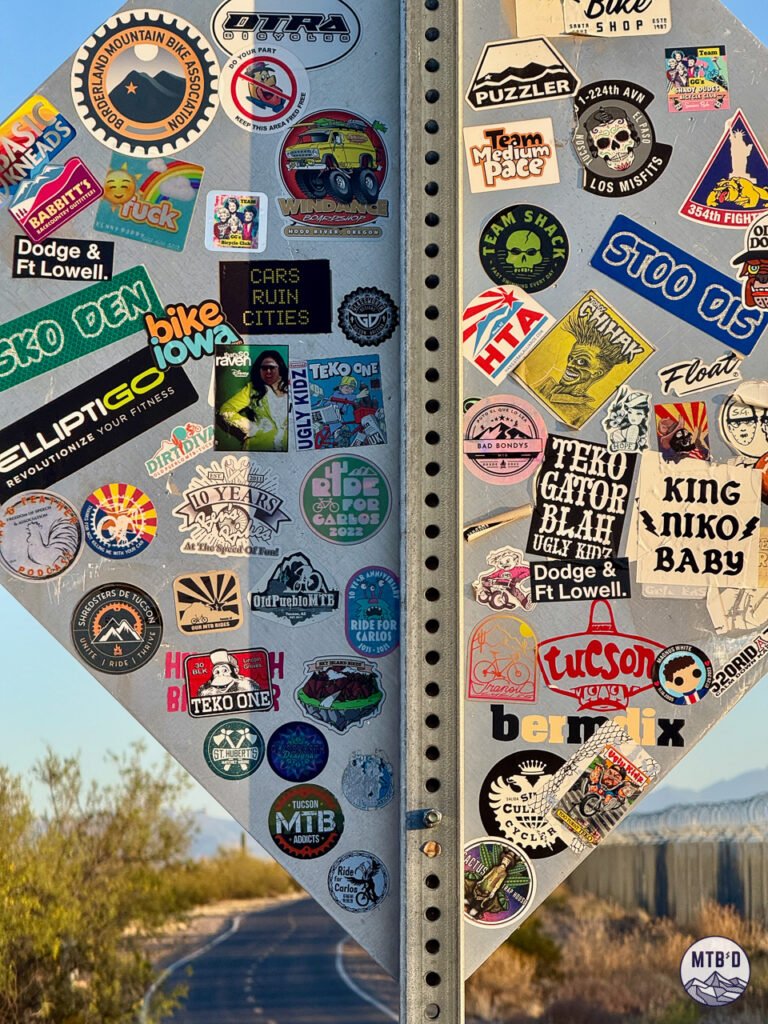
If you ask locals about the best beginner mountain bike trails in Tucson, I bet half will say Fantasy Island.
Fantasy Island is the most approachable mountain bike experience in Tucson. Not because it's stupid easy — it's real desert singletrack with the occasional surprise — but because it has a built-in entry point that really couldn't be more welcoming.
Park at the intersection of South Harrison and East Irvington (southwest corner is perfect) and get on your bike. Ride the paved bike path south past a trailhead in a straight line, warming up and making sure everything works (body and bike). Then, before you hit a road (if you do, you've gone too far), fishhook left onto the trail and ride one part of the Bunny Loop back to the trailhead and your car. That's it. That's your first timer lap.
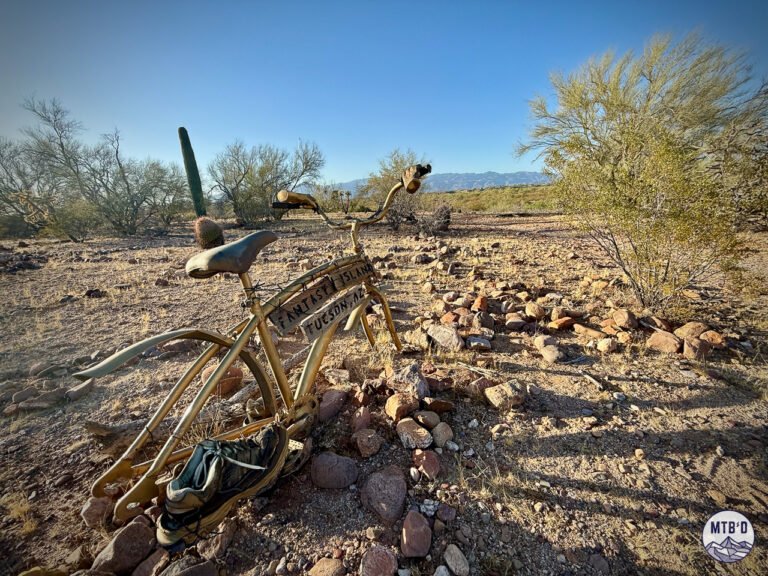
The Bunny Loop is genuine singletrack — narrow, rutty and bumpy in places, the desert doing what the desert does — but it's short enough and open enough that a complete beginner can find their footing without getting swallowed. Fantasy Island's terrain is forgiving by Tucson standards, and the vibe is... well, weirdly friendly.
Do it again, this time skip the bike path and try the full singletrack Bunny Loop out and back. Bail back to the bike path if you ever need to. Singletrack training wheels!
The bunnies are real too. Early morning, late afternoon — they're everywhere. Guaranteed (stuffed) trail wildlife.
Fantasy Island Network Review →
Stage 2, Best Beginner Mountain Bike Trails in Tucson — Fantasy Island: True Beginner
Add the Lone Cactus Loop
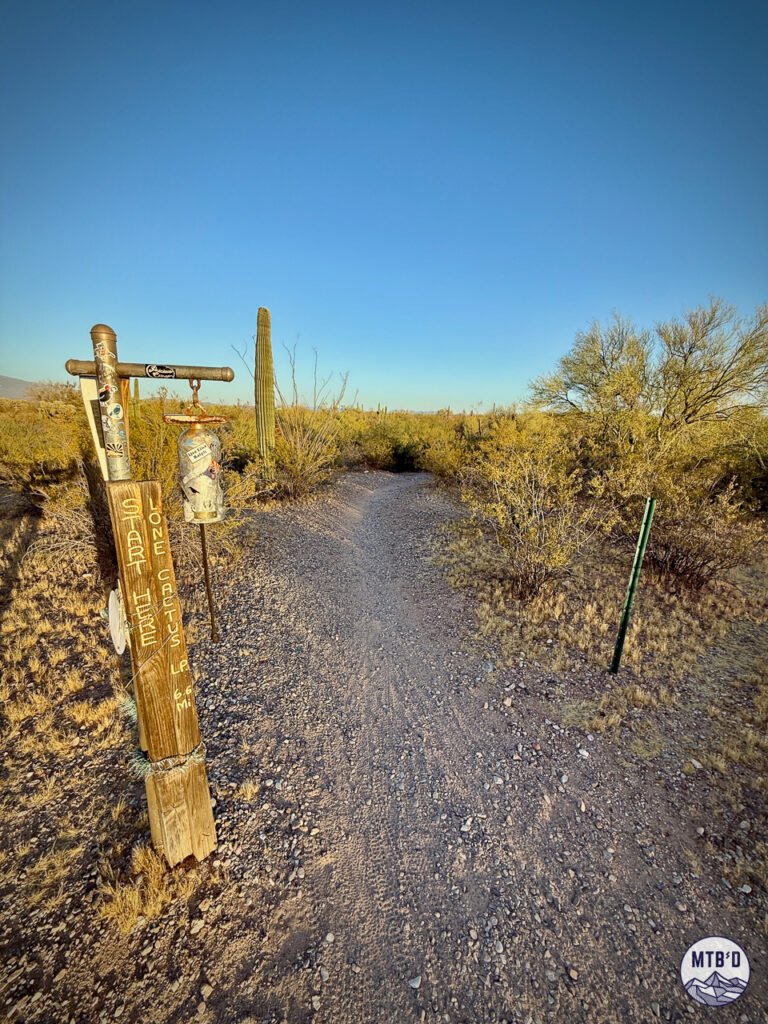
When the Bunny Loop starts feeling familiar — when you're not white-knuckling anything and you're feeling that creosote flow — it's time to ring the bell.
There's a bell at the start of the Lone Cactus Loop, just inside the park from where you parked the first time. Ring it. It marks the moment you've decided to step up.
The Sunset Loop adds ravines and cobbles to the Fantasy Island singletrack equation. Not extreme by any measure but real enough to demand attention and reward commitment. This is where you start learning to read terrain rather than just roll through it. The loop has character — a sense of place, a rhythm, the beginning of what mountain biking actually feels like when it's working.
Ride Fantasy Island until the Sunset Loop is comfortable. Until you're not thinking about the ravines anymore. Until you're crushing the cobbles vs being disrupted. Then move on.
Fantasy Island Network Review →
Stage 3, Best Beginner Mountain Bike Trails in Tucson — Sweetwater: Feeling Comfortable
Real MTB. Genuinely approachable.
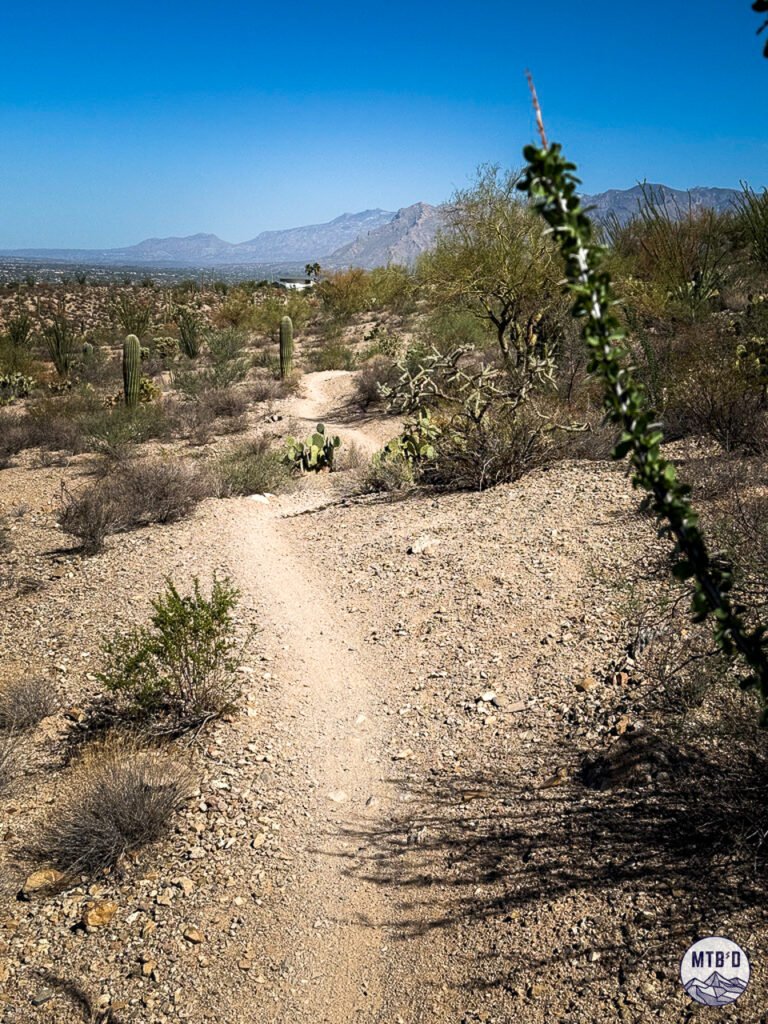
Sweetwater's Desperado Loop is the trail that helps beginners fall in love with mountain biking.
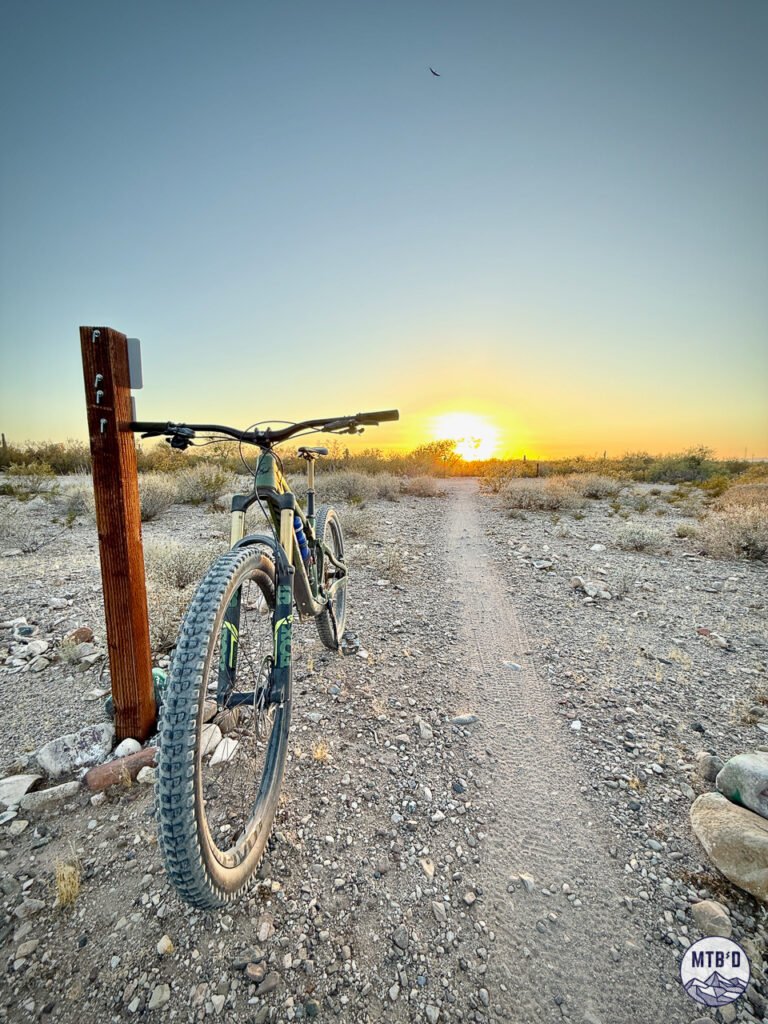
It's graded and signed — which sounds like faint praise until you've ridden trails in Tucson that are neither. The terrain is real: genuine desert singletrack, actual climbing that's not in or out of a ravine, surfaces that keeps you honest. But it's not rough in the way that makes a new rider question their life choices.
The grades are manageable. Flow is easily found. The scenery is legitimately beautiful — the Tucson Mountains lending the system some foothills character.
Desperado could be the first ride where you feel like a mountain biker rather than someone learning to be one. There's a difference. You'll know it when it happens.
See What's Coming. Ride the Good Stuff.
Get on-the-ground updates as trails transform and conditions change.
Don't fly blind in Tucson.
Stage 4, Best Beginner Mountain Bike Trails in Tucson — Honeybee: Ready to Explore
More ground. Less infrastructure. The desert shows you what it is.
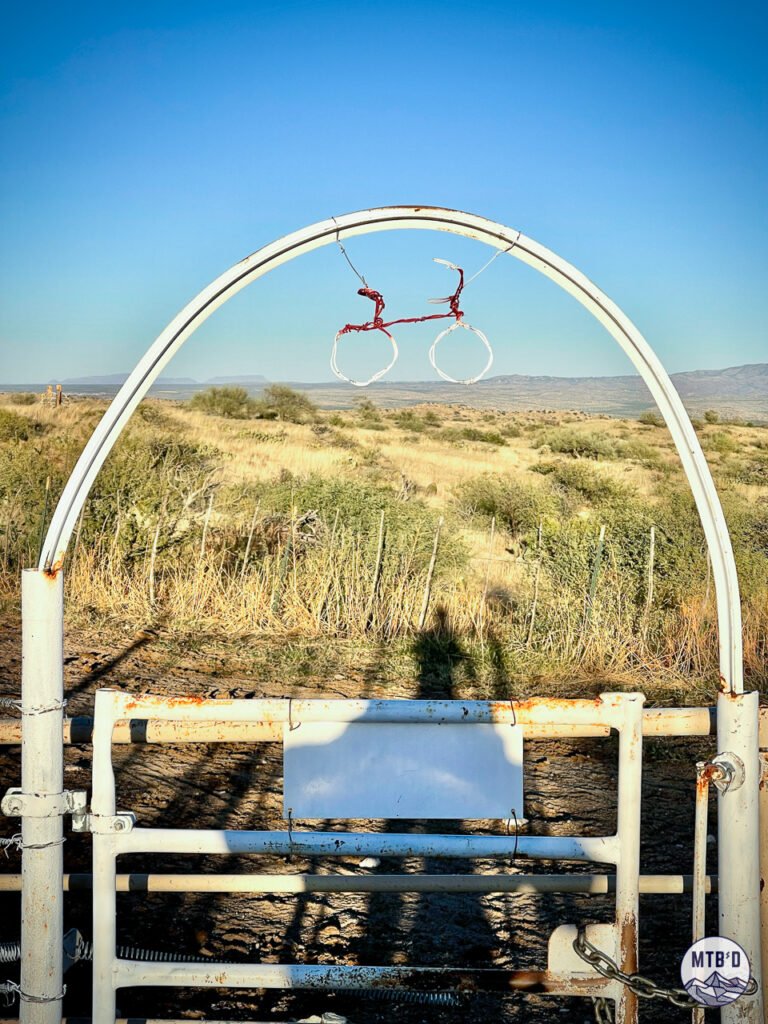
Honeybee is where the training wheels come off — not because the trails are suddenly brutal but because the system stops holding your hand. Go park at the Big Wash trailhead and start exploring. It starts easy and the options are endless, and overall friendly for beginners.
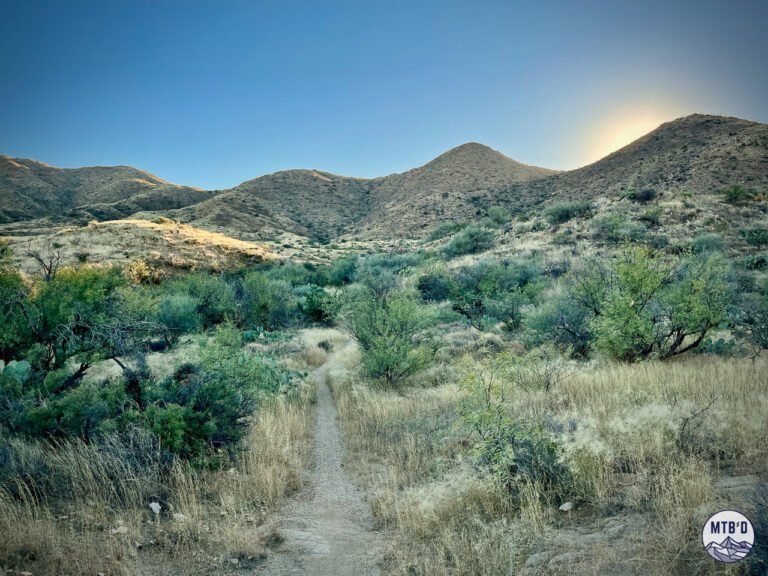
The riding at Honeybee is genuinely good. Fast, flowing, wide open in a way that Fantasy Island and Sweetwater aren't. You can cover real ground out here — miles of singletrack threading through a desert expanse with the Santa Catalinas visible to the east and the Tortolitas to the west.
But the signs thin out. And at some point you stop riding and look at the mountains and realize you've covered some ground. Nothing much out there. Just you and the plants and the wildlife and wherever the trail goes next.
That moment — the quiet recognition that you're actually out there — is the whole point. It's also the moment Tucson stops being a place you're visiting and starts being a place you are. You realize being out there is being there; that this is a massive benefit of the bike and the place.
Don't go alone your first time. Download Trailforks before you leave. Bring more water than you think you need.
This is all about gradual progression, remember?
Honeybee / Rail X Network Review →
Stage 5, Best Beginner Mountain Bike Trails in Tucson — Golder Ranch: Send It
The gateway. Master this and you're done being a beginner.
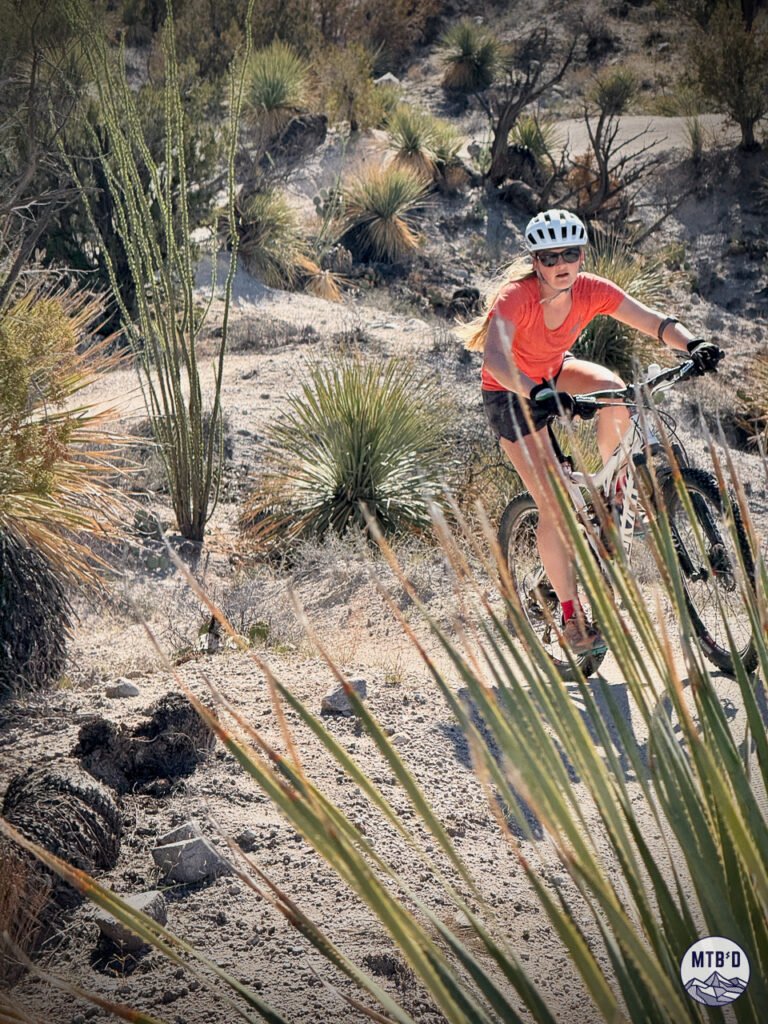
The 50 Year Trail network is where Tucson mountain biking lives at its best: technical, demanding, endlessly rewarding. It's not a beginner trail system. But the lower trails leading out to the Chutes are the exception to the rule.
Ride out on the lower 50 Year Trail. Find the Chutes. Ride them.
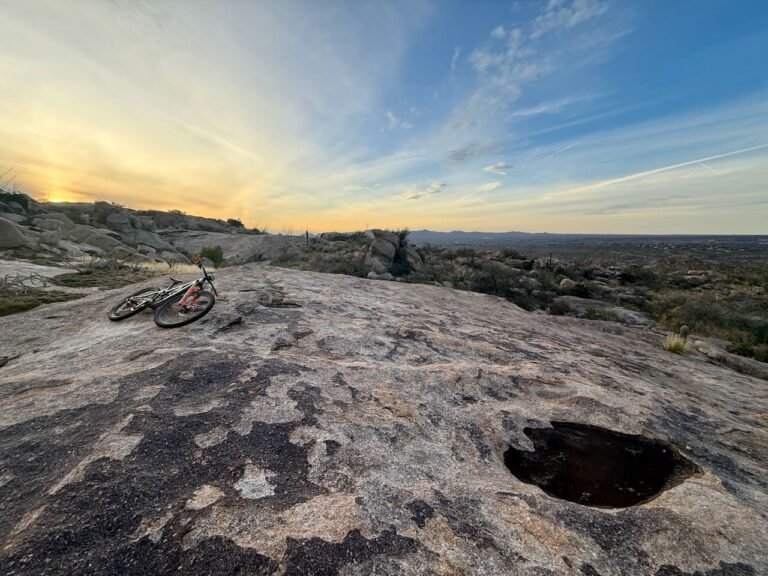
The Chutes are flowy — natural dirt, smooth lines, the kind of features that make you want to ride it again immediately (and you should). They're not easy but they're readable. A beginner who has worked through Fantasy Island, Sweetwater, and Honeybee has the skills to handle them. Just barely. Which is exactly the right level of challenge.
Master the lower 50 Year and the Chutes and you've crossed a threshold. The rest of the 50 Year network is waiting above you. So is Mt. Lemmon. So is everything harder that Tucson has to offer.
You're not a beginner anymore.
50 Year / Golder Ranch Network Review →
Bonus Stage, Best Beginner Mountain Bike Trails in Tucson: 100 Acre Wood Bike Park
Everything above assumes you're learning on natural desert terrain — which is the Tucson way and always has been. But Tucson is about to get something it has never had: a purpose-built progressive bike park.
100 Acre Wood open but also still under construction near Davis-Monthan Air Force Base. Skills areas, flow trails, pump tracks, progressive jump lines — the kind of designed learning environment that most MTB cities take for granted. When it opens, the beginner pathway in Tucson gets a genuine starting point that doesn't require the raw desert to be your first and only teacher.
For the best beginner mountain bike trails in Tucson, this is a game-changer.
100 Acre Wood — What We Know →
The Basics for Riding the Best Beginner Mountain Bike Trails in Tucson
Get a mountain bike. It's not enough to know the best beginner mountain bike trails in Tucson. Anything less than a real mountain bike will not make this easier. If you're serious about learning and progressing, a hardtail mountain bike is a good minimum. Full suspension makes everything more forgiving but isn't required. Tubeless tires with fresh sealant highly recommended — the Sonoran desert is literally sharp, and there's nothing more deflating to a beginner than... deflating.
Ride early. Especially in the summer months, you gotta time it right. Roll before sunrise. The Tucson heat is a fun-killer and finds gaps in fitness fast.
Bring more water than you think you need. The desert is dry and the exertion is real. With a bit of practice you'll dial this in but initially err on the side of extra.
Download Trailforks. Before you leave the house. Every time. Cell service is not reliable on any of these trails once you're out there.
Respect the progression. Fantasy Island before Sweetwater. Sweetwater before Honeybee. Don't show up at the Chutes without a clue. The desert, and the sport, reward being methodical alongside being able at adapt to the conditions at hand.
Recognize when you've strayed from the ideal and give yourself some grace. You're learning how to survive in the desert and ride a mountain bike at the same time.
Challenge yourself. On the flip side, don't be afraid to try. None of these trails or places are going to kill you for just showing up (as long as you have water and don't get hopelessly lost). Go take a look, and you'll remember that just getting yourself out there is always an accomplishment on its own.
And that's true for any skill level.
Takeaways for the Best Beginner Mountain Bike Trails in Tucson
Tucson trails aren't often built for beginners. Most were built by expedient desert dwellers, not at all focused on the comfort and well-being of mountain bikers, and the desert doesn't distinguish between who you are and what you're ready for.
But ride this progression — all five stages, in order, until each one feels natural — and you'll arrive on the other side of it a mountain biker. Not a beginner who survived. A rider who earned it.
And once you can ride Tucson terrain well, you can ride anywhere.
Want to know when conditions are right for your first Tucson ride? Trail Radar delivers firsthand conditions intel when it matters — before you book the drive. Activate the Radar →
See What's Coming. Ride the Good Stuff.
Get on-the-ground updates as trails transform and conditions change.
Don't fly blind in Tucson.