Ridgeline Trail Review: Reasonably Remote and Boldly Built
Tortolita Mountain Park is where Tucson riders go when Honeybee/RailX starts feeling too close to town. Ridgeline Trail delivers everything the higher mountains promise without making you earn it in blood.
Well, just not as much blood as other parts of this trail network.
Ridgeline Trail in a Nutshell
Ridgeline is a rugged, rewarding mountain bike trail in Tortolita Mountain Park that climbs switchbacks to a desert ridge high above the Tucson basin, navigates that ridge with rowdy singletrack and big views, and drops back into one of the more remote perched valleys in any Tucson trail system.
It's been called one of the best trails in greater Tucson — and the right place to start if you're ready to depart the lowlands of the Honeybee/Rail X network and ride high in the Tortolitas for the first time.
Should I Ride Ridgeline Trail?
Ride it if:
- Your fitness is solid — the approach and climbing demand real conditioning
- You're a strong intermediate comfortable on embedded rock and narrow technical terrain
- You want genuine remote desert mountain character without the full commitment of Wild Mustang or Upper Javelina
- You've ridden Honeybee and want to know what's waiting above it
- Big views and the feeling of real escape are worth the work to get there (and back again)
Skip it if:
- Your fitness isn't there yet — the effort is cumulative and the terrain finds gaps in conditioning
- You're not comfortable on rocky technical terrain with tight turns and embedded rock
- You want a quick, low-commitment lap close to town
- It's summer midday — exposed ridge, no shade, no mercy
New to mountain biking in the Old Pueblo? Get the lay of the land with Tucson Mountain Biking: Start Here →
Stats
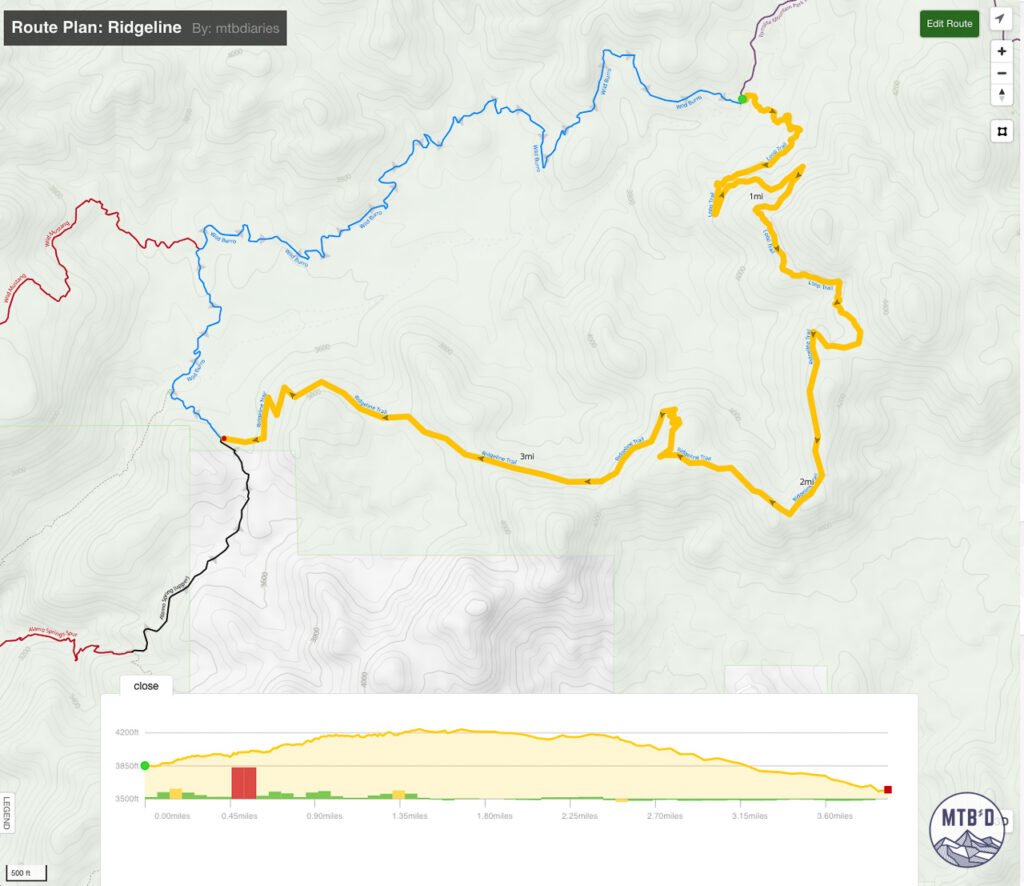
- Distance: ~4 miles (Loop and Ridgeline trail only, clockwise) — typically ridden with Wild Burro as part of a longer loop
- Elevation Gain: ~400 ft
- Difficulty: Blue/Black — strong intermediate to advanced
- Trail Type: Point to point within a loop
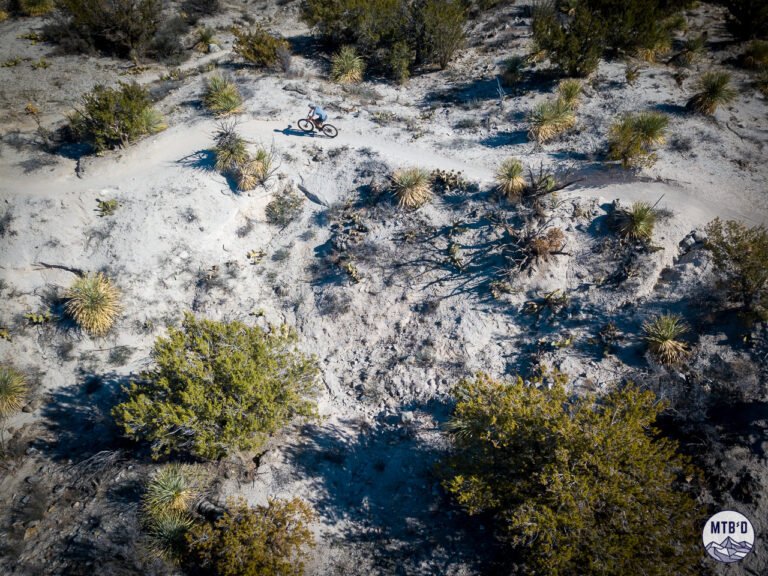
- Surface: Rocky singletrack, switchbacks, embedded rock, narrow ridgeline sections
- Best Bike: Full suspension trail bike
- Shuttle: No — loop trail
- Best Season: October–April
- Trail Network: Tortolita Mountain Park
The Trail
Most riders meet Ridgeline via Loop Trail, which gets the climbing started immediately and gives you a rolling start on Ridgeline.
The transition from the perched valley floor onto the trail is not subtle. The trail announces itself immediately: switchbacks, climbing, commitment required.
But here's what surprises first-time riders — the switchbacks are good. Not hiking trail repurposed for bikes, not erosion channels with pedal clearance issues. These were built with rideability in mind and it shows. The climbing is honest and sustained but it rewards riders who know how to manage their effort.
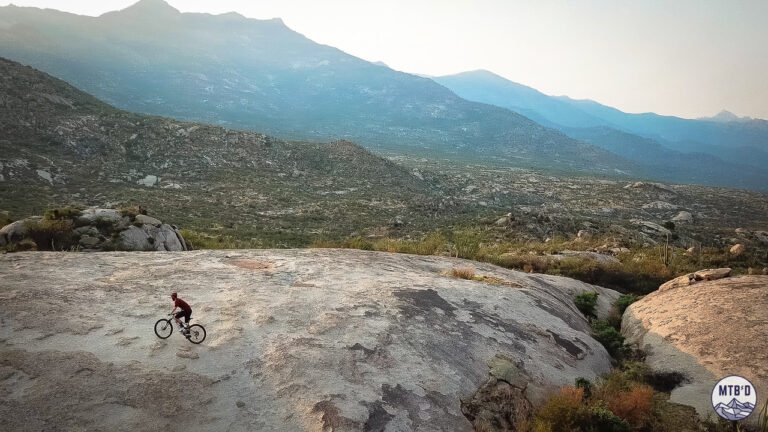
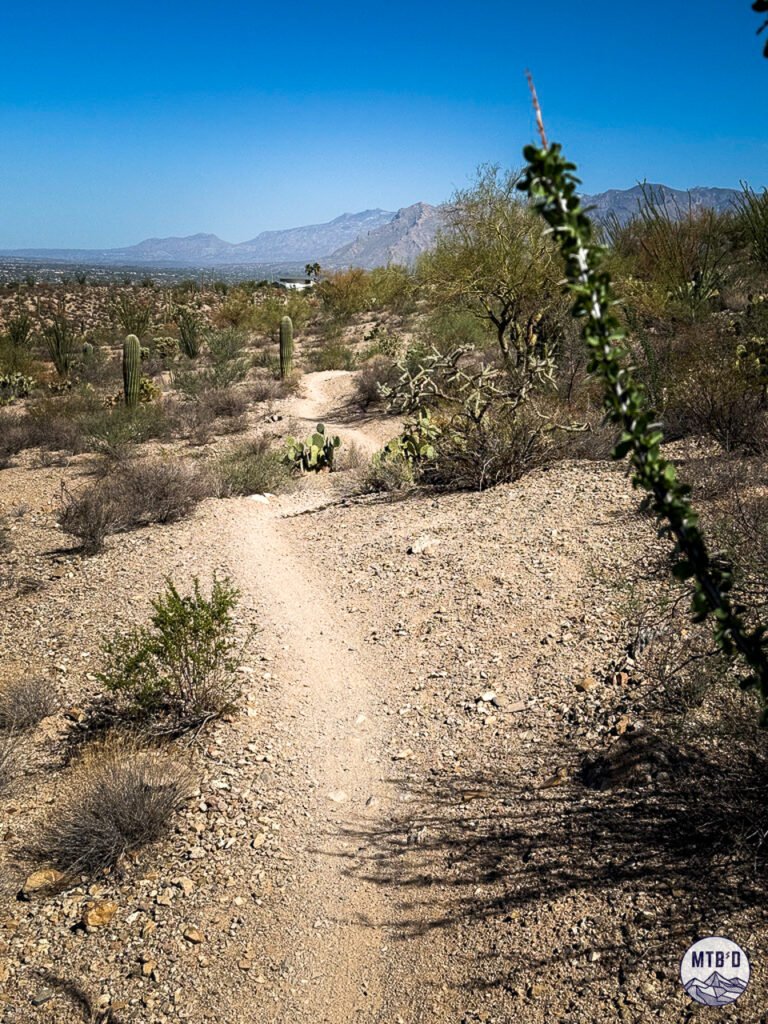
You work your way up through the switchbacks, gaining elevation steadily through Sonoran Desert terrain that subtly shifts character as you rise. The valley floor drops away. The mountain range reveals its actual scale — deeper and more complex than it looks from anywhere below.
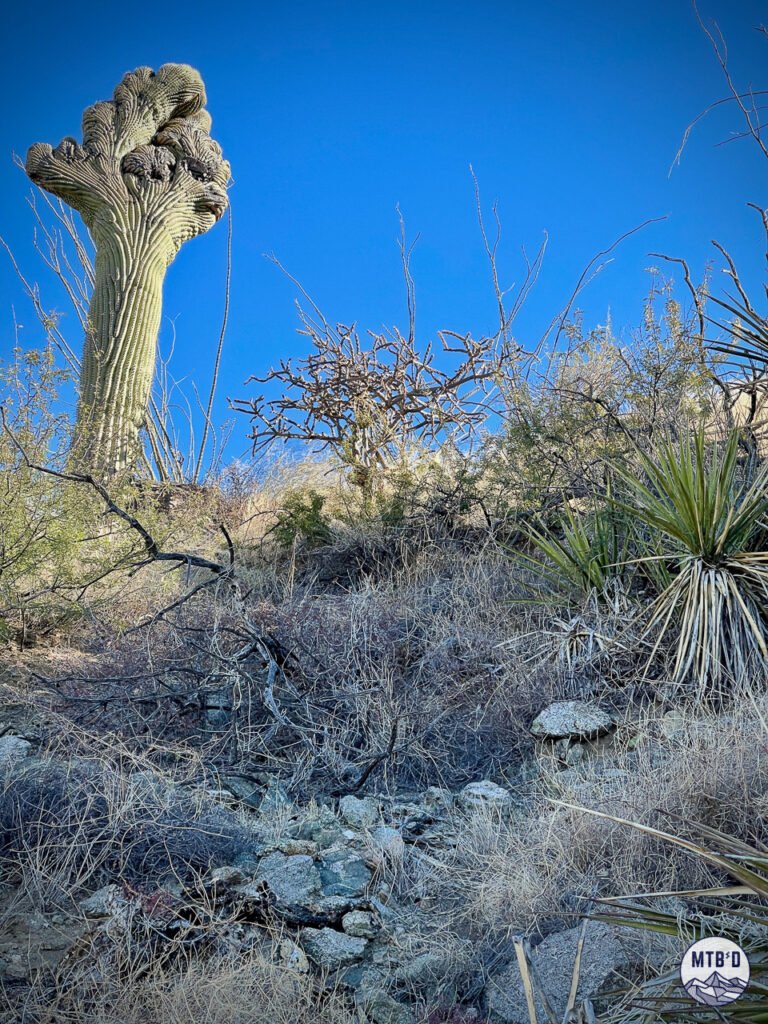
Then you top out.
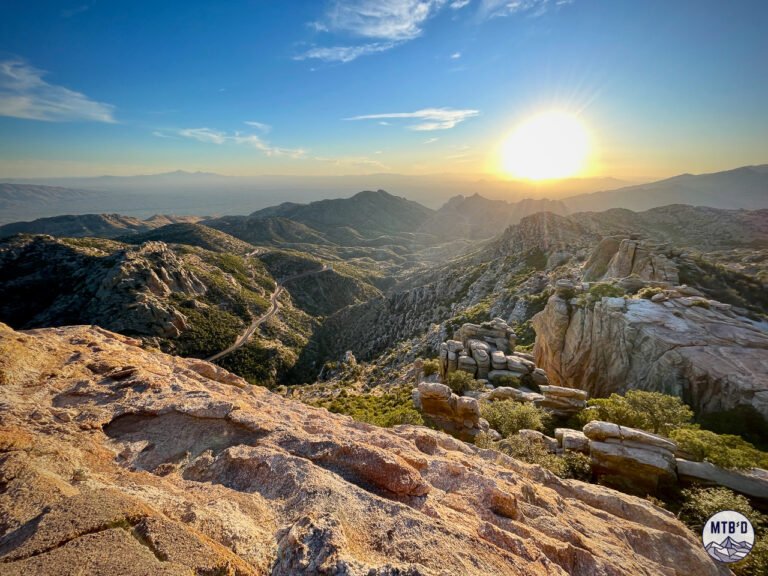
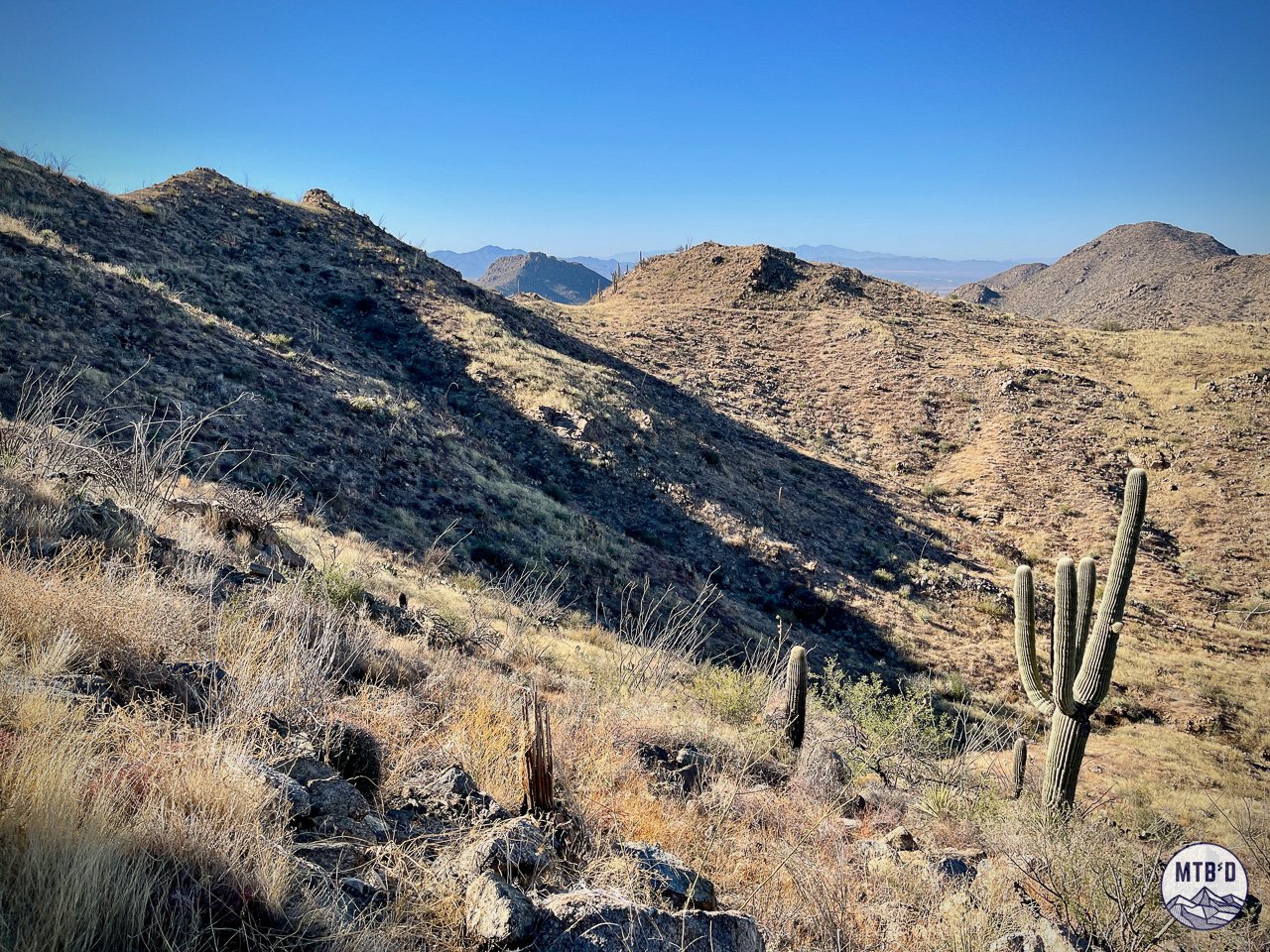
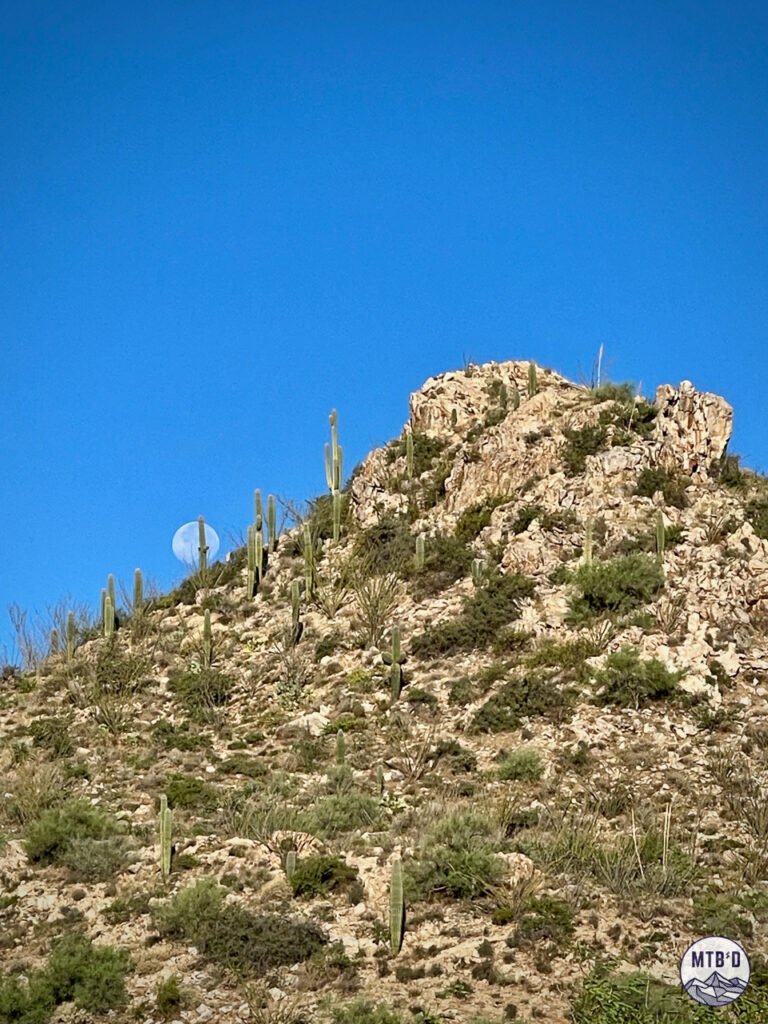
You navigate around a prominence, the trail working along the mountain's flank rather than over its spine. And then you pop out onto the ridgeline itself — and Tucson appears below.
Not directly below. You're deep enough in the Tortolitas that you're looking out over mountainous terrain first, the city pushing into the foothills in the distance. The wealthy neighborhoods of northwest Tucson are visible from up here — some of the most expensive homes in the city tucked into the lower slopes, one exclusive enclave accessible only through a tunnel in the mountainside.
It's a quintessentially Tucson juxtaposition: you're on a remote desert ridge that took real effort to reach, and below you is a tunnel to a gated neighborhood.
The viewpoints are finished with benches and interpretive signs, which feels slightly surreal given how far out you are. The infrastructure says one thing. The terrain says another. Between the viewpoints the trail keeps your full attention.
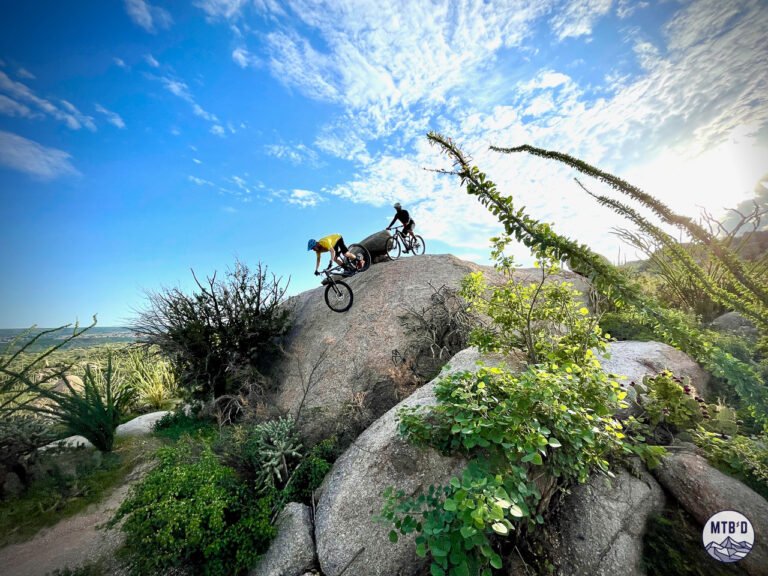
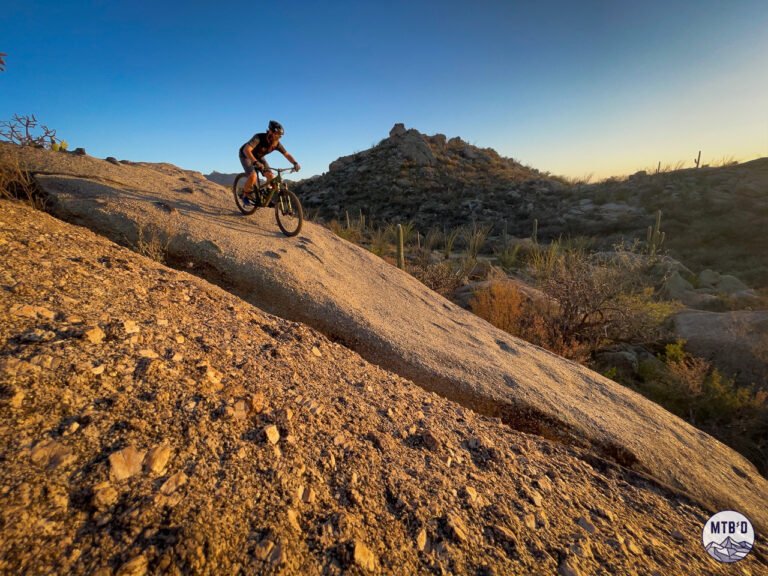
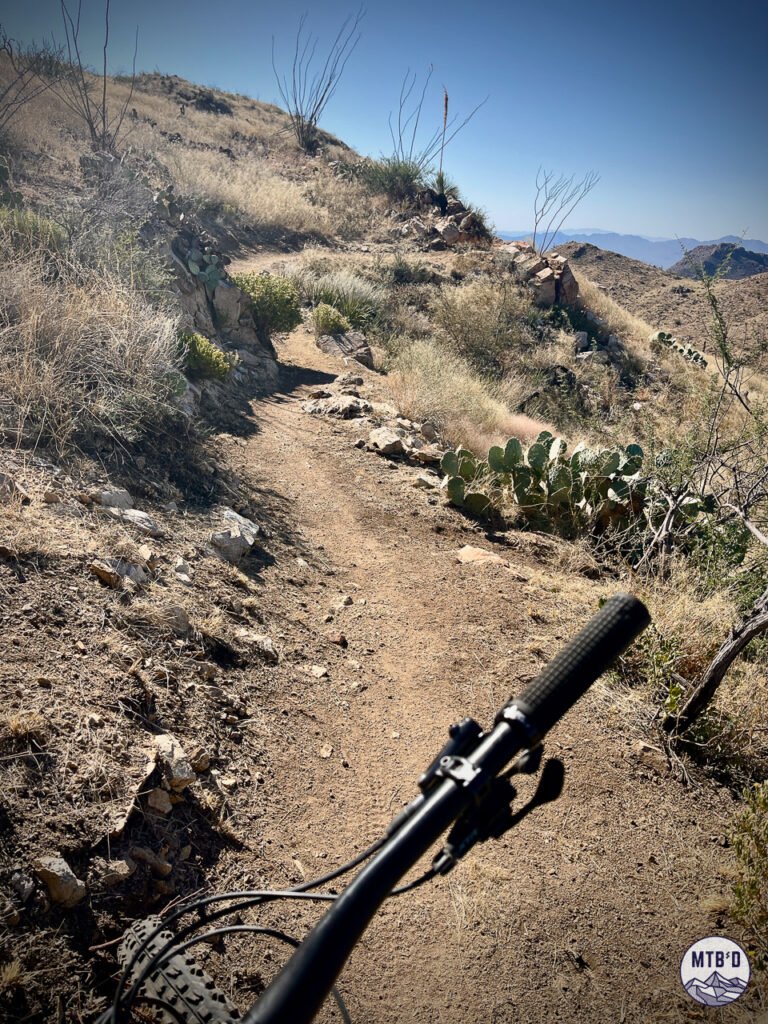
The ridgeline section threads narrow lines along the mountain’s flanks rather than its spine. Embedded rock requires constant reading. The descent begins with up-and-down movement along the ridge before the trail commits to dropping, and when it drops it does so on rocky, interrupted singletrack with tight turns that reward decisive riding.
Near the bottom, Alamo Springs appears, signaling one last drop to the valley floor.
The Sectors
Climb — Switchbacks to the Summit
The eastern start of Ridgeline puts the work upfront. Sustained switchbacks with steep sections, built for mountain bikes and ridden that way. Fitness is the key variable — the technical demands are manageable, the sustained effort requires real conditioning. Save something for the ridge.
Ridgeline — Summit to Descent
The trail's namesake section and its defining experience. Not a clean ridge traverse — the trail works along the mountain's sides, navigating the terrain honestly. Views emerge and demand you stop. The benches exist for a reason. Between the viewpoints the trail keeps you working — embedded rock, narrow lines, terrain that changes character with the seasons.
Descent — Rock, Turns, Sandy Finish
More interrupted and rockier than the climb. Tight turns, embedded rock on north-facing slopes, sections that catch handlebars if you're moving fast without reading the terrain. The descent winds down to the Alamo Springs junction, onto Wild Burro, and if you don't stop your eventually plunge into the sandy wash. When the sand arrives the descent is over.
Is Ridgeline Trail Worth It?
Yes — for the rider who earns it.
Ridgeline is not accessible. It's not quick. It doesn't give itself up on the first visit or the first hour of effort. What it delivers — remote mountain terrain, a genuine ridgeline experience, big views over the Tucson basin from a place that took real work to reach — is earned rather than handed over.
Riders who show up with the fitness and the technical comfort to enjoy what the trail actually is leave wanting to come back. Riders who arrive under-prepared for the climbing or expecting manicured flow leave confused about what the fuss was about.
The fuss is real. You just have to be ready for it.
The Verdict
Ridgeline is the best first taste of high Tortolita riding—remote enough to feel serious, rideable enough to come back smiling.
Ridgeline Trail is an ideal target in Tortolita Mountain Park. What (Loop+) Ridgeline offers is the full Tortolita experience in its most accessible form: a genuine climb, a genuine ridgeline, genuine views over the Tucson basin, and a descent that keeps score honestly without destroying you.
Come here first. Come back for the rest.
What to Know Before You Go
The approach matters. See the Tortolita Mountain Park Network Review for full access details to this trail network.
Bring more water than you think you need. The ridge is exposed and the total effort of the day is higher than the mileage suggests. There is no shade on the ridgeline and limited shade anywhere on the route. And definitely no water.
Cell service is unreliable deep in the Tortolitas. Download Trailforks before you leave. Ride with someone if it's your first time out there. If you break down in the perched valley, your phone is not your rescue plan.
North-facing descent sections grow over in spring and after monsoons. Embedded rock that's clearly visible in winter becomes partially obscured by vegetation. Ride those sections at a pace that lets you read the terrain before committing.
Don't ride the hiker canyon (Wild Burro below Alamo Springs connector) to the west of the valley. It's spicy. It's not for bikes. Use Alamo Springs (still a hike-a-bike).
Pair it with Wild Burro (above Alamo Springs) to make the full loop. That's the natural combination and the way most locals ride it. If you want to find out what harder looks like in the Tortolitas, head on over to Wild Mustang and Upper Javelina .
See What's Coming. Ride the Good Stuff.
Get on-the-ground updates as trails transform and conditions change.
Don't fly blind in Tucson.