Five Wildly Different Arizona Mountain Biking Destinations
Arizona mountain biking offers five major destinations, and that’s just off the top.
(There’s more if you go looking for them.)
But for Sedona, Flagstaff, Prescott, Phoenix, and Tucson? When it comes to mountain biking, they share a state and almost nothing else.
The Variety of Arizona Mountain Biking
- Sedona is red rock and exposure and international reputation.
- Flagstaff is forests at high altitude where the pines stand close and the air is thin.
- Prescott is granite slabs and a history-soaked high desert town with a brewery scene that fly under the radar.
- Phoenix is big city infrastructure wrapped around some of the best-maintained desert singletrack in the American Southwest.
- And Tucson is home to a sky island rising 7,000 feet from the Sonoran floor and a mountain bike experience that nobody sees coming.
You can drive between any two of these Arizona mountain biking destinations in about four hours. They feel like different countries.
That’s the Arizona mountain biking proposition. Not one great MTB destination. Five completely different ones, all within reach of each other, covering every terrain type and every season and every skill level the sport has to offer.
Pick your adventure. There’s no wrong answer.
Each deserves its own vignette.
Tucson — The Sky Island
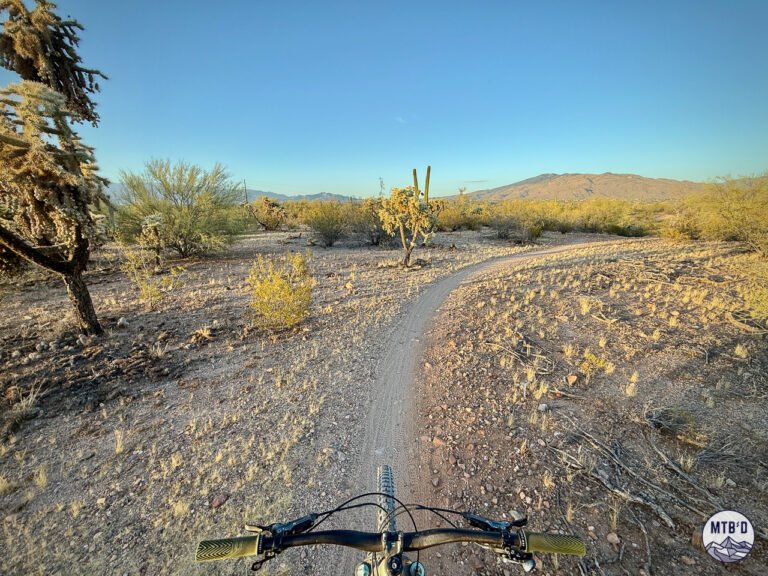
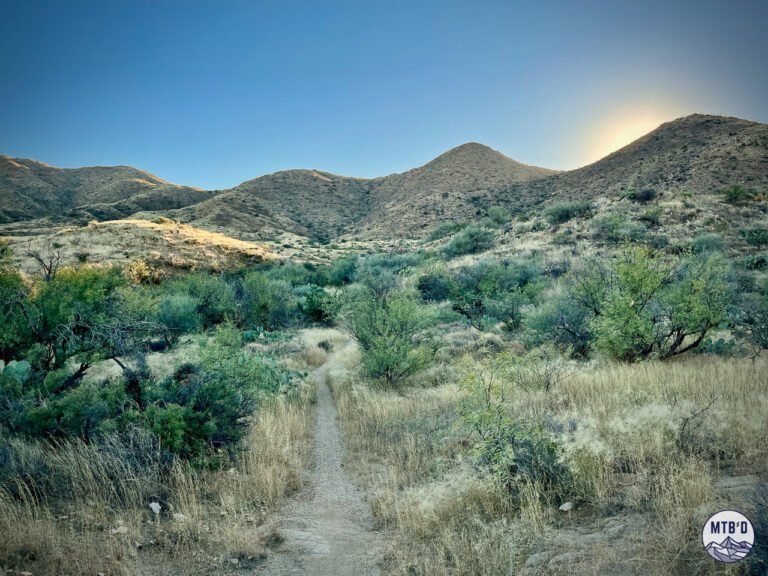
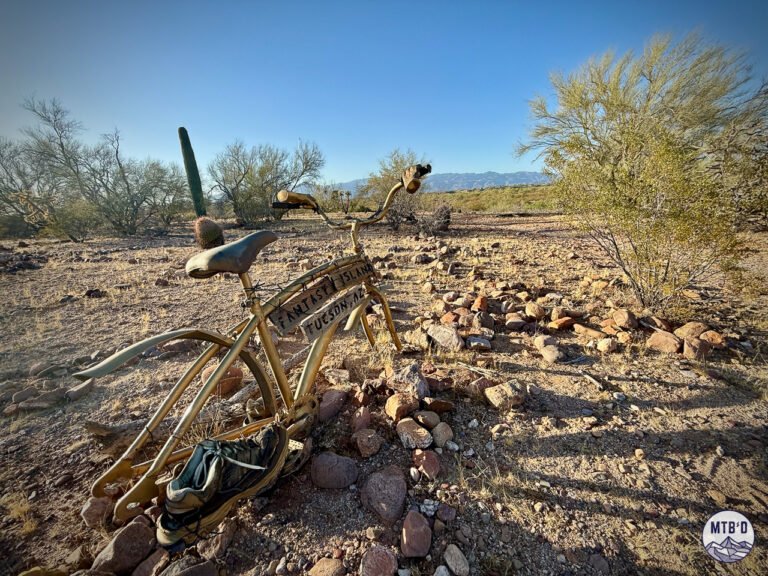
Tucson doesn’t scream “Arizona mountain biking destination” from I-10. The city spreads across a desert basin at 2,400 feet, flat and hot and surrounded by ranges that look, at distance, somewhat modest. But if you look north carefully and comprehend how Mt. Lemmon rises to 9,157 feet out of the Sonoran desert floor, you might start to understand what you’re actually dealing with.
A sky island — an isolated mountain range surrounded by desert, its summit in an entirely different ecosystem from its base. Alpine pines at the top, saguaro cactus at the bottom, five climate zones between them. The Lemmon Drop descends the whole thing — 30+ miles from summit to valley floor, nearly 10,000 feet of descending, one of the most complete and challenging mountain bike days anywhere in the U.S.
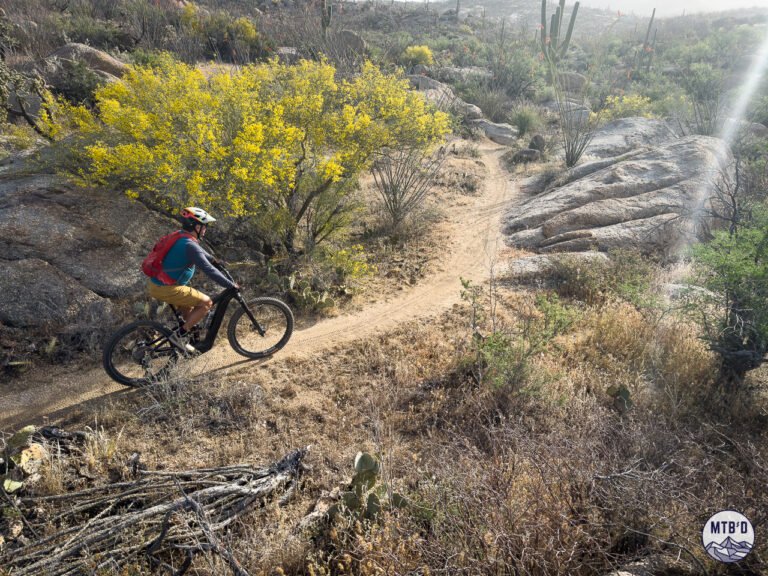
But Mt. Lemmon is just one of many distinct Tucson trail networks. The 50 Year / Golder Ranch trails in the Catalina foothills deliver big granite rock rolls in high desert terrain. The Tortolita Mountains to the northwest hide a ridge-line traverse that most riders drive past without knowing it exists. Honeybee Canyon opens into miles of fast desert singletrack where the signs thin out and the silence gets serious. Tucson Mountain Park on the west side has techy climbs (and descents) that will find exactly the gap between where you think your riding is and where it actually is.
There’s no gentle version of Tucson. The terrain is old and embedded and doesn’t move for anyone. The riders who shaped these trails weren’t building for beginners — they were riding what the desert gave them, technical by default, hike-a-bikes included. Put in the time here and you come out the other side with a skill set that travels.
Full Tucson Guide →
The Lemmon Drop Ride Review →
Bug Springs Trail Review →
Sedona — The Red Rock Cathedral
Sedona has a real shot at being the most beautiful place you will ever ride a mountain bike. That’s not hyperbole. The red sandstone towers and mesas and spires rising from the high desert floor at 4,500 feet create a landscape so visually extraordinary that riders stop mid-trail to stare at it — which on some of Sedona’s trails is genuinely inadvisable because you might be standing on a ledge.
The riding here is world-class and it seems that everyone knows it. Sedona draws international visitors, hosts the Sedona MTB Festival, and produces trails with names — Hiline, Hangover, The Hogs — that exist in the vocabulary of serious MTB riders who have never been within 5,000 miles of Arizona. That reputation is entirely deserved and also slightly misleading. Sedona has beginner and intermediate trails. But what Sedona is known for, what riders travel from everywhere to experience, is the expert terrain on the red rock.
One honest caveat: While it’s the best known when it comes to Arizona mountain biking, Sedona is also one of the busiest tourist destinations in Arizona. The trailheads fill early. The Village of Oak Creek is a better base than Sedona proper for most riding. Come in fall or spring, leave before the summer heat and the summer crowds turn the place into something else entirely.
Flagstaff — The High Country
When the desert gets serious — and it does, reliably, from May through September — Arizona mountain biking still has Flagstaff.
The city sits at 7,000 feet in the shadow of the San Francisco Peaks, surrounded by Coconino National Forest, one of the largest ponderosa pine forests in North America. The temperature differential between Flagstaff and Phoenix on a July afternoon can be 30 degrees. The trails run through shaded forest on volcanic soil that drains fast after rain and offers a surface completely unlike anything in the desert below.
The Schultz Creek trailhead is the heart of the Flagstaff trail system. Most rides start and end here for intermediate riders and up. Schultz Creek itself is the approach — fast, flowy, a gradual climb through aspens and Douglas firs following a seasonal creek upward into the network. It’s been described as one of the most enjoyable easy trails anyone has ever ridden: no technical rocks or big jumps, just long sustained flow through one of the most beautiful forest corridors in the Southwest. A good climb and an enjoyable descent.
From Schultz the network opens up. Mount Elden’s trails including Upper Sunset and Little Bear provide the technical tier — thrilling descents, rocky technical sections, and unbeatable panoramas for advanced riders who want big payoffs after big climbs. Full Sail and Meteoride are two downhill-only trails added in recent years, designated for mountain biking only. Full Sail is a machine-built flow trail designed for intermediate riders seeking a fun and progressive descent. Flagstaff is building toward something more complete.
The altitude matters. Riders coming from sea level or even Phoenix feel the elevation on the first climb, usually more than expected. Give yourself a day to adjust before attempting the bigger days on Mount Elden.
Prescott — The Hidden One
Nobody talks about Prescott the way they talk about Sedona. That’s partly because Prescott is quieter by nature — a historic high-desert town at 5,400 feet, with Whiskey Row and Victorian architecture and a pace that suits the place — and partly because the riders who have found it here aren’t in a hurry to share.
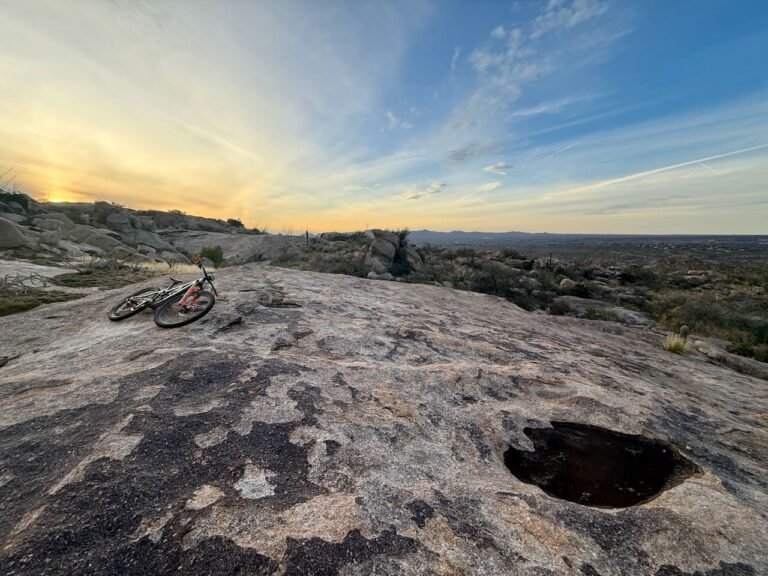
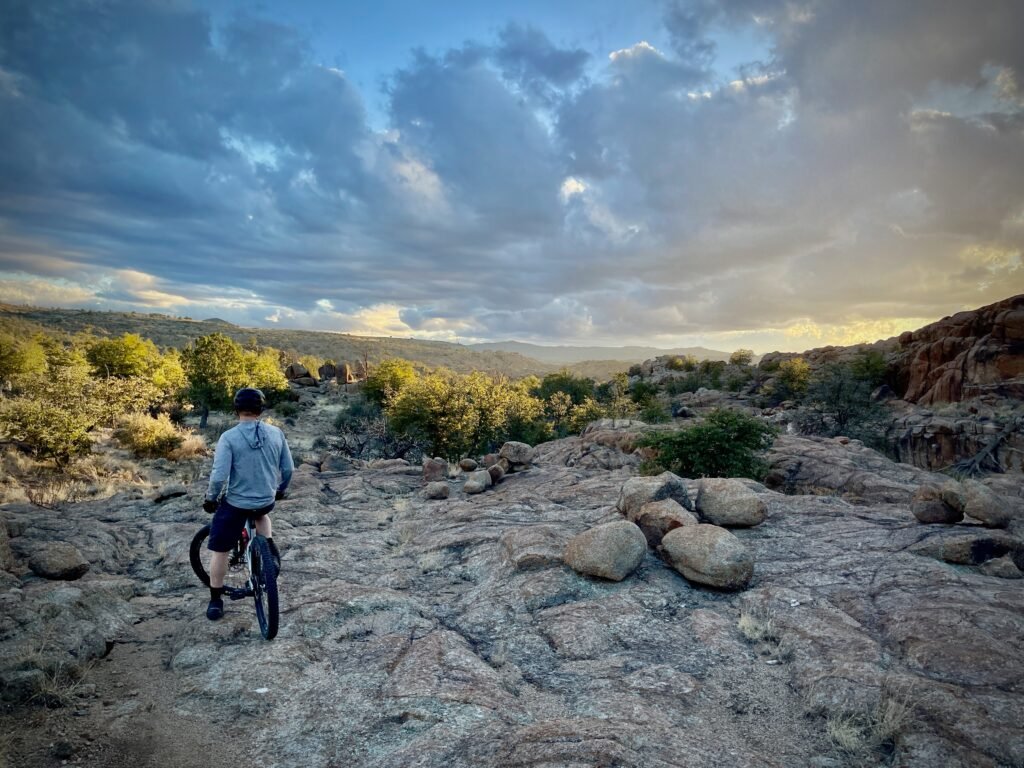
Maybe it’s because the terrain is primarily granite, and those doesn’t register like the red rocks. But it’s hard not to admire the Granite Dells — a collection of eroded granite outcroppings rising from the desert floor north of downtown that look like someone dropped a box of enormous rounded boulders from a great height and decided to leave them there. Even harder once you ride there.
The riding through and around the Dells has a character completely distinct from anything else when it comes to Arizona mountain biking — generally lower consequences than Sedona’s exposure-focused trails, more interesting than Phoenix’s desert flow, and accessible in ways the Tucson technical terrain simply isn’t.
Granite Basin offers a mix of smooth trails and rugged obstacles. The Homestead Trail and Goldwater Lakes trail system add mileage and variety. Bean Peaks Gravity Flow Trails — Arizona’s first gravity flow trails, opened in 2026 — sit three miles south of downtown, offering a smooth and high-speed riding experience with well-constructed ledges, jumps, and rollers for riders of various skill levels. Prescott is building its infrastructure without losing what it already has.
The Whiskey Off-Road brought Prescott to national attention as an endurance MTB destination. What Epic Rides understood when they chose Prescott for that event is what riders who go looking discover: the system here is better than its reputation, and the town rewards the kind of rider who goes looking for things other people drive past.
Phoenix — The Desert at Its Most Accessible
Phoenix has excellent mountain biking. That needs to be stated plainly before anything else, because the city’s reputation as a flat, hot, car-dependent sprawl sometimes obscures the fact that it sits inside some of the most trail-rich terrain in the American Southwest.
Hawes is the crown jewel — epic views, a variety of terrain from fast desert flow to legit downhill double blacks, and the best social vibe of any trail network in Phoenix. The system sits on the east side of the metro near where the Salt River enters the Valley of the Sun, marked by several small peaks and ridgelines covered in purpose-built singletrack that ranges from accessible flow trails to genuinely technical expert lines.
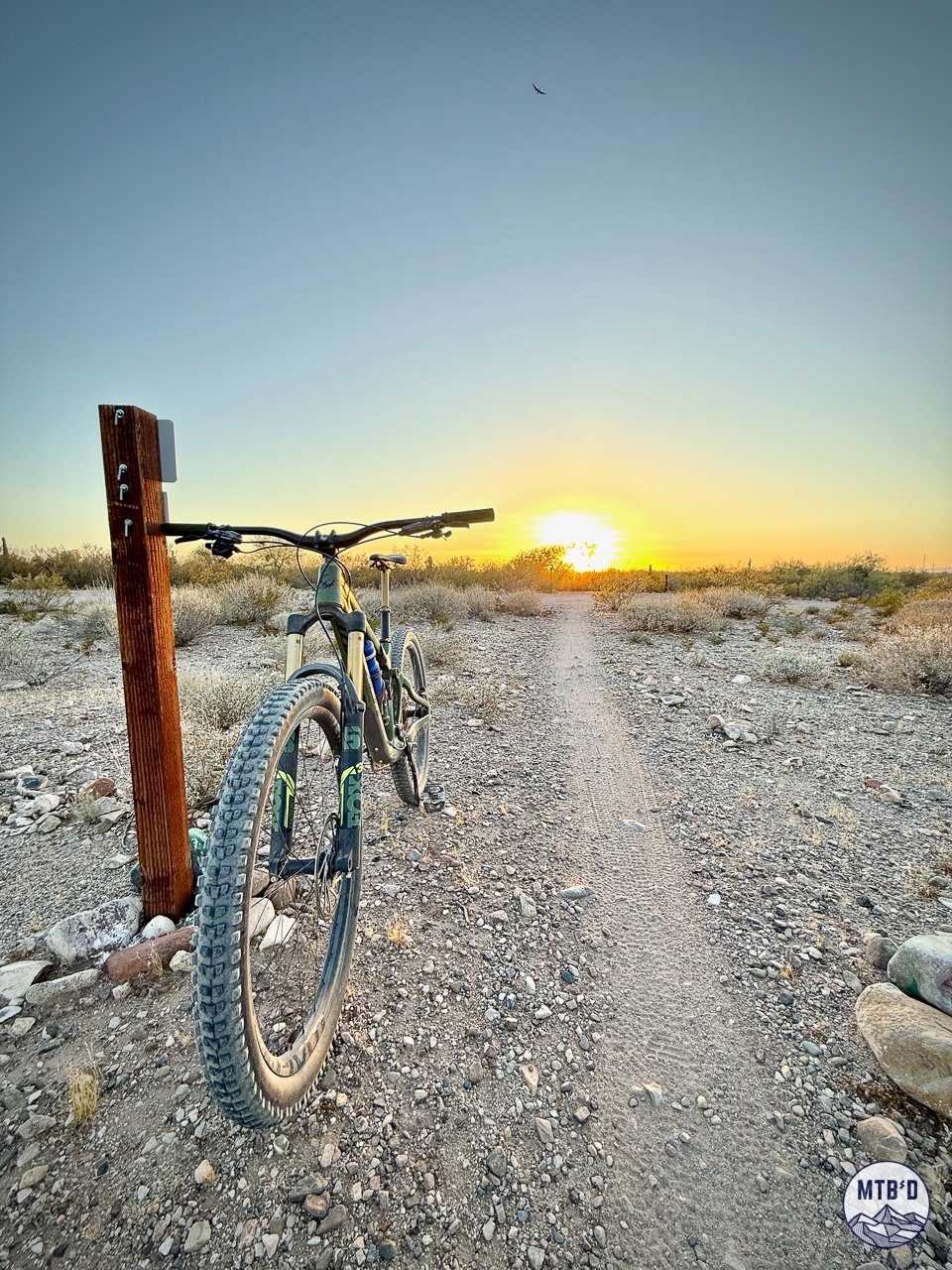
The views out over Red Mountain and the surrounding saguaro-studded desert are stunning, especially during golden hour. Boulderdash and Sunset Ridge are for the expert tier. Red Mountain Rush is for everyone with the legs to get there.
South Mountain is the other anchor — one of the largest municipal parks in the United States, 50 miles of trails, and the National Trail running the length of the ridge with technical sections and views over the Salt River Valley. It’s a different experience from Hawes — larger, more varied in difficulty — but one of the most satisfying desert ridge rides accessible from any major American city.
The honest strength of Phoenix as an MTB destination isn’t just the trails. It’s the infrastructure around them. Every bike shop is accessible, every restaurant option exists, every mechanical issue can be solved same-day. Every kind of accommodation. When you want to maximize saddle time with minimum logistical overhead, Phoenix removes every friction point except the riding itself.
Arizona Mountain Biking — All Year Round
Arizona mountain biking never closes. The season just moves.
November through February — Tucson and Phoenix are at their best. Temperatures in the 60s and 70s, clear skies, the desert at its most welcoming. The riding window is open all day. The 24 Hours in the Old Pueblo runs in February and brings Tucson’s trail community to life.
March and April, September and October — Sedona and Prescott peak. The mid-elevation destinations at 4,000–5,400 feet run warm enough to be comfortable and cool enough to be excellent. The Sedona MTB Festival fills spring. The Whiskey Off-Road in late April is Prescott’s signature moment.
May through August — Flagstaff. The high country opens as the desert locks down. Tucson runs on dawn patrol timing — before 8am, everything is yours. Mt. Lemmon stays accessible all summer. Phoenix is survivable at dawn but the heat finds gaps in fitness fast.
The full Arizona circuit: Phoenix in January for Hawes on a cool desert morning. Tucson in February/March for the Lemmon Drop (or at least a partial, depending on the snow situation at the top of Lemmon). Prescott in April for the Whiskey Off-Road. Sedona in May before the heat really builds. Flagstaff in July when everywhere else has given up. Or run it backwards in the fall.
Five destinations. One state. As complete a mountain biking year as exists anywhere in the country.
Finally, don’t think all the riding is limited to these five destinations. There’s plenty more.
Arizona Mountain Biking: Where to Start
In one state you can descend a sky island, traverse exposed red rock ridgelines, float through ponderosa pines at seven thousand feet, surf granite slabs above a historic high-desert town, and hammer purpose-built technical singletrack at the base of the largest municipal park in the United States.
Not many places in the world put this much riding this close together.
The only question is where to start.