Is 24 Hours in the Old Pueblo Worth It?
The Verdict
Yeah. Do it.
24HOP is one of those events that sounds insane until you’re there, and then it just sounds like mountain biking. Hard, yes. Expensive, yes. A multi-day logistical undertaking in the middle of the Sonoran Desert — also yes.
But it’s also one of the most distinctive things you can do on a bike, the community is genuinely good, and you will come out the other side a better rider whether you want to or not.
If you’re active, reasonably ambitious, and willing to prepare — this one’s for you. We haven’t seen many regret it.
→ 24 Hours in the Old Pueblo event page (2027)
What You’re Actually Signing Up For
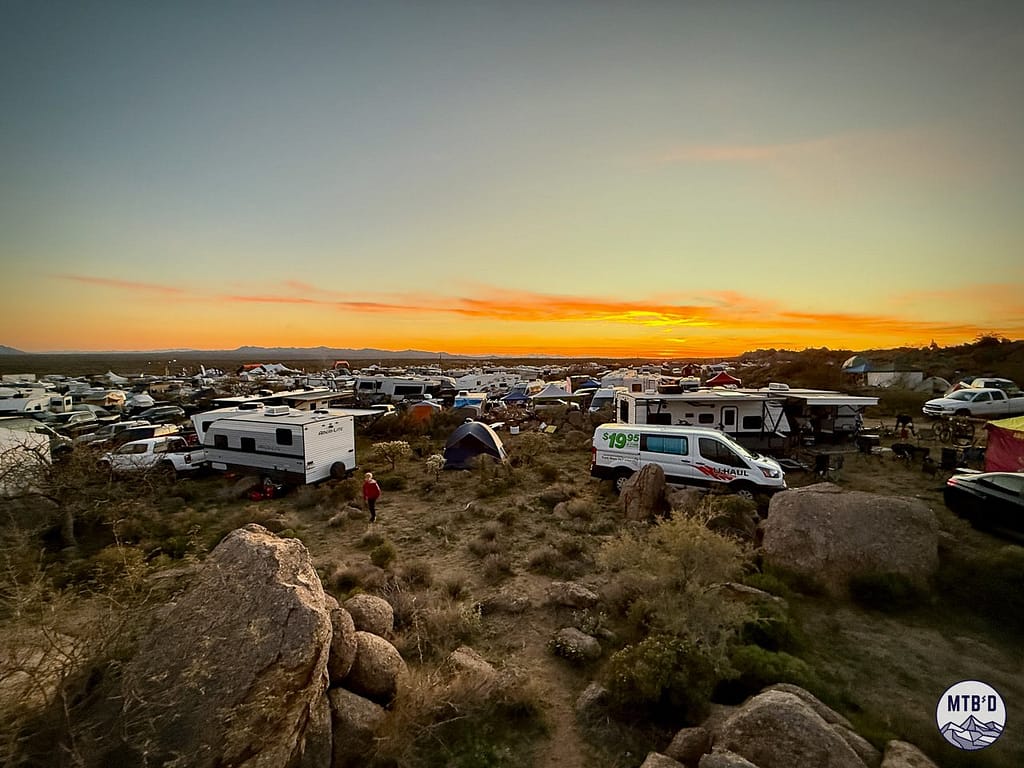
The race is 24 hours. The trip is three to four days. You drive in, set up camp, race from noon Saturday to noon Sunday, break everything down, and drive home.
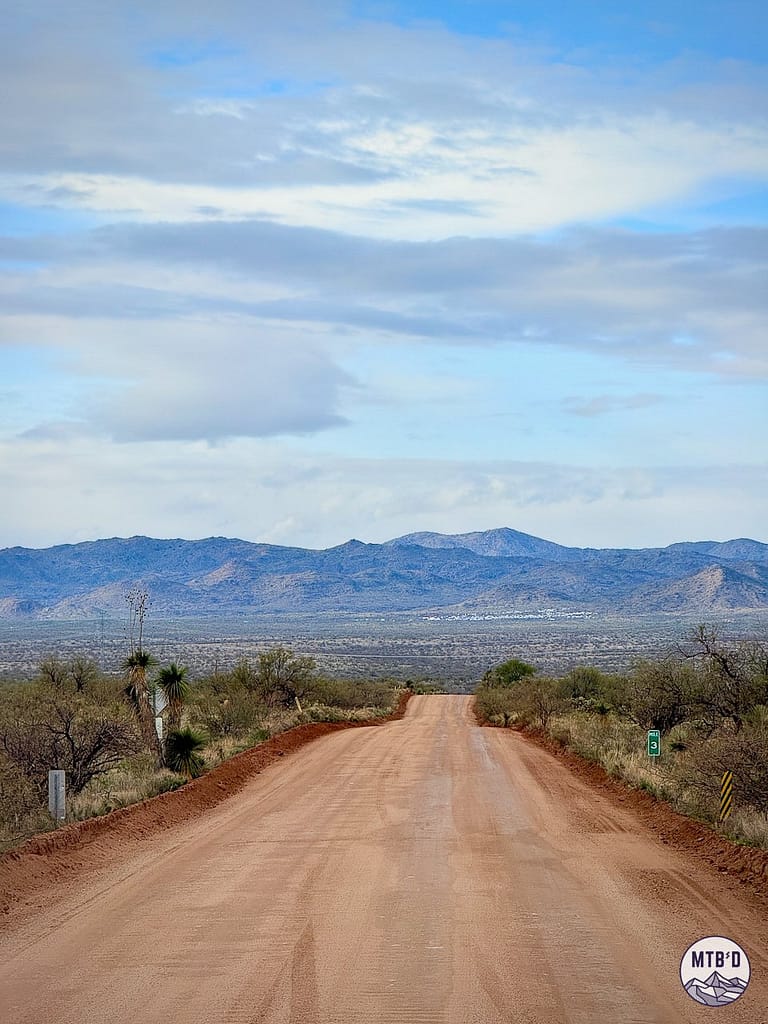
In between: lap after lap on a 17-mile desert loop at Willow Springs Ranch, about 45 minutes north of Tucson, surrounded by thousands of other riders doing the exact same thing.
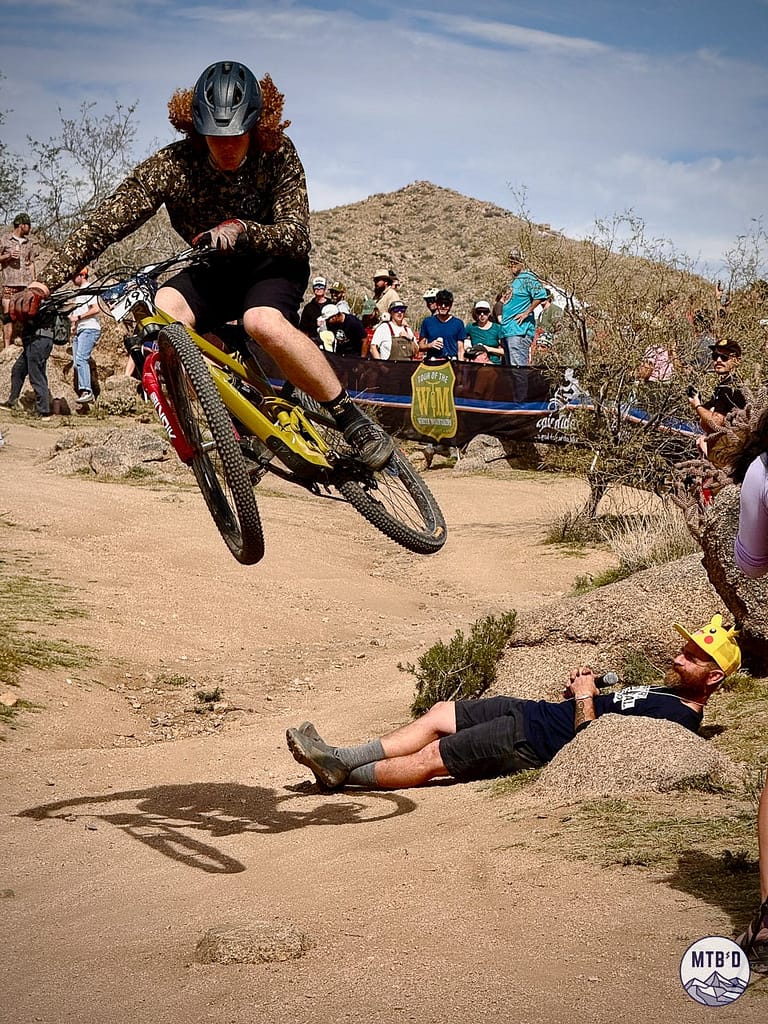
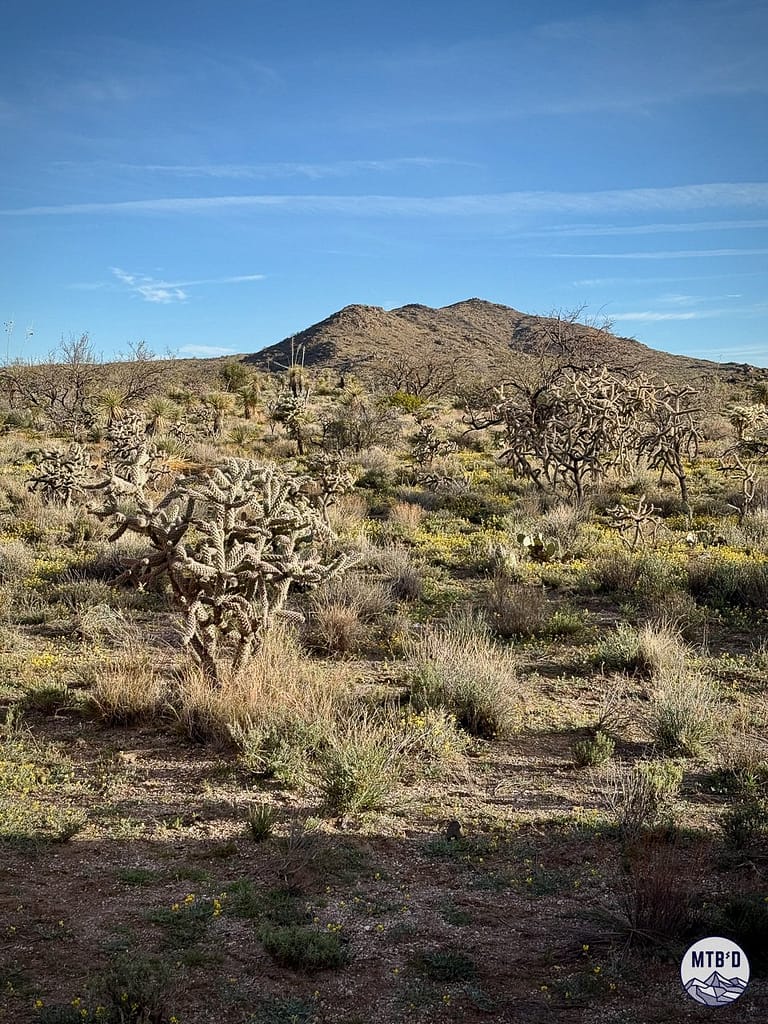
The course is fast, rolling Sonoran Desert singletrack. Hardpack, punchy climbs, cactus lining both sides of the trail. The most technical features are optional — one sizable rock roll and a kicker — if you want to keep things interesting. It’s not a gnarly course, but there’s enough rockiness and high-speed cornering to keep you alert.
What makes it hard is everything else: the accumulation of laps, the cold desert night, the particular mental arithmetic of a challenge that doesn’t let you stop when you feel like stopping.
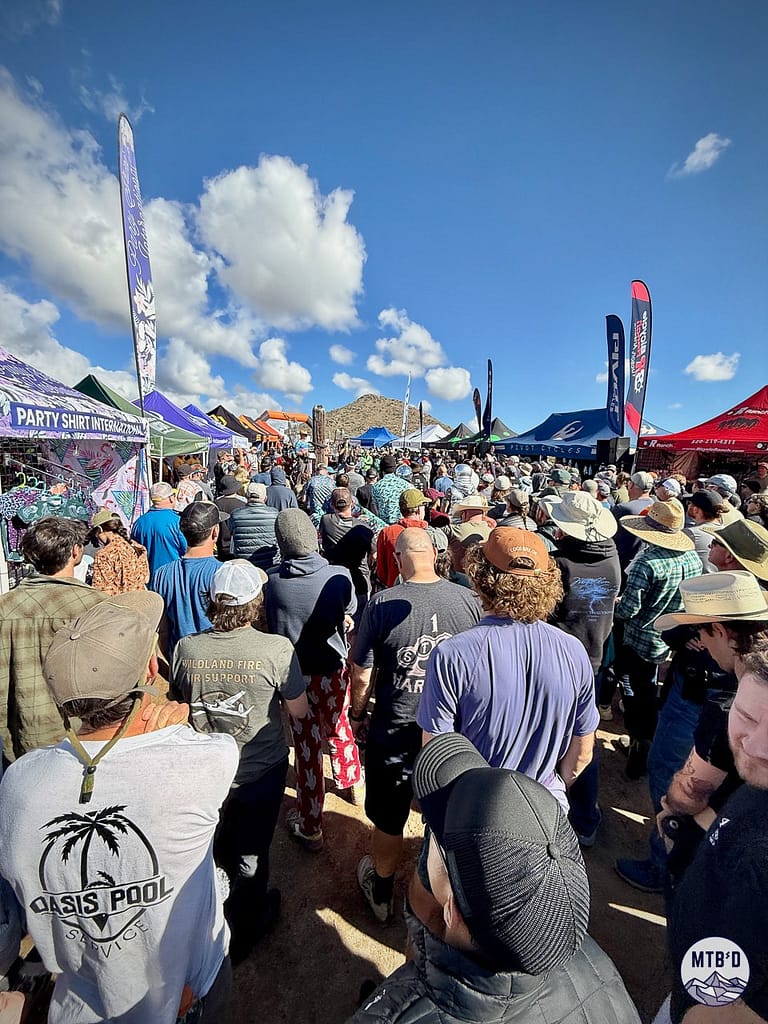
And here’s the thing nobody really warns you about: the vibe is exceptional. The organizers beat this drum at the pre-race captain’s meeting and it actually turns out to be true. Thousands of people sharing close quarters in the desert for several days, and it’s… fine? Better than fine.
People call out their passes on course. Strangers cheer for strangers at 3am in the timing tent. Your camping neighbors become temporary neighbors in the actual sense of the word.
Some of the best conversations you’ll have all weekend happen when you’re standing around doing nothing between laps. That part sneaks up on you.
A Note for Riders
This is an XC course. Let’s just say that clearly. Fast and efficient wins here — there’s no righteous chunk, no big exposure, no reason to show up on a 160mm rig. If your whole riding identity is built around technical descents and lift access, the 24HOP course is not going to deliver that.
But here’s why you should still go.
The Sonoran Desert at midnight in February is unlike anywhere you’ve ridden.
The 24-hour format is an experience every mountain biker should have at least once.
And the fitness work — both the training you’ll put in beforehand and the event itself — transfers to everything.
When else are you essentially forced to keep riding? Not just physically. Mentally. Managing effort through fatigue, finding motivation for another lap when your body is loudly expressing opinions about it. That’s real training. It makes you better at the stuff you actually care about riding.
And that enduro bike can still come in handy before or after the race — there’s plenty of terrain in Tucson that’ll scratch that itch.
Anyone Can Do This. Seriously.
We mean this literally. You’ll see kids out there. You’ll see riders in their 70s and 80s turning laps in the dark, steadily, like they’ve been doing this since before you owned a bike (because they have). You’ll see first-timers and twenty-year veterans and people in full costumes and people who look like they belong on the cover of a catalog and people who absolutely do not.
The physical bar for a team effort is lower than you think. A few months of intentional preparation — more time in the saddle than you’re probably doing now — is enough.
The event meets you where you are. It will push you, but it won’t spit you out.
The mental bar is the real thing. More on that below.
Try It If…
- You want a challenge that’s bigger than a long weekend ride but doesn’t require being a professional athlete. Team format especially — this is genuinely accessible with the right preparation.
- You’ve never done anything like this and that’s the whole point. First-timers are everywhere and they’re welcomed. The event is designed for them.
- You want an experience as much as a race. The social fabric here is unusually good. Teams, camping neighbors, vendor conversations, the strange camaraderie of the timing tent at 4 am — this is a community event dressed up as a race.
- You want to ride somewhere genuinely different. The Sonoran Desert in February is its own thing.
→ What to Expect (and How to Prepare) for 24 HOP
Skip It If…
- You’re not fully committed. This is the big one. A 24-hour race in the middle of nowhere is a multi-day undertaking — logistics, coordination with other people, preparation, follow-through. Half-committed doesn’t survive contact with this format. If you’re on the fence about whether you actually want to do this, that fence is your answer. Come back when you’re not on the fence.
- You’re expecting a normal race. There’s no finish quick and go home, this one is going to linger. The structure of the event — lap after lap, day into night into day — is its own thing entirely. If you want a clean start and a clean finish, this isn’t it. Nothing wrong with that, it’s just a different event.
Solo vs. Team — It’s the Wrong Question
The real question is: how much of a physical and mental challenge do you want, and how much do you want to coordinate with other people?
More riders means fewer laps per person and more time in camp. A 10-person team might each only ride one lap. A solo rider is out there for every single lap, 24 hours straight. Everything in between is the spectrum.
Some teams go out to grind — maximum laps, minimal sleep, full competition mode. Some teams go out to enjoy the desert, put in a few laps, and spend the rest of the time around the fire with good people. Both are completely valid.
The more riders you bring, the more the experience tilts toward social and away from sufferfest.
Choose the version that matches what you actually want.
What It Actually Costs
Entry is roughly around $300 per person. Not per team — per person. No way around it, this is an expensive weekend. And the fees have a way of stacking up: late waiver submissions, pre-event camping if you want to arrive earlier in the week, miscellaneous add-ons that each seem minor until they’re not. Build in a buffer for the costs you didn’t know to budget for.
The easy recommendation: drive. You want your own bike, your own camping setup, and a mountain bike road trip to the desert is its own reward. Budget for someone coming from within the Southwest:
Entry fee: ~$300. Gas and incidentals: $80–200 depending on distance. Food and drink across three to four days including food trucks and camp cooking: $150–200. Gear — lights if you don’t own them, tubes, sealant, whatever else you’re missing: $100–300.
Realistic total for a driving trip, assuming you own a bike and camping gear: $650–1,000 per person.
Flying is possible but adds layers: airfare ($200–500), bike shipping or rental ($200–400), rental car ($200–400, or more if you want that fancy camping van… which would be nice). Budget $1,500–2,500 from out of state. It’ll still be worth it.
If the Answer Is Yes
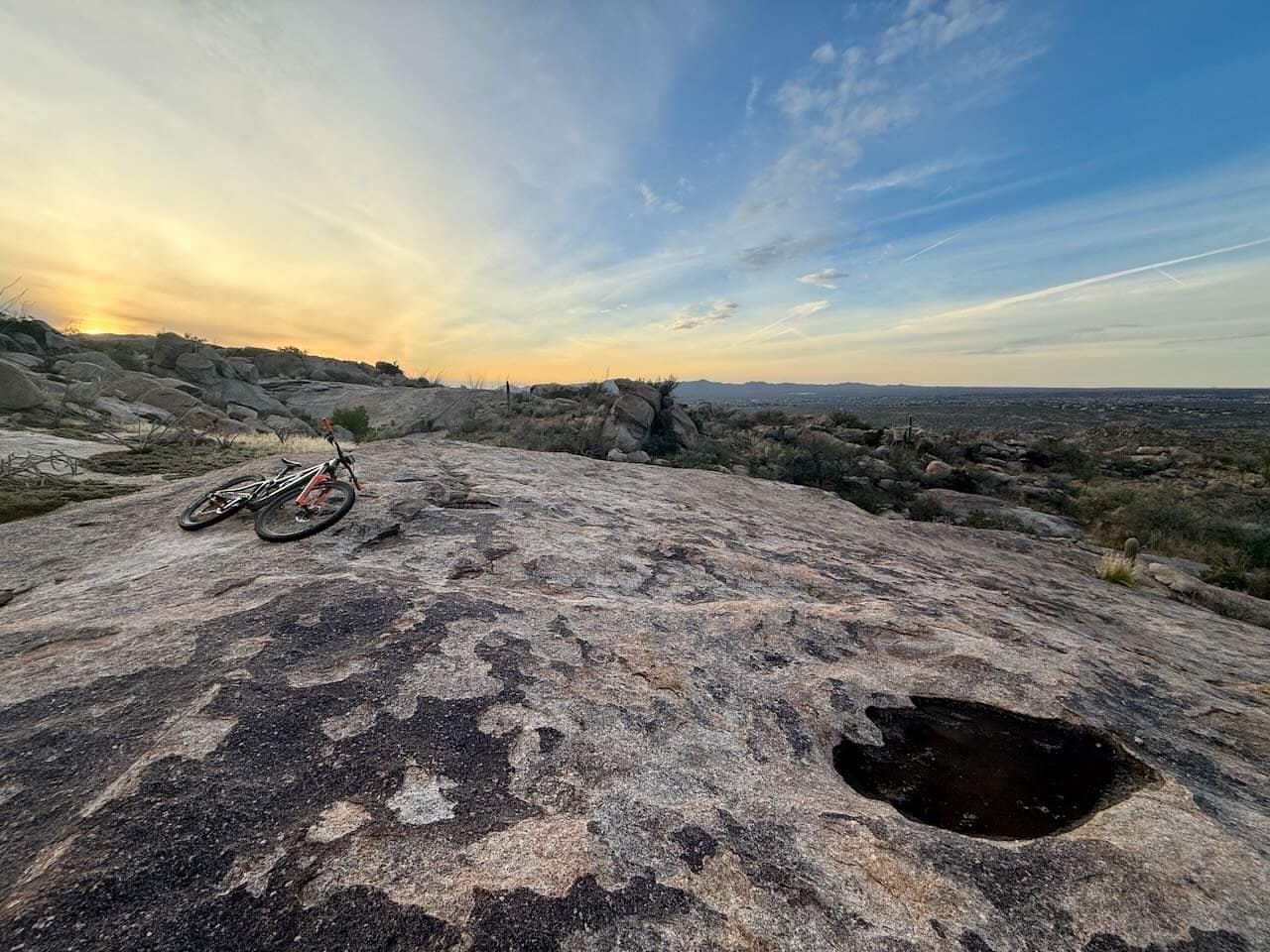
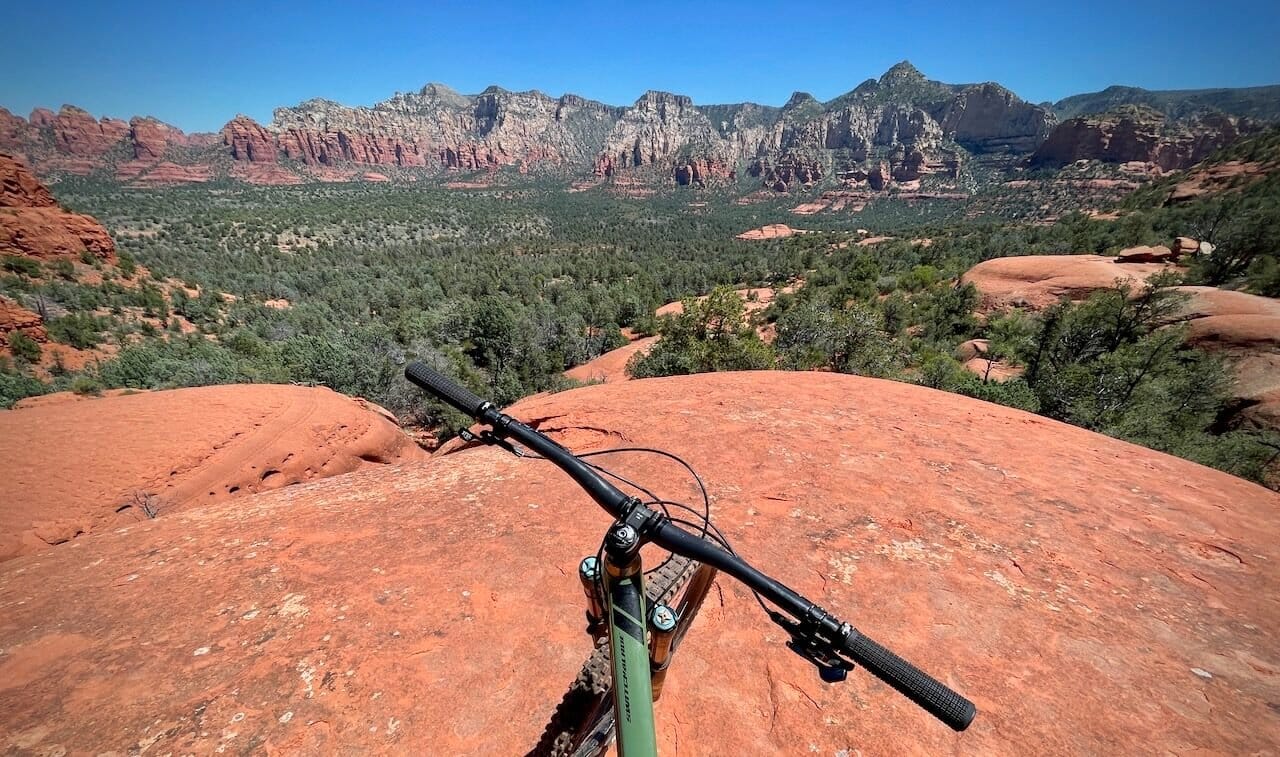
Most people come to 24HOP, suffer joyously for a weekend, and leave. That’s a miss. Tucson has stellar mountain biking in every direction — trails that visiting riders miss if they show up for the event and bounce.
If you’re an enduro rider looking for terrain that’ll actually challenge you, it’s close. If you want the best XC in the Southwest, it’s right there. If you just want to ride in a cactus forest until your legs give out, also yes.
The MTB Diaries Tucson Ride Guide is built for the traveling rider who wants local-level knowledge without the research spiral. Network overviews, curated classic routes, and ride recommendations based on how your legs are actually feeling after 24 hours in the desert.
More Information
Official event details and registration: Epic Rides – 24 Hours in the Old Pueblo
How to prepare for race weekend: What to Expect at 24 Hours in the Old Pueblo
Full event details and 2027 logistics: 24HOP 2027

One Comment