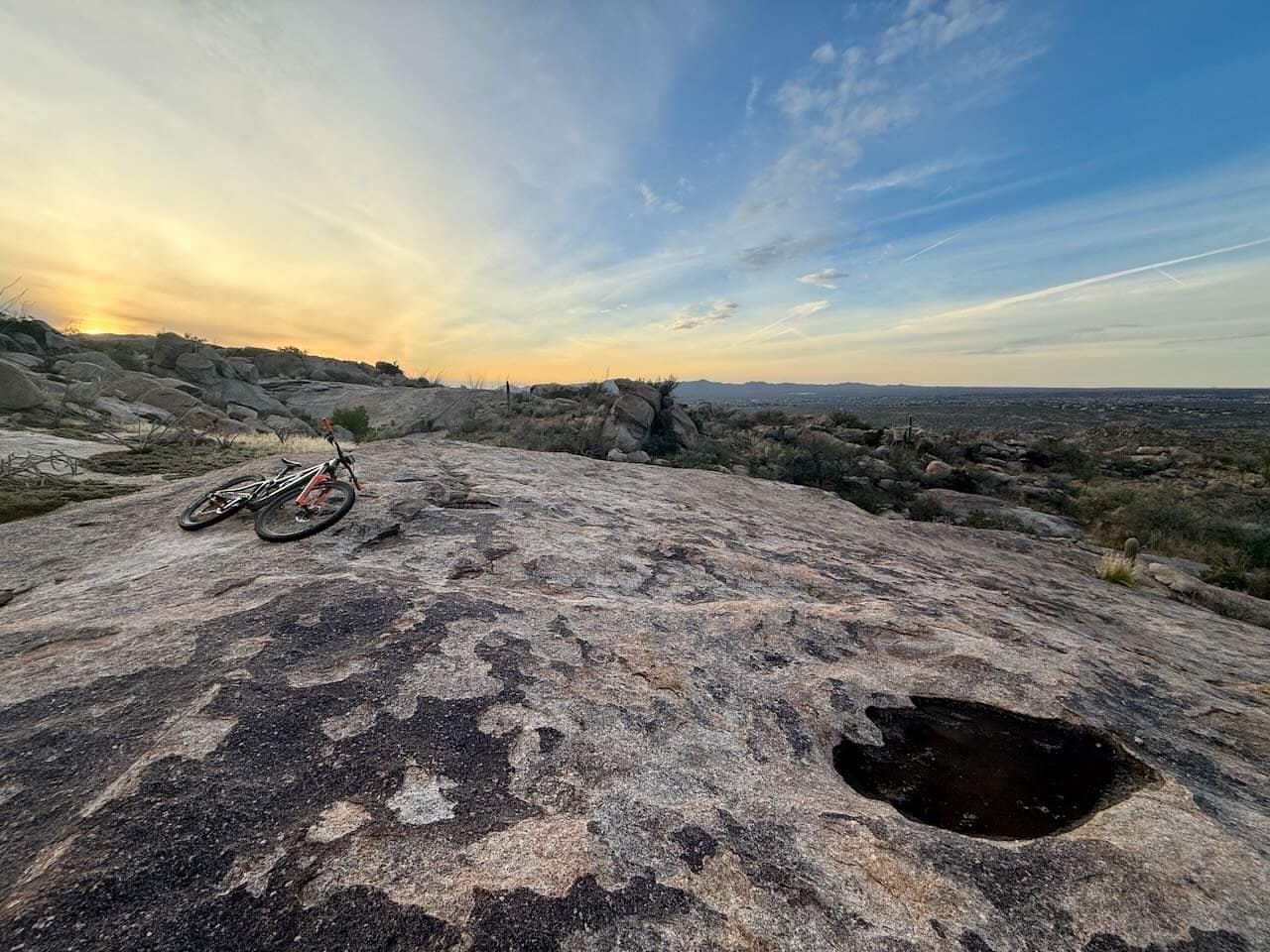
The Best Time to Ride in Tucson: Why Winter is Desert Mountain Bike Season
A month-by-month guide to planning any Tucson or Arizona mountain biking trip, and confirmation of the best time to ride in Tucson and Southern Arizona.
Most mountain bikers think of summer as riding season.
June through September. Warm weather. Long days. Perfect conditions.
In Tucson, summer is when the trails close.
Not officially—there are no gates or signs. But when it’s 100°F at 9 AM and climbing toward 110°F, the desert becomes hostile. Dawn and dusk (and night) rides are the name of the game, but that’s for the hardcore.
Tucson’s riding season is inverted: winter is peak season.
November through March, when the rest of the country is frozen, Tucson is 60-75°F and sunny. Perfect trail conditions. Zero mud. Blue skies every day. Well, most days…
This is when you come to Tucson.
Here’s your month-by-month guide to planning the perfect trip.
The Short Answer: When Should Mountain Bikers Visit Tucson?
Best months (Peak Season):
- January – Perfect temps (60-70°F), minimal crowds
- February – THE best month (65-70°F, zero rain, 24 Hours in the Old Pueblo)
- March – Still excellent (70-75°F), spring wildflowers
Good months (Shoulder Season):
- November – Cooling down (70-80°F), fewer tourists
- December – Holiday quiet (60-70°F), great deals on lodging
- April – Warming up (75-85°F), still rideable but getting hot
Avoid:
- May-September – Too hot (85-110°F), brutal desert heat, locals flee to Mount Lemmon
Exception: Mount Lemmon
- High elevation (9,000+ feet) inverts the season
- Best riding: May-October (when the valley is too hot)
- Winter can have snow/cold (rideable but chilly)
Month-by-Month Breakdown
January: The Hidden Gem
Temperature: 60-70°F daytime, 40-50°F mornings
Rainfall: 1 inch (occasional winter storm)
Crowds: Low (post-holiday quiet)
Trail Conditions: Excellent (dry, hero dirt)
Why January is great:
January is Tucson’s secret weapon. While Colorado, Utah, and the Pacific Northwest are buried in snow, Tucson is sunny and 65°F.
What to expect:
- Cool mornings (you’ll want a light jacket for the drive to trailheads)
- Perfect midday temps (60s and low 70s—ideal riding weather)
- Occasional winter storm (1-2 days of rain per month—trails dry fast)
- Almost no tourists (locals are back from holidays, but visitors haven’t arrived yet)
Best rides for January:
- Lower elevation networks (Sweetwater, Honeybee, Tucson Mountain Park)
- Mount Lemmon is rideable but chilly (40-50°F at high elevation)
- Desert trails are in prime condition (no mud, perfect traction)
Pro tip: January is when locals ride the most. If you want to meet Tucson’s MTB community, this is your month.
Book lodging early if visiting MLK weekend (three-day weekend brings a mini-surge of visitors).
February: The Best Month (No Contest)
Temperature: 65-70°F daytime, 45-55°F mornings
Rainfall: 0.8 inches (driest month)
Crowds: Moderate to High (peak visitor season)
Trail Conditions: Perfect (zero mud, dry, fast)
Why February is #1:
February is when Tucson mountain biking peaks. The weather is flawless—mid-60s every day, rare rain, plenty sunshine. This is what you came for.
What to expect:
- Perfect riding temps (65-70°F all day)
- Rain as afterthought (February averages less than 1 inch of rain)
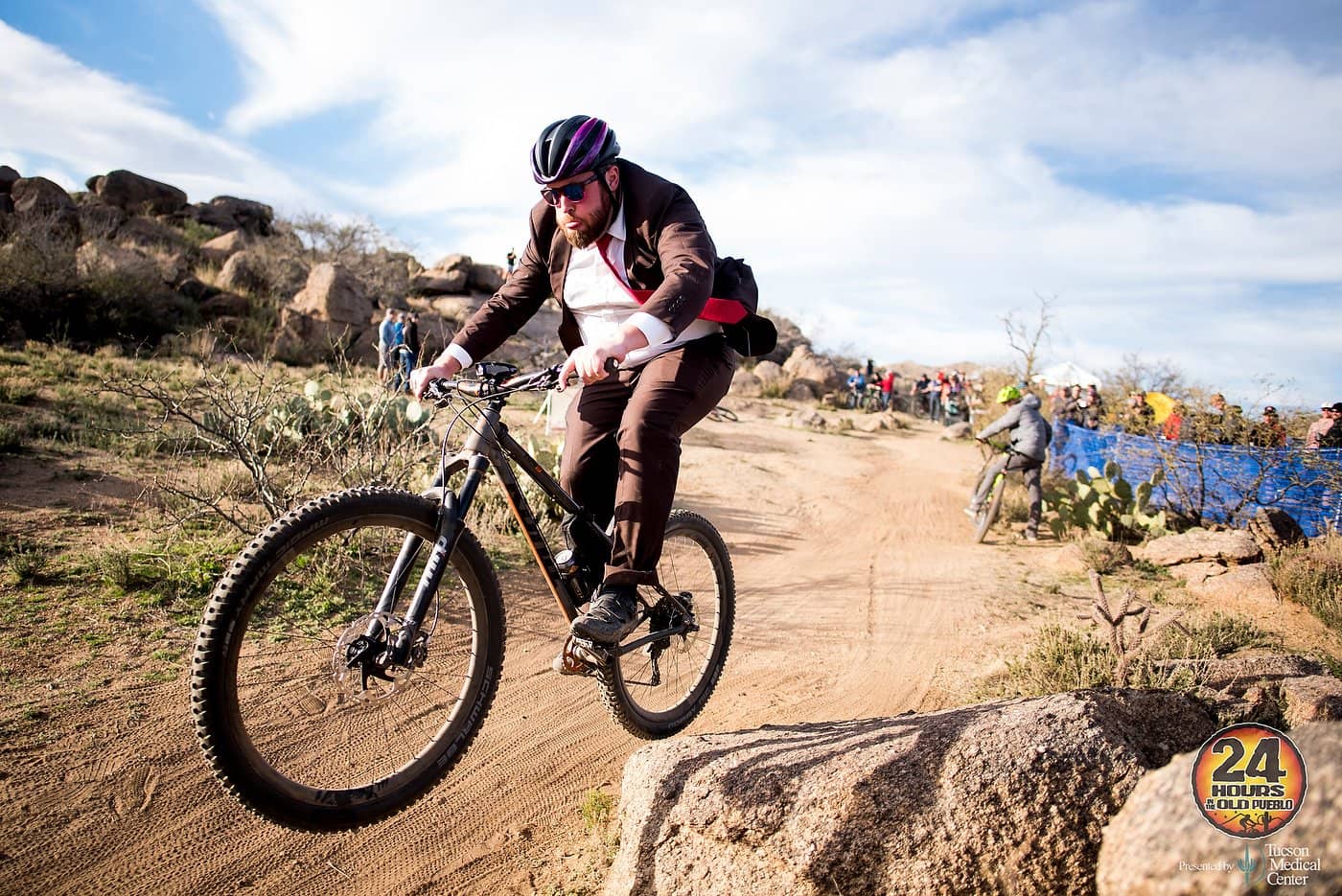
- 24 Hours in the Old Pueblo (mid-February, the Southwest’s biggest MTB event)
- Humming trails (everyone knows February is perfect—expect company)
Best rides for February:
- Any Classic ride (they’re all perfect this month)
- Mount Lemmon is rideable (but still cool—bring layers)
- Longer rides are comfortable (you won’t overheat)
Event to know: 24 Hours in the Old Pueblo
Mid-February brings 24HOP—a 24-hour relay race at the 24 Hours in the Old Pueblo course. It’s a massive event (2,000+ riders, festival vibe, camping, vendor village).
Should you go?
- If you’re racing: Plan and register early (things fill up)
- If you’re not racing: Avoid 24HOP weekend if you want quiet trails (or embrace the chaos and spectate)
Book lodging early. February is peak season—hotels and Airbnbs fill up fast, especially around 24HOP.
March: Still Excellent (But Warming Up)
Temperature: 70-75°F daytime, 50-60°F mornings
Rainfall: 1 inch (occasional storm)
Crowds: High (spring break, tourists, snowbirds)
Trail Conditions: Excellent (dry, fast, wildflowers blooming)
Why March is great:
March is February’s slightly warmer cousin. Still excellent riding, but you’ll feel the heat creeping in by late afternoon.
What to expect:
- Warming temps (70-75°F—still comfortable but start thinking about hydration)
- Spring wildflowers (poppies, lupines, desert blooms—gorgeous)
- Busier trails (spring break brings families, snowbirds are still here)
- Occasional wind (March can be gusty—plan around it)
Best rides for March:
- Early mornings are perfect (cooler temps, fewer people)
- Mount Lemmon is warming up (great if you want alpine without the chill)
- Any desert network (conditions are still dialed)
Pro tip: Start your rides earlier. By late March, midday temps hit 80°F+. Get out at 8 AM instead of 10 AM.
Crowds: Spring break and snowbird season means busier trails. If you want solitude, ride weekdays or hit remote networks (Tortolitas, Mount Lemmon).
April: The Transition Month
Temperature: 75-85°F daytime, 55-65°F mornings
Rainfall: 0.5 inches (very dry)
Crowds: Moderate (snowbirds leaving, locals adjusting to heat)
Trail Conditions: Good to Excellent (still dry, but getting warm)
Why April is tricky:
April is the edge of riding season. Early April feels like March—great. Late April feels like May—hot.
What to expect:
- Warm afternoons (80-85°F by noon—hydration is critical)
- Still rideable (but you’ll feel the heat)
- Fewer tourists (snowbirds head north, visitors taper off)
- Mount Lemmon becomes prime (valley is hot, high elevation is perfect)
Best rides for April:
- Mount Lemmon (this is when Lemmon Drop and Hard Lemmonade hit their stride—60-70°F at elevation)
- Early morning desert rides (start at 7 AM, finish by 11 AM)
- Avoid midday (85°F+ in the valley is pushing it)
Pro tip: April is “locals shift to Mount Lemmon” month. If you’re visiting, prioritize high-elevation riding and avoid the valley after 11 AM.
May: Often Hot (But Lemmon is Prime)
Temperature: 85-95°F daytime, 65-75°F mornings
Rainfall: 0.3 inches (bone dry)
Crowds: Low (tourists gone, locals on Lemmon)
Trail Conditions: Dusty, hot, unforgiving
Why May is tough:
May is when Tucson starts to transition from “riding season” to “survival mode.” The valley starts to become too hot for comfortable riding in the heat of the day.
What to expect:
- Valley heat (90-95°F by 10 AM, 100°F+ by noon)
- Mount Lemmon is perfect (70-80°F at elevation—this is peak Lemmon season)
- Empty desert trails (locals abandon the valley)
- Dust (everything is dry, trails are dusty and loose)
Best strategy for May:
- Ride Mount Lemmon (see also: Mt Graham)
- Early morning valley rides (start at 6 AM, finish by 9 AM)
- Bring extra water (dehydration happens fast)
Pro tip: May through September is “Lemmon Season.” Locals add in high-elevation rides to escape the heat, either at Lemmon or further afield (Northern Arizona, etc.)
June-August: Tough
Temperature: 95-110°F daytime, 75-85°F mornings
Rainfall: Variable (monsoon season July-August)
Crowds: Almost zero (everyone’s hiding indoors)
Trail Conditions: Punishing heat, occasional monsoon mud
Why you should skip summer:
Tucson summer is tough. It’s not “hot but rideable.” It’s “dangerous if you’re not careful.” But don’t be fooled, savvy desert creatures ride MTB year round… carefully.
What to expect:
- Extreme heat (100-110°F regularly, 115°F+ during heat waves)
- Monsoon storms (July-August bring afternoon thunderstorms—trails get muddy, flash floods are real)
- Few tourists (for good reason)
- Even locals struggle (most shift entirely to Mount Lemmon or quit riding until fall)
If you ride in summer:
- Mount Lemmon (70-80°F at elevation—very nice)
- Dawn patrol (start at 5:30 AM, finish by 8 AM if riding the valley)
- Bring liters of water (dehydration is no joke)
- Watch for monsoon storms (afternoon thunderstorms roll in fast—don’t get caught out)
Pro tip: Monsoon season (July-August) is beautiful but dangerous. Lightning, flash floods, and sudden downpours are common. If you see dark clouds building, get off the trails.
Honest advice: You can make the most of a Tucson summer trip (monsoon season can actually be an incredible time of year), but maybe don’t prioritize it. And consider an AirBnb with a pool!
September: Still Too Hot (But Cooling)
Temperature: 90-100°F daytime, 70-80°F mornings
Rainfall: 1-2 inches (late monsoon)
Crowds: Very low (locals hungry for fall)
Trail Conditions: Hot, dusty, occasional mud from storms
Why September is rough:
September is “almost fall but not quite.” Still too hot for comfortable valley riding during the heat of the day.
What to expect:
- Lingering heat (90-100°F most days)
- Late monsoon storms (trails can be muddy after afternoon rains)
- Empty trails (tourists haven’t returned, locals still picking and choosing times carefully)
- Mount Lemmon is still prime (but cooling down)
Best strategy:
- Focus on Mount Lemmon (valley is still too hot)
- Wait until October (seriously—one more month makes a huge difference)
Pro tip: September is when locals start getting antsy for fall. Trail conditions improve after monsoon season ends, but it’s still too hot for prime riding.
October: The Return
Temperature: 80-90°F daytime, 60-70°F mornings
Rainfall: 1 inch (mostly dry)
Crowds: Low (tourists haven’t arrived yet)
Trail Conditions: Improving (cooling down, drying out)
Why October is good (but not great):
October is the start of fall riding season. Still warm, but tolerable.
What to expect:
- Warm but rideable (80-85°F most days—start early)
- Fewer crowds (snowbirds haven’t arrived, tourists are sparse)
- Trail conditions improving (monsoon mud dries out, trails firm up)
- Mount Lemmon cooling down (still rideable but transitioning to winter)
Best rides for October:
- Desert networks are back in play (Sweetwater, Honeybee, Tortolitas)
- Early morning rides (start at 7-8 AM, avoid midday heat)
- Mount Lemmon is still good (but getting cooler)
Pro tip: October is a “locals’ secret” month. Tourists haven’t arrived yet, but trails are rideable again. If you want empty trails and decent weather, October is underrated.
November: The Season Begins
Temperature: 70-80°F daytime, 50-60°F mornings
Rainfall: 1 inch (occasional storm)
Crowds: Moderate (snowbirds arriving, tourists trickling in)
Trail Conditions: Excellent (dry, cool, perfect)
Why November is great:
November is when Tucson riding season officially begins. Temps drop into the 70s, trails are dry, and the desert feels alive again.
What to expect:
- Perfect fall temps (70-75°F most days)
- Cool mornings (you’ll want a light layer for the drive)
- Increasing crowds (snowbirds arrive, tourists start booking trips)
- Trail conditions are dialed (dry, fast, tacky)
Best rides for November:
- Any desert network (Sweetwater, Honeybee, Catalinas, Tortolitas)
- Mount Lemmon is cooling down (still rideable but bring layers)
- Longer rides are comfortable (no overheating risk)
Pro tip: November is when it’s time to shift back to full desert riding. It’s a great month for visitors—good weather, fewer crowds than winter peak, and trails are in excellent shape.
December: Holiday Quiet
Temperature: 60-70°F daytime, 40-50°F mornings
Rainfall: 1 inch (occasional winter storm)
Crowds: Low (holiday travel, quiet trails)
Trail Conditions: Excellent (cool, dry, perfect traction)
Why December is underrated:
December is Tucson’s quietest riding month. Locals are busy with holidays, tourists haven’t arrived yet, and trails are empty.
What to expect:
- Cool temps (60-70°F—perfect for desert riding)
- Chilly mornings (40-50°F—dress in layers)
- Empty trails (best month for solitude)
- Occasional winter storm (1-2 days of rain, trails dry fast)
Best rides for December:
- Desert networks are perfect (low-elevation trails are ideal in cool weather)
- Mount Lemmon can be cold/snowy (check conditions before going)
- Longer rides are comfortable (cool temps = no overheating)
Pro tip: December is the best month for cheap lodging and empty trails. If you’re flexible on timing, book a December trip for maximum solitude and good deals.
Special Consideration: Mount Lemmon’s Inverted Season
Mount Lemmon (9,000+ feet elevation) has its own season:
Best months for Lemmon:
- May-October (when valley is too hot, Lemmon is 70-80°F and perfect)
Rideable but chilly:
- November-April (can be 40-60°F at elevation—bring layers)
Occasionally snowed in:
- December-February (snow/ice at high elevation—check road conditions)
Why this matters:
If you’re visiting Tucson in summer, Mount Lemmon is a great option to escape the heat. The valley is 110°F, but Lemmon is a comfortable 75°F.
If you’re visiting in winter (peak season), Mount Lemmon is rideable but cool. Lemmon Drop and Hard Lemmonade are doable depending on conditions, but you’ll want layers.
How to Pack for Tucson (By Season)
Winter (November-March):
- Layers: Cool mornings (40-60°F), warm afternoons (65-75°F)
- Arm warmers, leg warmers, light jacket (shed layers as you warm up)
- Hydration: 2-3 liters (cooler temps = less sweat, but still desert)
- Sunscreen: Always (desert sun is strong even in winter)
Spring/Fall (April, October):
- Light layers: Cool mornings, warm afternoons
- Hydration: 3-4 liters (getting warmer, more sweat)
- Sun protection: Hat, sunscreen, buff (sun is intense)
Summer (May-September):
- Dawn patrol: Start at dark, liters of water, electrolytes, ice in hydration pack, home early.
Events and Races to Know
24 Hours in the Old Pueblo (mid-February):
- Massive 24-hour relay race (2,000+ riders)
- Festival atmosphere (vendor village, camping, spectating)
- Book lodging 6+ months early if attending
- Trails are crowded this weekend (or embrace the chaos)
Arizona Trail 300 (March):
- Bikepacking race on the Arizona Trail
- Doesn’t impact Tucson trails directly, but you’ll see bikepackers
Tucson Mountain Bike Festival (dates vary):
- Check local bike shops for group rides, clinics, demos
The Bottom Line: When Should You Visit?
If you want the BEST possible conditions: → February (perfect temps, zero rain, peak season energy)
If you want great weather + fewer crowds: → January or November (still excellent, quieter trails)
If you’re on a budget: → December (holiday quiet, good lodging deals)
If you’re flexible and want empty trails: → October or November (cooling down, tourists haven’t arrived)
Look elsewhere: → June-September (very hot, limited options for riding due to midday temps, although locals do shred year-round)
Planning Your Trip? Get the Full Guide.
This guide tells you when to ride Tucson. The Tucson MTB Ride Guide tells you what to ride.
Inside the guide: ✓ The 7 Tucson Classics (essential rides, fully detailed)
✓ 10+ Specialty Rides (alternatives, advanced options, hidden gems)
✓ Sample itineraries (5-day, 7-day, 10-day trips)
✓ Trip planning tools (budgets, lodging, logistics)
✓ Desert riding skills (bike setup, hydration, heat management)
✓ Local intel (where to eat, where to stay, insider tips)
[Get the Guide] | [Join the Email List for Launch Updates]
Final Thoughts: Tucson is Worth the Timing
Tucson isn’t a “ride whenever” destination.
Summer is brutal. Spring is warming up. Fall is transitional.
But winter? Winter is perfect.
60-75°F every day. Zero mud. Blue skies. Endless singletrack through saguaro forests, rocky Catalinas climbs, and iconic Mount Lemmon descents.
When the rest of the country is frozen, Tucson is paradise.
Plan your trip for January, February, or March. Book lodging early (especially around 24 Hours in the Old Pueblo). Pack layers. Bring sunscreen.
And get ready to shred the desert.
Planning a Tucson MTB trip? Get the free Tucson Trails Cheat Sheet—the best rides organized by skill level, season, and terrain. Plus updates when the full Tucson Ride Guide launches.

One Comment
Comments are closed.