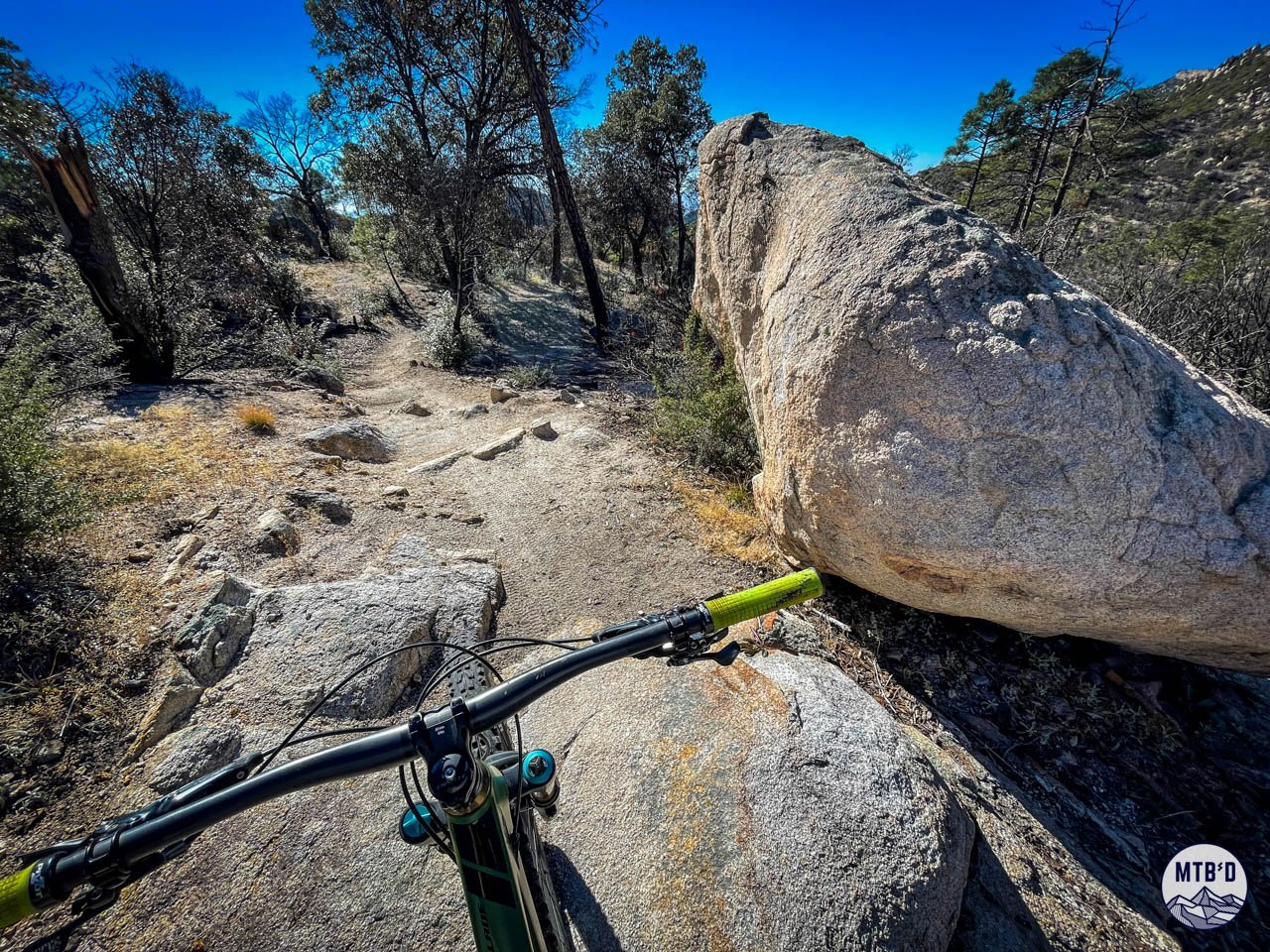
The Lemmon Drop Ride Review
When it comes to Tucson mountain biking, one ride captures the imagination like no other. The Lemmon Drop.
But one does not simply... ride the "full" Lemmon Drop. One commits to it.
From the top of Mt. Lemmon to the desert floor is a long, long way down, and the terrain is punishing from start to finish.
The Lemmon Drop in a Nutshell
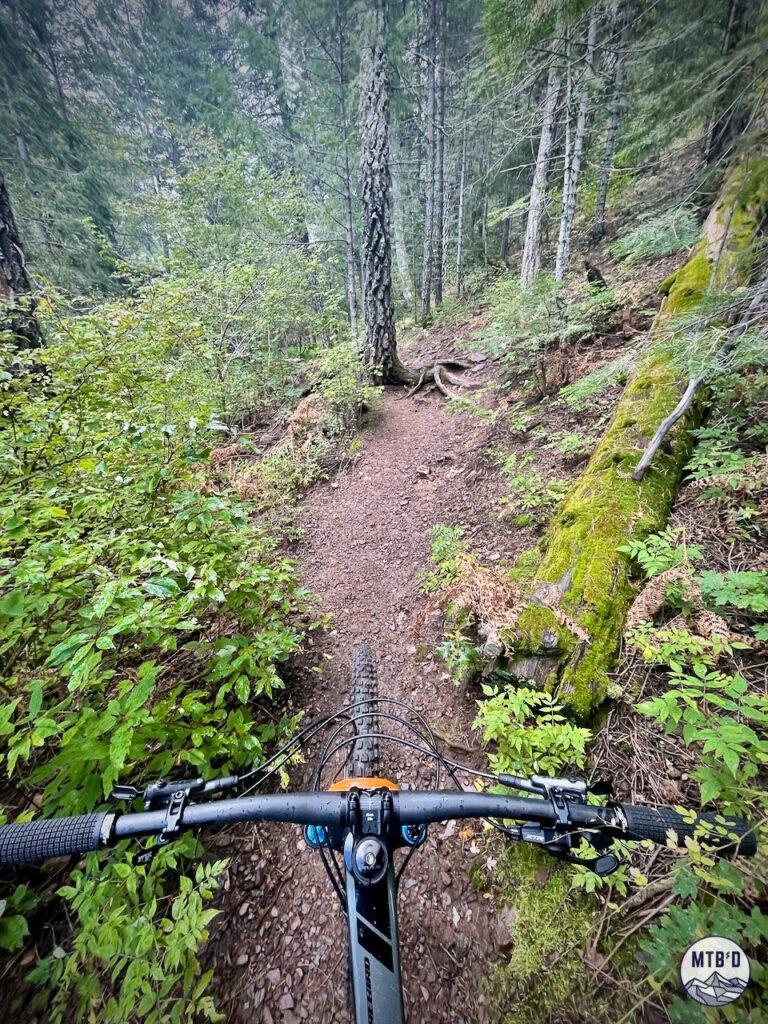
A 30+ mile ride from the summit of Mt. Lemmon to the Tucson valley floor — linking alpine singletrack, a mountain town, the hardest trails on the mountain, hike-a-bikes, technical canyon trails, and highly varied mountainous terrain. Tucson's masochistic mountain bike crown jewel.
By the time you're done, you'll have descended nearly 10,000 — and climbed over 3,500 — vertical feet. Much of it across chunky, exposed rock. On trails that were, and this is the truth, never really meant to be linked together and mountain biked in a day.
The Lemmon Drop is a defining mountain bike ride in Tucson and in Arizona. Arguably far beyond. The kind of ride that exists as a rite of passage, a measuring stick, and a reminder of what this sport boils down to: figuring out how to ride your bike off an unruly mountain.
This is a hard ride and for many riders it will read as pure punishment.
But for others, nothing's more enticing.
Should I Ride the Lemmon Drop?
Ride it if:
- Your fitness is strong — this is an all-day effort with accumulated technicality that finds gaps in conditioning late in the ride
- You're an advanced to expert rider comfortable with sustained chunk, hike-a-bikes, and naturally technical terrain
- You have a shuttle arranged, a capable bike, spares, tools, and enough water and food for a full mountain day
- You've ridden Bug Springs and La Milagrosa separately and know the end game
- You understand that the highway is right there the whole way down (except when it's not) — and you've already decided you're not using it
Skip it if:
- You're intermediate or below — the Lemmon Drop Lite (Bug Springs to bottom) exists and it's the right call
- You don't have a shuttle plan or the ability/appetite for the required logistics
- You haven't ridden Incinerator Ridge and have no idea what you're getting into on the upper mountain
- You're mechanically unprepared — cell service everywhere is unreliable and a breakdown can get complicated
- You've never ridden Bug Springs or La Milagrosa
New to Mt. Lemmon? Start with the Mt. Lemmon Mountain Biking Network Review →
Stats
- Distance: 30+ miles point to point
- Vertical Feet Descended: ~10,000 ft (7k net elevation loss)
- Vertical Feet Climbed: ~3,500 ft — yes, there is climbing. Significant climbing.
- Difficulty: Expert
- Trail Type: Point to point
- Key Trails: Aspen Draw, Sunset, Bigelow, Incinerator Ridge, Green Mountain, Bug Springs, Molino Basin/Prison Camp, La Milagrosa
- Shuttle: Yes (up Mt. Lemmon Highway)
- Best Season: October–November and March–April
- Time: 6–8+ hours for most riders... just plan to make a day of it
- Trail Network: Mt. Lemmon
- Destination: Tucson
The Mountain
You start at over 9,100 feet. The pines are tall the air is thin and the mountain, for a moment, can almost keep its scale secret.
It doesn't keep it for long.
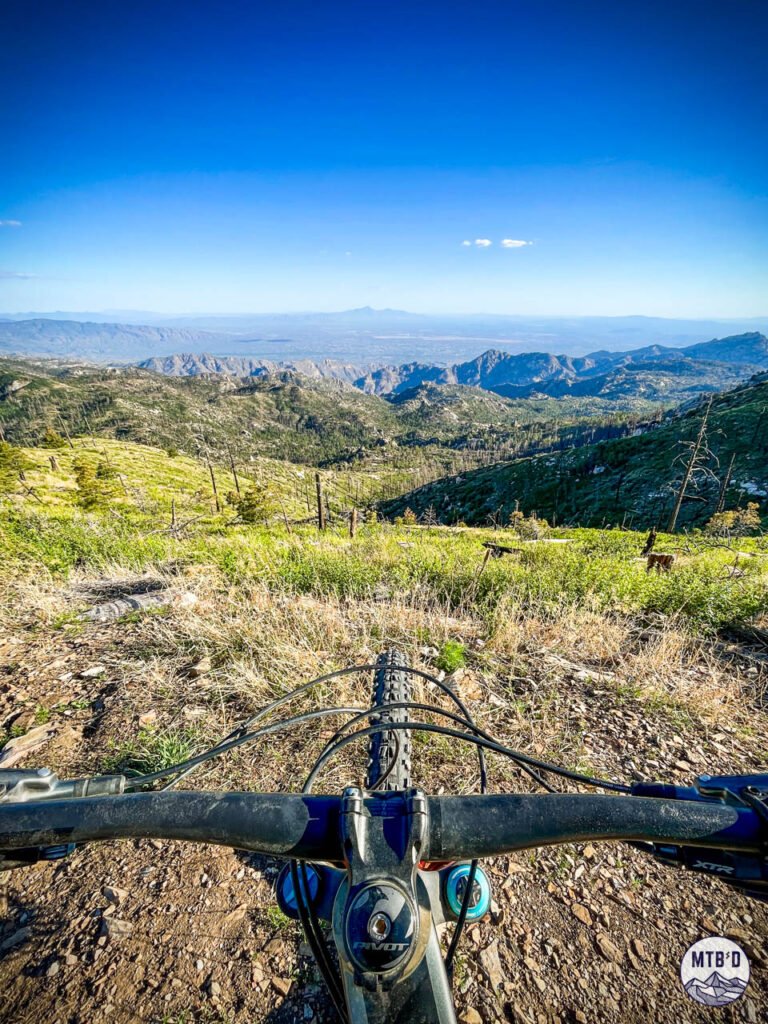
Aspen Draw drops you out of the summit area fast — the most generous the mountain gets all day. Your legs are fresh. The trail is good, techy, and tight and flashes of flow are found. File that feeling away. You'll want it later.
Then you ride through Summerhaven.
A handful of cabins, a general store, the ghost of a forest fire that reshaped the upper mountain in 2003. You pass through it in minutes.
What follows Summerhaven is where the Lemmon Drop earns everything it claims. The climbing mixed into the descent. The trails that clearly weren't made for bikes. The moment somewhere on the upper mountain where the riding becomes genuinely hard and stays that way — not hard for a section, not hard until the next flat, just continuously, honestly demanding in the way that separates the rides you remember from the rides you forget.
By the time Bug Springs arrives the mountain has already taken something from you. What Bug Springs gives back — 4.7 miles of the finest natural singletrack descent in southern Arizona, the rhythm that arrives when you've managed your effort correctly, the overlook where Tucson materializes far below for the first time — is the reason most riders would do the whole thing again.
The mountain is true to itself.
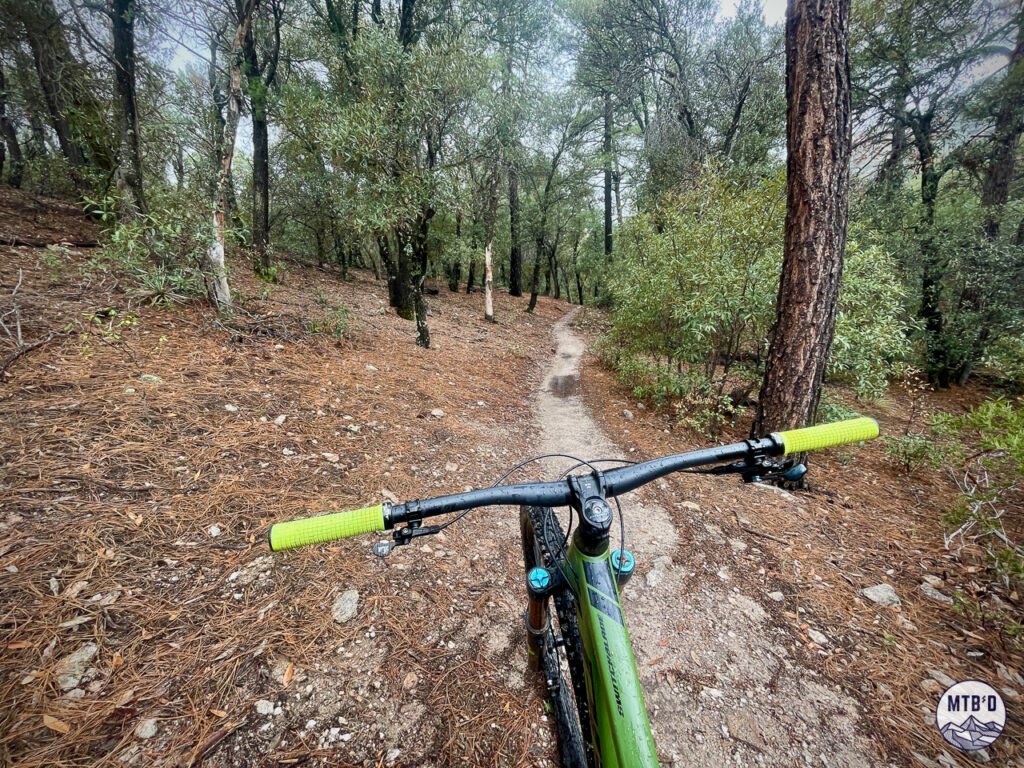
Here's the thing about the climate zones. You start in alpine pines. You pass through the mountain town, through mixed conifer and oak woodland, through chaparral. Eventually you emerge into full Sonoran Desert at the base. Five distinct ecosystems on one descent. It sounds like something you would notice in real time. You don't, exactly. You're too busy riding. The vegetation changes around you the way years pass — you only understand what happened when you look at the photos afterward and realize the mountain aged while you weren't watching.
By Molino Basin your legs know the truth. There's still La Milagrosa ahead. And you clearly feel like you're somewhere different from where you started.
The highway has been following you the whole way down. General Hitchcock runs parallel to the mountain trail system from Summerhaven to the valley floor, a constant visible option, an invitation to call the ride complete and coast to the bottom on pavement or jump in a car. Everyone knows it's there. Most riders think about it. Only the most dedicated ignore it.
The approach to La Milagrosa begins with a climb — a hike-a-bike approach from the west that then drops and deposits you at the Millie trailhead with aching legs and however much resolve you have left. The trail does not care how much resolve that is. Four and a half miles of canyon chunk and consequence, ungroomed and unforgiving, running on sustained technical demands that would be hard on fresh legs. On Lemmon Drop legs they are something else entirely.
You ride it because you're already here. You ride it because the highway is no longer an option once you're committed to the canyon. You ride it because finishing the Lemmon Drop means finishing the Lemmon Drop and there is no version of that sentence that ends at Molino Basin.
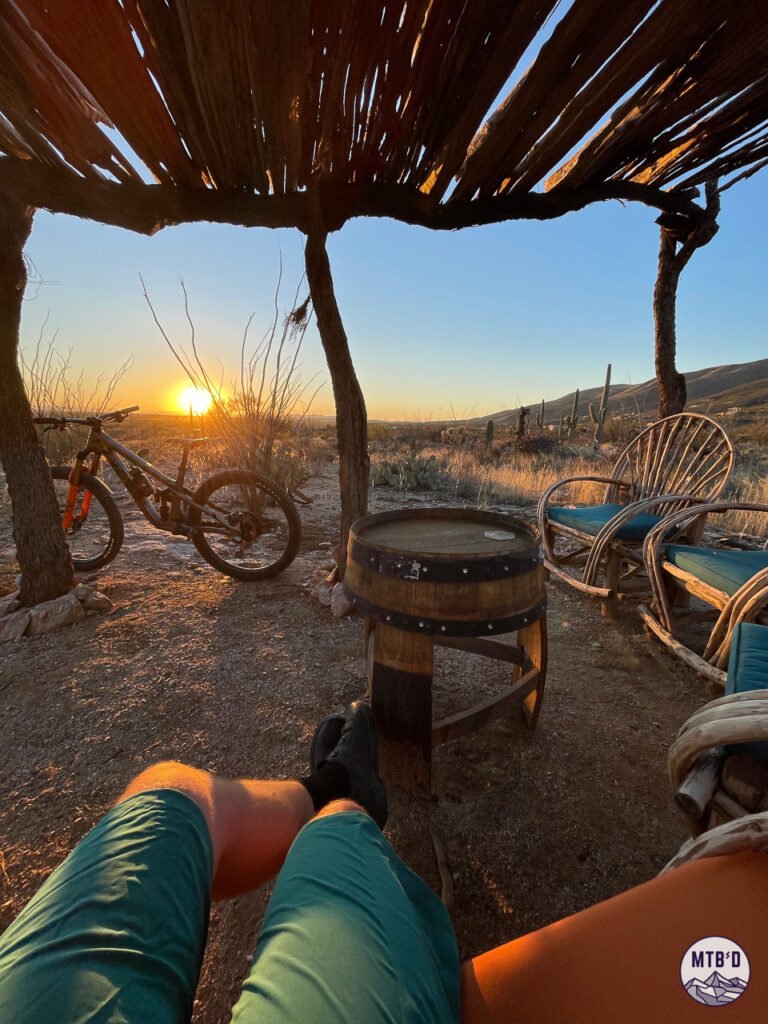
When the pavement appears at the bottom of La Milagrosa there is no ceremony. The descent is over. You're glad. You're glad you didn't crash in the last miles when the canyon was trying to find your last mistake. The legs are done. The mountain is behind you.
You are ready for Mexican food.
See What's Coming. Ride the Good Stuff.
Get on-the-ground updates as trails transform and conditions change.
Don't fly blind in Tucson.
How the Drop Works
The Lemmon Drop links eight trails and sections from the summit to the valley floor. Each has its own character, its own demands, and its own relationship to what came before it.
Aspen Draw — Upper Mountain
The alpine opener. Fast and technical, the most approachable trail on the route because it's like techy downhill mountain bike forest trails everywhere. It sets a tone (we're doing this) and gives your legs a chance to knock off the rust. Enjoy it. The mountain changes character quickly after this.
Aspen Draw on Trailforks.comSummerhaven — The Town
A brief passage through the mountain community at 8,200 feet. Not a break — a transition. The route parades right through town and connects to Sunset Trail down in Marshall Gulch.
If you forgot something, maybe you can find a replacement here. You definitely won't find it after Summerhaven.
Sunset Trail and Bigelow — The Middle Mountain
Short but technical connector terrain getting out of Marshall Gulch over towards Mt. Bigelow. First flashes of "oh yeah, this is a hiking trail" and a good place to settle in and just enjoy time with your bike whether riding or walking. Some fireroad climbing then gets you to the top of Mt. Bigelow.
AZT/BP - Sunset Trail on Trailforks.com 1918 on Trailforks.comKellogg / Incinerator Ridge — The Mountain's Teeth
Kellogg is your drop off Mt. Bigelow. After the miles of fragmented trail and climbing it's refreshing to be shredding singletrack again. But it's leading you straight back to another kind of challenge.
Incinerator is the most demanding trail in the Lemmon Drop sequence. Loose, steep, rocky, tight switchbacks with not much forgiveness. This is where the Full Lemmon Drop earns its reputation for being more demanding than the Whole Enchilada. Riders who haven't scouted this trail will be jumping off the bike. Riders who have still may be challenged to find and hold the line.
Raw. Gnar. Chunk. All that stuff.
AZT/BP - Kellogg Trail #45 on Trailforks.com AZT/BP - Incinerator Ridge #18A on Trailforks.comGreen Mountain — The Transition
More civilized than Incinerator Ridge only by comparison. Steep rock steps, hike-a-bike sections, the tree line thinning as Tucson begins to appear below. The mountain starting to reveal its scale.
Some awkwardness here. Some climbing. You gotta earn Green Mountain, and by now most are starting to feel the toll of the day.
AZT/BP - Green Mountain #21 on Trailforks.comBug Springs — The Heart of the Drop
The trail most riders remember longest. Nearly 1,600 feet of descent over 4.7 miles, a rhythm that rewards commitment, and the overlook that shows you how far you've come and how far you still have to go.
Of course, to start it is a classic hike-a-bike, where you drag your bike up waterbars to the ridgeline. But, overall, perhaps the Lemmon Drop's most rewarding trail and the reason most riders would come back.
AZT/BP - Bug Springs #10 on Trailforks.comMolino Basin / Prison Camp — The Connector
Fast rocky section. A fun transition that links the upper mountain riding to La Milagrosa. A good place to "recover" and enjoy some speed.
Also — Molino is the last chance to drop out before a final, committing, section. Don't be too proud, especially if you're overheating.
You've still got to go through a cauldron to finish.
AZT - Molino Basin on Trailforks.comLa Milagrosa — The Finish
The miracle or the masochism. The canyon demands everything the mountain hasn't already taken.
The riders who finish the Lemmon Drop finish it here, and it's never a gimme.
La Milagrosa on Trailforks.comWhat Goes Wrong
- Incinerator Ridge can surprise riders who haven't done their homework. It is legitimately hard — not "hard for Tucson" but hard by any standard. If you're not ready for it at the top of the mountain when your legs are fresh, you will not be ready for it in the middle of the day. Anything can be walked, but that mode applied too frequently makes for a very long day.
- The hike-a-bikes are real and they cost more energy coming late in the day than they would early on. Budget for them throughout the route.
- Mechanicals anywhere, despite the highway, can mean a long walk. Carry a complete repair kit. Carry more tubes than you think you need. Limited cell service.
- La Milagrosa on spent legs produces the most common Lemmon Drop failures — overcooking things in the canyon, making bad decisions in technical terrain, because the mental reserves are gone along with the physical ones. The canyon does not grade on a curve.
- Heat in the lower sections surprises riders who started in alpine cold. The temperature swing on the Lemmon Drop commonly exceed 30 degrees between top and bottom. Spring and fall are the windows for good reason.
Is It Worth It?
Yes. Completely. Without qualification for the rider who is ready for it.
The Lemmon Drop is a mountain bike ride that doesn't exist anywhere else in the American Southwest. Not the Whole Enchilada, not Porcupine Rim, not anything in Sedona. Summit to city on natural terrain through five climate zones and eight distinct trail personalities — raw, ungroomed, earned mile by mile from the alpine to the desert floor.
Riders who finish it remember it. That's not marketing. That's just what happens when you ride a mountain into the ground and survive La Milagrosa at the end.
What to Know Before You Go
Shuttle. Several operations run local shuttle services — worth every cent, as they'll also provide helpful beta and tips on the ground. Riding up General Hitchcock Highway to start adds enormous climbing to an already enormous day.
Tucson Mountain Bike Rentals. Flying in without a bike? Tucson mountain bike rentals — what the trails actually require →
Know the degree of technicality before you commit. Incinerator Ridge and Green Mountain are stiff. Riders who arrive having ridden only the most popular trails, Bug Springs and/or La Milagrosa, are not fully calibrated for what the entire mountain asks. There is a compounding effect.
The highway is right there. All the way down from Summerhaven to the valley floor. You will see it. You will think about it. The riders who complete the Lemmon Drop are the ones who decided before they started that it is not an option.
Carry everything. Tools, tubes, food, electrolytes, and more water than seems necessary. Cell service cannot be counted on. A breakdown in some spots is a long walk out.
Spring and fall. October–November and March–April are the windows. Summer heat in the lower canyon is a genuine hazard. Winter can be good depending on snow and weather. Check conditions before committing to a shuttle you can't undo.
Try trails separately first. A la carte is a great way to get to know the mountain. Also allows for selection based on weather (hot, high; cool, low).
The Verdict
The Lemmon Drop is a core reason Tucson mountain biking exists as a serious destination.
The trail reviews — Bug Springs, La Milagrosa — are all in the MTB Diaries library. The Mt. Lemmon network review explains the mountain. But none of that is the same as linking them all into one continuous descent from near the summit to the valley floor, with Incinerator Ridge in the middle to remind you what the mountain actually is.
This is a Sonoran Sky Island at full expression, experienced on a bike. Summit to desert, climate zone by climate zone, trail by trail, until you roll out onto neighborhood pavement with the whole mountain behind you.
Come prepared. Finish it. Get Mexican food.
See What's Coming. Ride the Good Stuff.
Get on-the-ground updates as trails transform and conditions change.
Don't fly blind in Tucson.