The Best Mountain Bike Trails in Tucson
Top 5 MTB Trails in Tucson
For the best mountain bike trails in Tucson, start with these five:
- Upper 50 Year (Advanced) — granite slab tech; short and spicy; high desert central to larger network.
- Bug Springs (Intermediate→Advanced) — Lemmon gateway; hike-a-bike for big descent; natural singletrack.
- Red Ridge (Advanced / Committing) — Sky Island back door epic kickoff; exposure; no bailout.
- Ridgeline (Intermediate→Advanced) — Tortolita high traverse; rocky, well-built singletrack.
- Explorer (Tucson Mountain Park) (Intermediate) — key trail network spine, climbing tech.
But first, let's take a closer look at Tucson dirt.
Tucson Mountain Biking
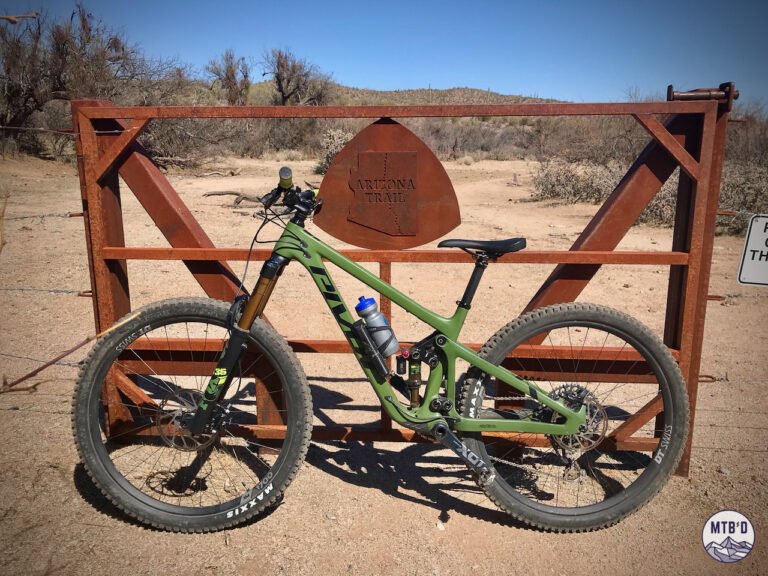
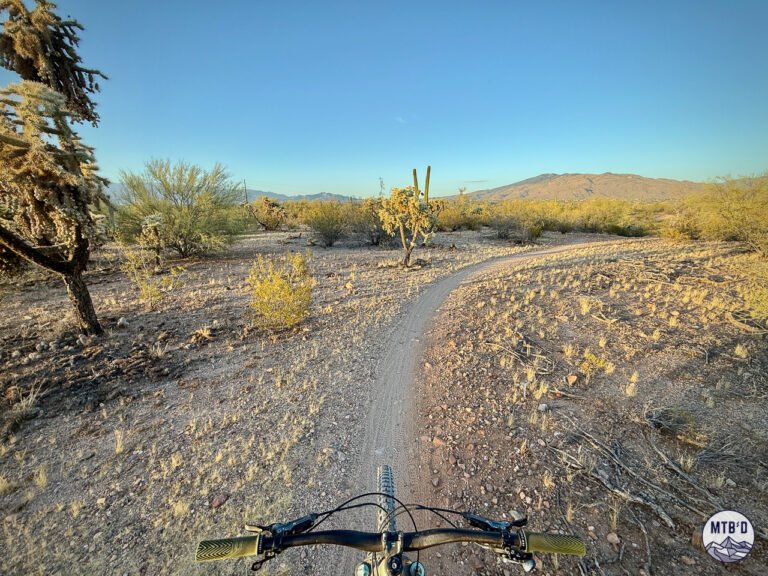
The best mountain bike trails in Tucson earn their spot. Tucson is surrounded by major mountain bike trail networks, stacked from the valley floor at 2,400 feet to the summit of Mt. Lemmon at 9,157 feet, crossing five climate zones. Tucson mountain biking flaunts nearly 400 cataloged MTB trails.
It's the kind of riding variety that takes years to properly explore and longer to fully understand.
But you gotta start somewhere. So, here are five Tucson trails that are excellent.
The Best Trails in Tucson, Really?
Our little selection of the best mountain bike trails in Tucson is not the whole story, of course. No trail on this list exists in isolation, and on any given day the ride you string together with or around it might be the best. How so?
Upper 50 Year is central to the full 50 Year network. Bug Springs is the heart of the Lemmon Drop. Red Ridge is a gateway to the backcountry. Ridgeline beckons a longer traverse across the Tortolitas. Explorer invites you to build a big day out in Tucson Mountain Park.
Find these five trails and start exploring from there. Your own creativity and network discoveries will do the rest. And just because we don't mention a Tucson trail network on this list doesn't mean it's not worth exploring. (Sorry, Sweetwater.)
Desert Skills
One important note: this selection of the best skews heavily expert. Think advanced and rugged terrain — much of it technical, ungroomed, and unforgiving in the way Tucson riding is unforgiving. The desert is not a soft place and you can get remote fast.
If you're newer to the sport or newer to Tucson, this beginner progression → is a better starting reference. Come back to this list when you're ready.
If you're ready — here's what Sonoran Desert mountain biking dreams are made of.
Best Mountain Bike Trails in Tucson
Upper 50 Year — Best Trail for Rock Rolls
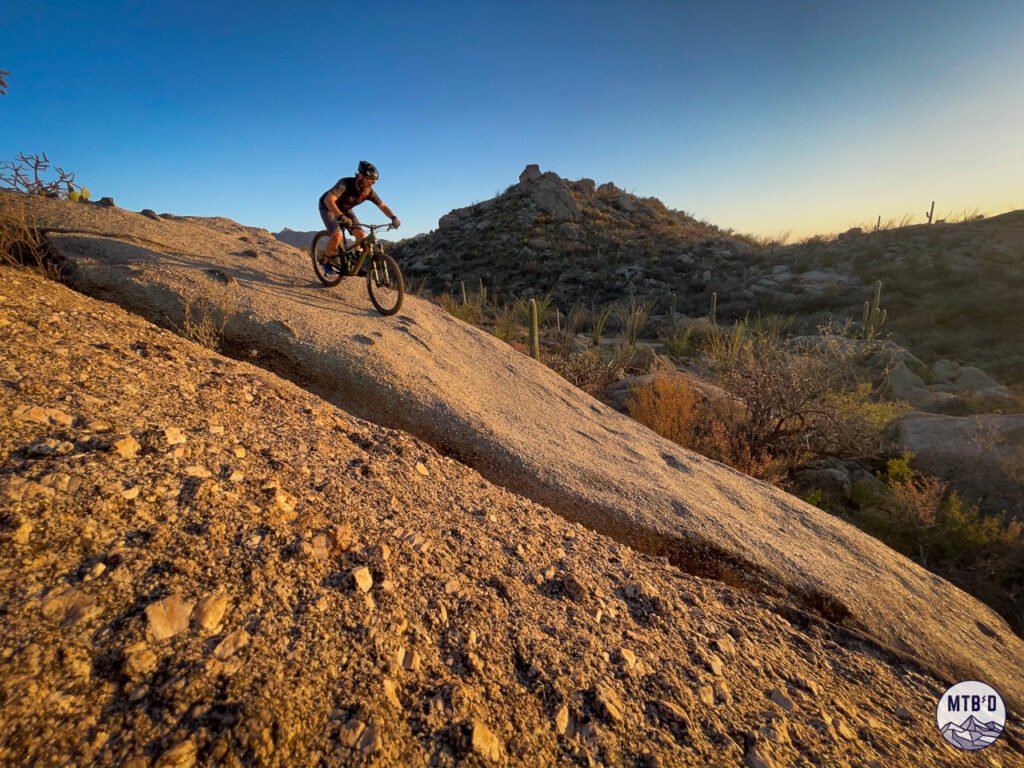
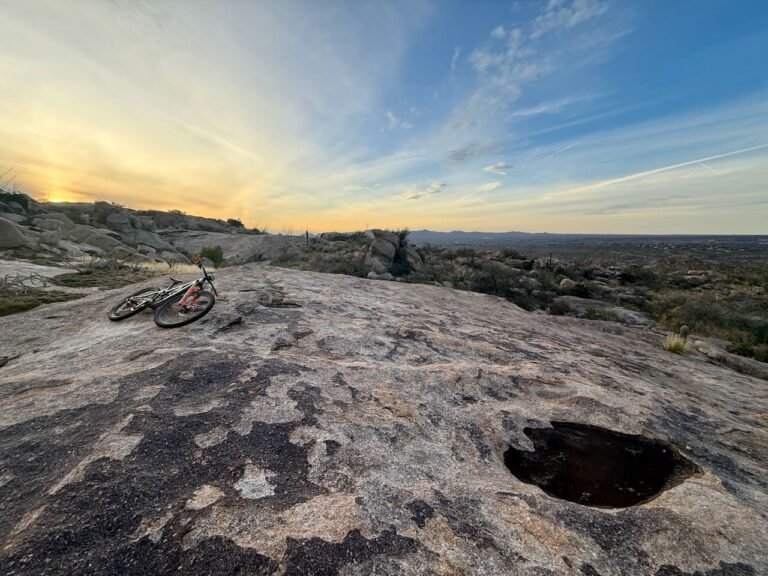
There is a natural human response that comes from riding a big granite rock feature — "I can't believe I just rode my bike up/down/across that!" Never gets old.
Upper 50 Year delivers this repeatedly, over unique features across some of the most striking high desert terrain in Arizona. Approximately two miles long, it goes up and it goes down (roughly equally, ~350 vertical feet, ride clockwise).
Huge granite rock slabs and boulders. Unique vegetation. The kind of trail that gets better as you get better, rewards creative vision with new lines, and delights riders who pay attention and know how to challenge themselves just enough.
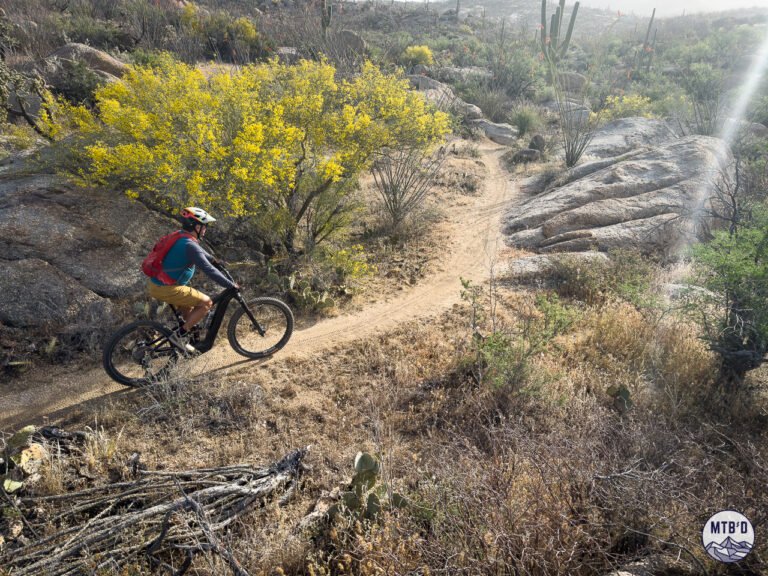
The elevation and environs here (3,000 ft+, mountainside) changes the character of the riding completely vs. the valley floor — you've still got some saguaros, but you're into junipers and more on the western flanks of the Santa Catalina mountains, where the terrain stacks up. The views are earned and jumbled granite creations show up at a scale that is truly unique for Tucson, and far beyond.
It's a tough call but Upper 50 Year is the best representative of many excellent trails in the Golder Ranch network. Tight, techy, and unique. A winding singletrack through a granite wonderland that it's easy to dream about decoding.
50 Year / Golder Ranch Network Review →
Bug Springs — Best Trail for Lemmon Drop Sampler
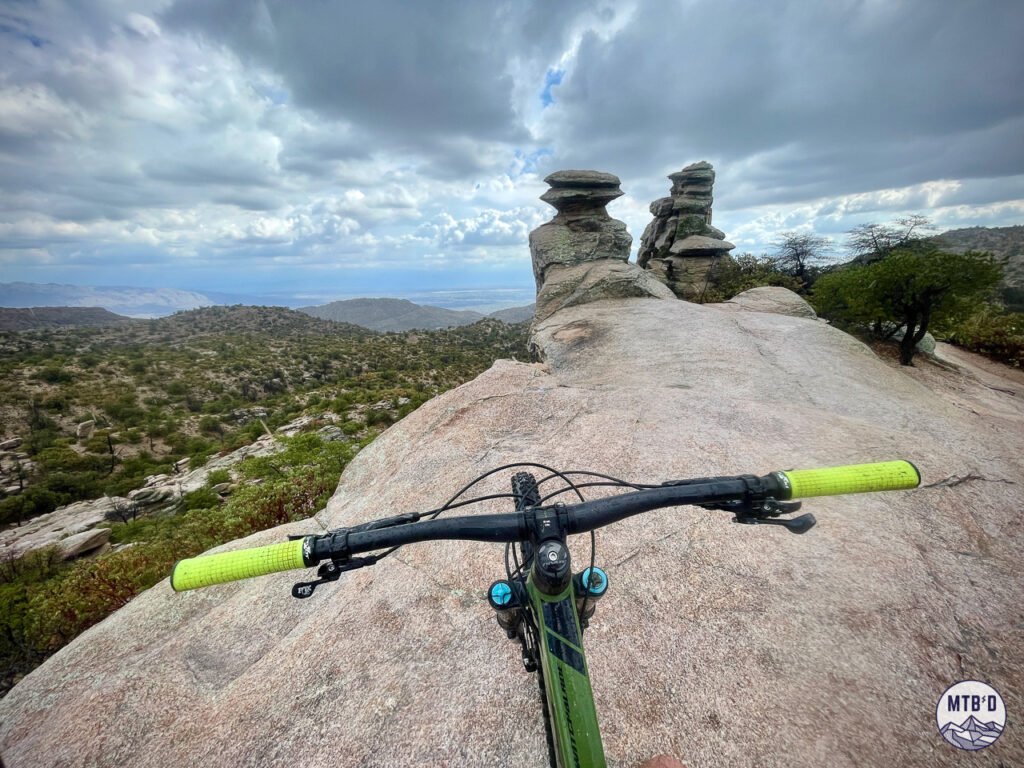
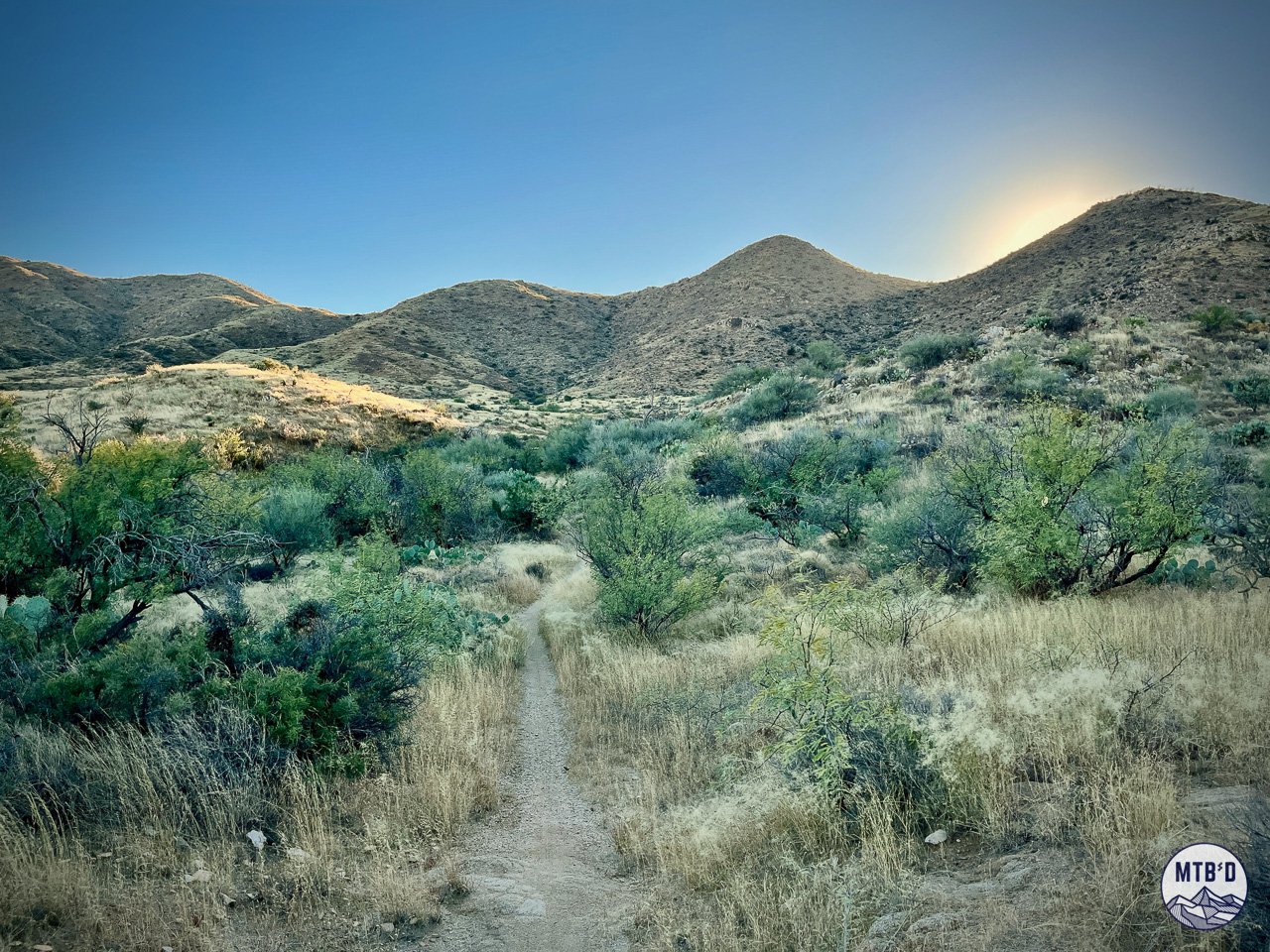
Mt. Lemmon is a sky island — one of dozens of massive mountain ranges scattered across the region, each one an isolated world rising from the sprawling basins below. No sky island has more trails than Mt. Lemmon, and Bug Springs sits in the mountain bike sweet spot for elevation, technicality, and feel.
Almost five miles long and with over 1,500 feet of descending (and 500 feet of climbing) Bug Springs is natural singletrack that shifts character as you lose elevation.
Two stiff hike-a-bikes keep it real, while a playful streambed, an epic overlook, and long sections of granite chunk trail that beg for more speed appeal to mountain bike sensibilities. The overlook where Tucson materializes far below for the first time reveals the scale of the endeavor. The city down there, the mountain all around, and you somewhere in between on a trail that is natural, rugged, and absolutely rips when you lean into it.
This is a trail where it's hard to imagine that you're anywhere else in the world. While the chunk will challenge, the rhythm when found is raw and rewarding and pure Tucson.
Of course Bug Springs is the heart of the Lemmon Drop — the 30+-mile summit-to-valley epic that is Tucson's less consumer-friendly version of the Whole Enchilada.
Ride Bug Springs as a standalone first. Contemplate bigger challenges, and come back to add elements above and below to suit your taste. The supersize option on this one is extremely filling.
Red Ridge — Best Trail for Backcountry Bash
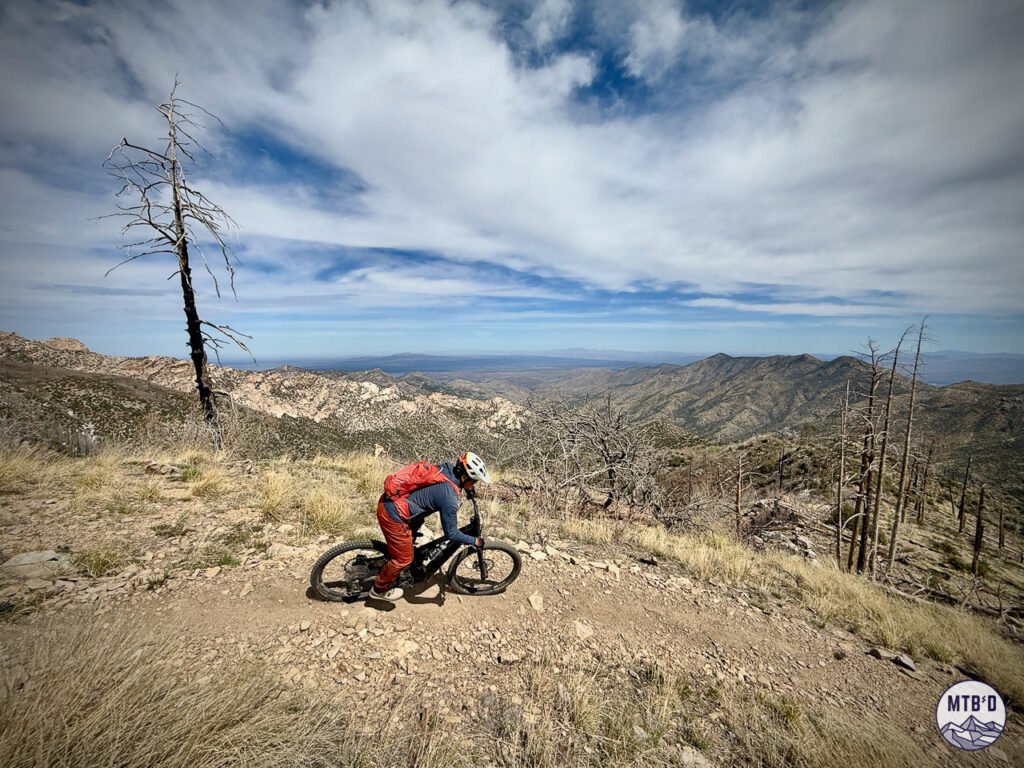
Most riders know Mt. Lemmon from the front. Aspen Draw at the top, Bug Springs in the middle, La Milagrosa at the bottom, the highway offering glimpses and access at regular intervals.
Upper Red Ridge is what the mountain offers when you go out the back door. Please note that this door locks behind you.
Steep and committing (~2,500 feet descent in about three miles), but less of the in-your-face embedded gnar of the front side, Red Ridge serves up speed and exposure and the titillating feeling of dropping into the wild side of a big hulking mountain range with only one good option: down. This trail is raw and loose and rewards a penchant for sketchiness most of the way — reading the trail ahead, passing on the big views (ok, just a quick look), playing chicken with your brakes.
Here's the catch: one does not easily sample Red Ridge. The drop-in is easy to find, and then you quickly discover that the whole thing is a drop-in. Getting back out is much less easy. The setup and the terrain conspire to isolate. There are no roads anywhere near Upper Red Ridge once you set out, let alone a highway. No bailout.
Catalina Camp and Oracle Ridge trails do offer a loop option back to the top — but they are too steep and too technical to be a reasonable (enjoyable) return route for most riders. Which means Red Ridge is best served as the opening act of Hard Lemmonade — a committing backcountry epic that links the backside of the Catalinas all the way out to Golder Ranch.
Same concept as the Lemmon Drop. Different deal entirely. A backcountry adventure where the trail fades to the point that it's just you and your bike lost in the hills with however much day you have left (take a light). And a big old climb lurking out there in the middle, that's somehow always in the sun. And mechanicals. Count on a mechanical somewhere between Lower Red Ridge and the top of Charouleau Gap.
Anyway... Red Ridge is on this list because it's a remarkable mountain bike trail that leads somewhere extraordinary and it would be an injustice not to call it out with the best Tucson mountain bike trails.
Just know what you're getting into before you drop in.
Full Red Ridge review coming soon. Hard Lemmonade guide coming soon.
See What's Coming. Ride the Good Stuff.
Get on-the-ground updates as trails transform and conditions change.
Don't fly blind in Tucson.
Ridgeline — Best Trail for Boldly Built
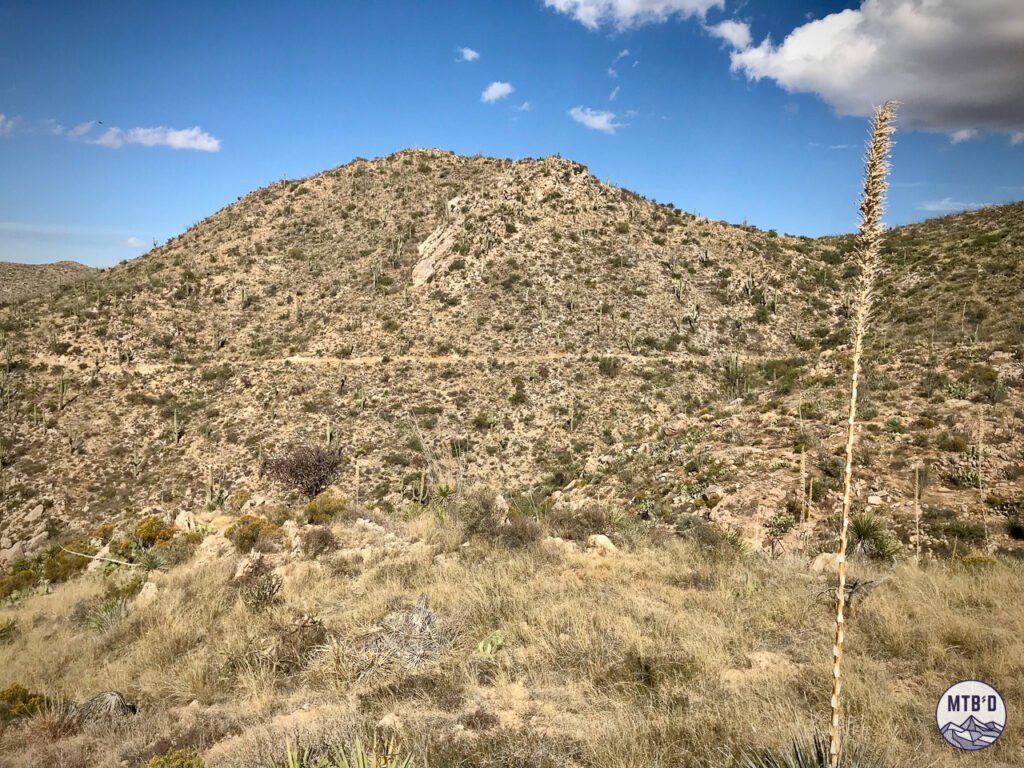
The Tortolita Mountains sit on the northwest horizon above Tucson — lower than the Catalinas, less dramatic on the skyline, the kind of range that most riders drive past on the way to something more obvious. That's fine. More Ridgeline for the rest of us.
In a little over three miles you'll traverse a low desert mountain range in the truest sense — climbing switchbacks (500 feet up, this section is technically known as the "Loop" trail) above a perched valley full of history, then navigating the ridgeline itself with rocky singletrack and views over the Tucson basin (meanwhile descending over 600 vertical feet). A wonderful opportunity to get genuinely out there on quality trail.
This is another one that isn't convenient. You have to go looking for it intentionally. But Ridgeline rewards the looking with a ride that doesn't really have an equivalent in the Tucson trail ecosystem — a sustained engagement with the lofty side of a desert mountain range that nobody tells you about and you might talk a lot about when you get back.
Pair it with Wild Burro to close full loop. Choose your poison getting in and out (hike-a-bike via Alamo or a stiff jeep road up-and-over from Honeybee). That's the day.
Tortolita Mountain Park Network Review →
Explorer — Best Trail for Fun Tech Climb Challenge
With two big Lemmon descents on this list, not to mention Upper 50 and Ridgeline, it trends toward gravity-centric, committing (some might also say inconvenient, in terms of access) trails. Fair enough — but if you're looking for the mountain bike trails that stand out in Tucson, each one fairly earns their place.
But we haven't talked much about climbing, and climbing on a mountain bike in Tucson is not just a means to an end.
With winch-and-plummet riding a rarity here, you'll find riders talking about cleaning climbs just as much as pinning descents. Beyond the pragmatic — the only way to piece together a good ride — climbing on a mountain bike in Tucson is often technical and tricky, and that challenge shouldn't be missed.
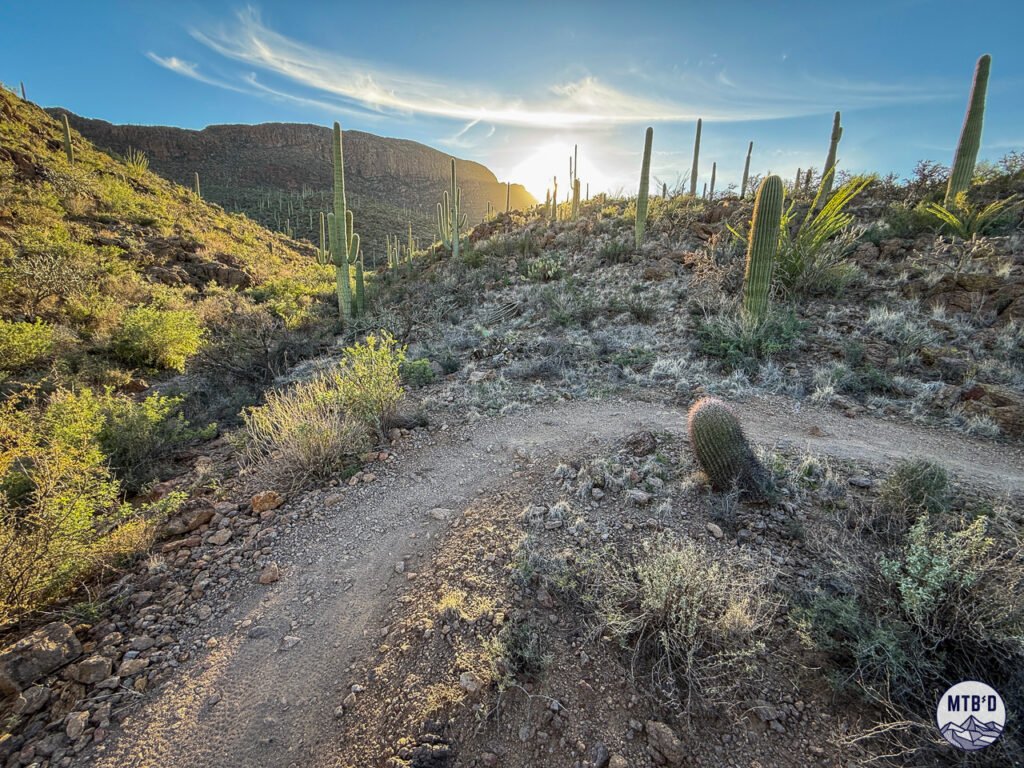
The crux climb on Explorer (heading southeast, Black Diamond section) on the flanks of Cat Mountain through Tucson Mountain Park is this list's one honest challenge in the upward direction. Rocky step-ups. Awkward moves that reward precise brute force. The kind of terrain that requires reading well ahead, finding the pace that leaves something in reserve for the technical bursts, staying loose enough to absorb what the trail throws without losing momentum on what comes next.
This one is not long (half mile, couple hundred feet of vertical). It's not brutally steep. But it's long enough and steep enough. Intermediates will walk sections. Riders who find some flow on a good day — who pace it right, pick the right lines, keep the rubber down, and power through the chunky bits — will cherish the feeling.
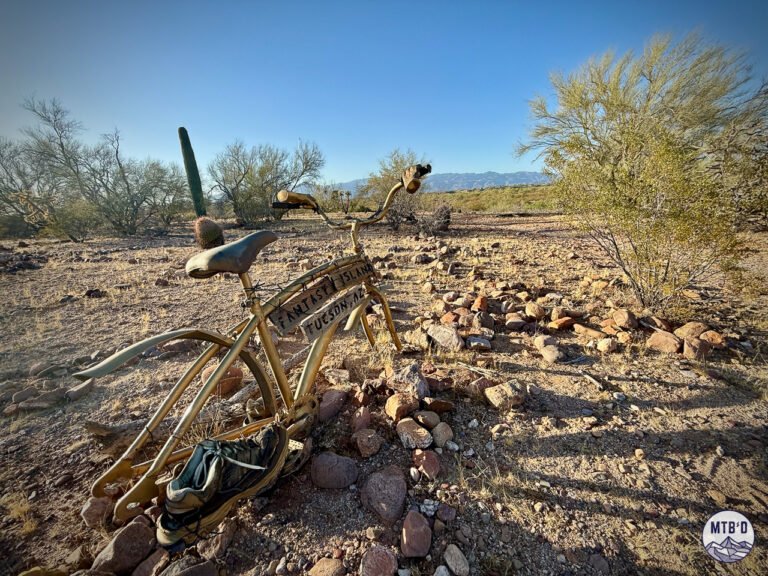
This classic Tucson mountain bike reality distilled: a conquerable uphill mountain bike problem referred by the desert. Gravity against you. Cactus to the sides. Chunky embedded rock under tire. The saguaros standing by while you figure it out.
Or don't.
After the burn, turning onto Mockingbird and Shemwell or continuing on Explorer offers some nice descending as way of payback too — but this one is about the up. Focus on the climb. Treat the descent as a bonus.
You are likely to find yourself thinking about the moves laying in bed that night, replaying the lines, already planning when you're coming back to do it cleaner.
That's a great trail.
Tucson Mountain Park Network Review →
The Big Picture
Five trails. Five different things Tucson does well that shouldn't be missed on a mountain bike.
A technical granite playground. A big Sky Island descent. A backcountry doozie. A hidden ridgeline traverse. And a chunky climb that will reveal the gap between where you think your riding is and where it actually is.
Find these trails. Ride them. Then start branching out — because what surrounds each one is the reason Tucson exists as an excellent MTB destination.
See What's Coming. Ride the Good Stuff.
Get on-the-ground updates as trails transform and conditions change.
Don't fly blind in Tucson.