Tucson Mountain Biking: Start Here
The Old Pueblo Rides Different
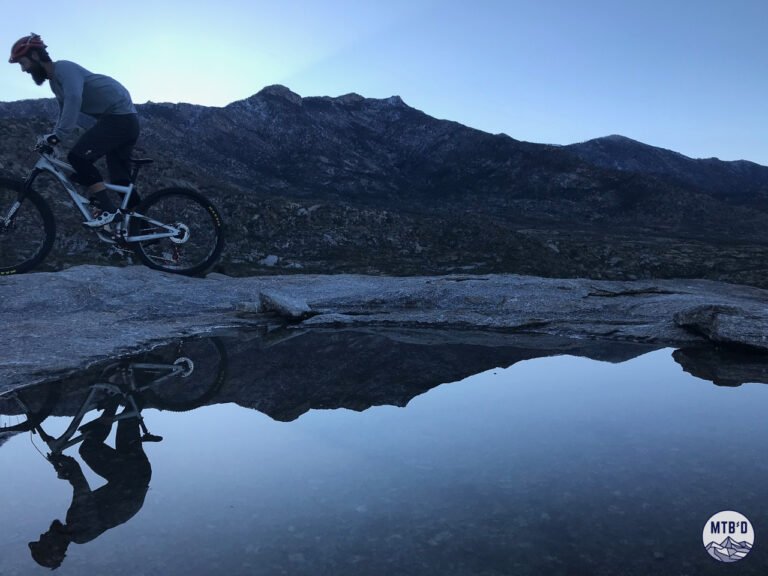
Tucson mountain biking features everything from high-speed singletrack to sky island descents, cacti galore, and year-round riding once you figure a few things out.
Whether you’re heading to the desert for the first time, a seasoned rider looking for big mountain bike adventures like the Lemmon Drop, or making plans around 24 Hours in the Old Pueblo, you’ll find it here.
Because Tucson isn’t just another place to spin tires—it’s a proving ground. Ultimately, the desert rewards mountain bikers who pack patience, skill, and humility. And they leave the Old Pueblo a better rider.
Is Tucson Good for Mountain Biking?
Yes — but Tucson rewards a specific kind of rider.
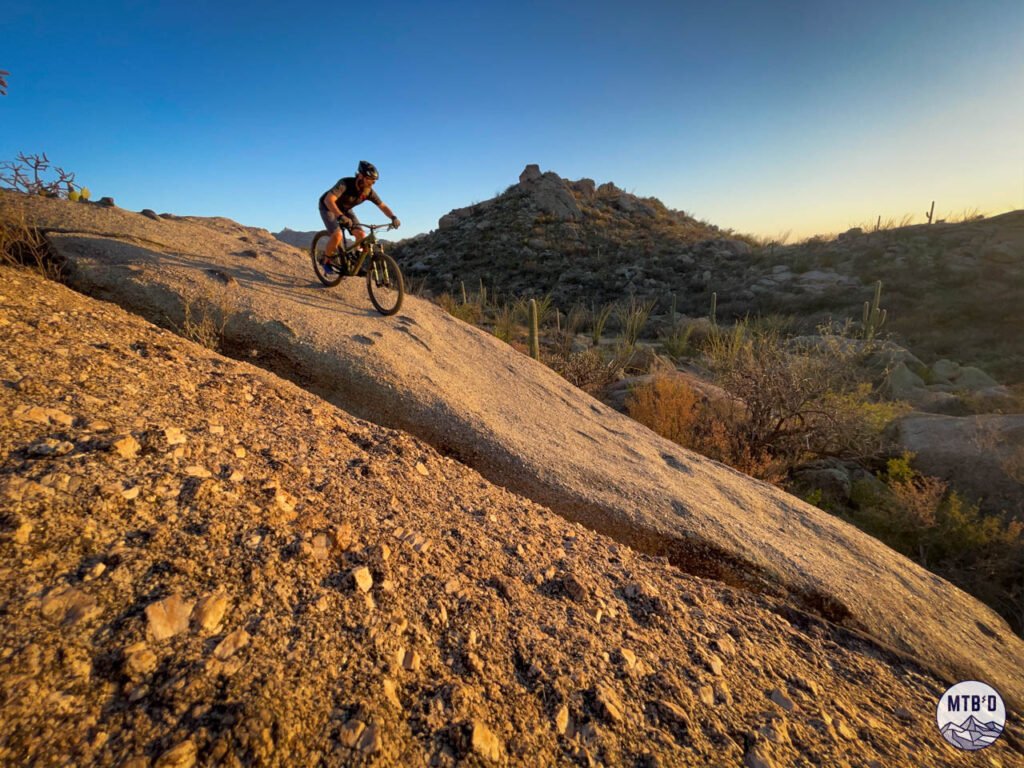
The terrain here goes from high speed desert singletrack to raw mountain tech with almost nothing in between. Trails are natural, spread out across the city and surrounding ranges, and logistically demanding — you'll be driving between most trail systems, not linking them on two wheels. The environment is unique: Sonoran Desert singletrack, sky island descents, granite slabs, saguaro-lined canyon trails. There's nothing quite like it anywhere else in the country.
But Tucson is the opposite of a bike park. If you're looking for smooth, predictable, machine-built flow, this probably isn't your place.
If you want to figure things out as you go, cover real ground, and ride terrain shaped by the desert rather than built for you — Tucson is one of the best places you can ride. It's also a legitimate winter destination for riders who want to pile on desert miles when everywhere else is frozen. Big loops, long days, relentless sun.
Ride Tucson If
- You're an intermediate building toward expert, or already there
- Raw, natural trails appeal more than groomed flow
- You want year-round riding in a genuinely unique environment
- Big vertical and technical desert terrain is what you came for
- You're happy to drive between trail systems and plan your days accordingly
- Winter base miles in the desert sounds like exactly your kind of trip
Skip Tucson If
- You're expecting everything to be close together and easy to navigate
- You're a beginner looking for mellow progression trails
- Smooth, predictable singletrack is what you need right now
- You want everything within easy reach of one trailhead
- Heat management and desert logistics aren't your thing
Seriously... What About Beginners?
You are persistent, and that actually bodes well. Ok, ok, there are advantages to beginning mountain biking in Tucson! Right this way:
The Best Mountain Bike Trails in Tucson for Beginners (A 5-Stage Progression) →
Tucson Mountain Biking
Conditions
- Check out the latest MTB conditions report from Tucson.
Tips
- The Best Mountain Bike Trails in Tucson - No holds barred, we choose five favorites
- Best Time to Ride Tucson MTB – Month-by-month guide to Tucson's riding season
- eMTB Trails in Tucson – Where to ride your eMTB (legally) in Tucson
- The Best Mountain Bike Trails in Tucson for Beginners – A five-stage progression
- Tucson Mountain Bike Rentals: What the Trails Actually Require – Rent a mountain bike in Tucson
- eMTB Rentals in Tucson - Where to rent eMTBs
Networks
- 50 Year and Golder Ranch Trail Network Review – Technical Catalinas benchmark with granite slabs and punchy climbs
- Mount Lemmon – Alpine descents and high-country riding
- Honeybee Canyon & Rail X Ranch – Endless desert miles
- Sweetwater Preserve – Classic saguaro-studded warmup rides
- Tucson Mountain Park – West-side chunk and character
- Fantasy Island – Find flow on the desert floor
- Tortolita Mountain Park – High and Hidden
- 100 Acre Wood Bike Park –Tucson's family-friendly bike park (opening Summer 2026)
Trails
- 50 Year (50 Year/Golder Ranch) – Key artery for the network (but still fun to ride)
- The Chutes (50 Year/Golder Ranch) – An iconic half-mile long natural desert rollercoaster
- Middlegate (50 Year/Golder Ranch) – "Flowing" tech in Tucson
- Upper 50 Year (50 Year/Golder Ranch) – Tucson's original granite tech
- Cowboy Slickrock (50 Year/Golder Ranch) – Rounding up the slickrock slabs
- Gem (50 Year/Golder Ranch) – Get your steeps on
- Stone Cactus (50 Year/Golder Ranch) – A recent trail build that takes you high above Oro Valley and Catalina
- Bug Springs (Mt. Lemmon) – A local favorite and your gateway to gnar
- La Milagrosa (Mt. Lemmon) – It's at the bottom of the mountain, but it's not the easiest
- Desperado (Sweetwater) – Sweetwater's smoothest roll
- Ridgeline (Tortolita Mountain Park) – Reasonably remote and boldly built
Rides
- The Lemmon Drop (Mt. Lemmon) – Top to bottom, 10k in a day
Events & Race Coverage
- 24 Hours in the Old Pueblo 2027 – Complete event guide with dates, registration, prep tips, and race info
- What to Expect at 24 Hours in the Old Pueblo – Inside look at the desert's greatest MTB party
See What's Coming. Ride the Good Stuff.
Get on-the-ground updates as trails transform and conditions change.
Don't fly blind in Tucson.
Why Tucson for Mountain Biking?
If you like your riding cheesy and spicy, Tucson just might be the chile relleno you've been looking for.
Tucson's Landscape
Tucson doesn’t do “lost in the woods” in the traditional sense. The trails carve straight through cacti kingdoms where prickly denizens stand like referees waiting to see if you’ll blow the line.
Sharp climbs reveal long desert views. Unless you're inclined to stop, however, you can't look around too much because the descent will be serving up everything from rock slabs to loose marbles to more cacti.
The icing on the mountain bike cake? Everything is situated together naturally, framed by not one, but five mountain ranges—some so high that they're known as Sky Islands—that circle this laid-back city.
Yes. Tucson is an amphitheater for dusty MTB dreams. And while it may be dry (most of the time), that's not the whole story. Not even close.
Tucson's Climate
While the rest of the country is scraping windshields, mountain biking in Tucson is peak season. Winter here isn’t something you “endure”—it’s when you ride with abandon. Blue skies, tacky desert dirt (yes, that’s a thing), and long days daring you to squeeze in just one more mile.
Summer does crank the oven to “broil” and puts the kabash on many a carefree spirit but Mount Lemmon offers any soul an instant alpine escape, and early birds can still get the worm even down low in the desert.
And if you’re around during monsoon season—Tucson’s storied second spring (July to August)—dawn patrol rides come with wildflowers, desert creatures galore, and crunchy dirt.
How to MTB All Seasons in Tucson
Tucson Mountain Bike Culture
Tucson riders are creatures of practicality, fundamentally speaking, but there’s a mighty mountain bike scene.
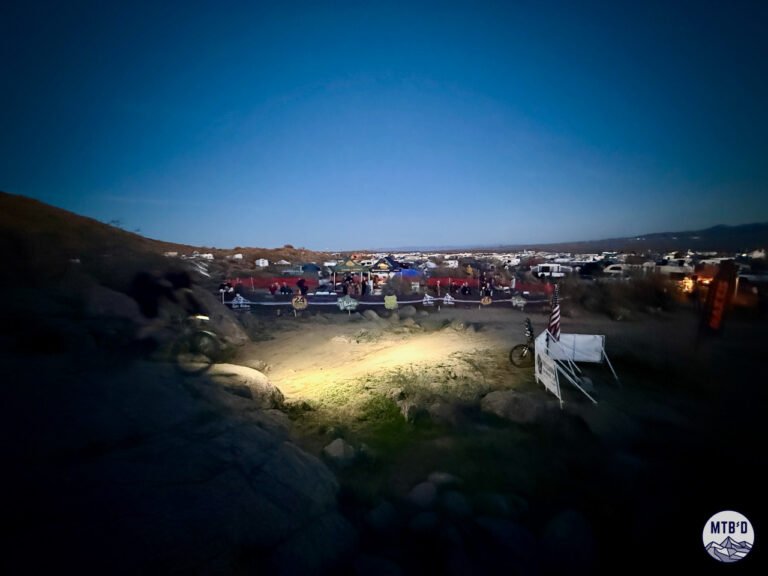
This is home to 24 Hours in the Old Pueblo, where thousands of riders shred through the desert night under one of the best skies for stargazing on earth.
Local advocates don’t just build and maintain trails—they think big (the Arizona Trail and The Loop). People have been thinking and building big here for a long time. These are lands of the O'odham, who descend from a society known for its extensive and innovative irrigation systems.
And when you’re done riding, you’ll eat like a king: Tucson’s food scene runs from James Beard-level fine dining to a taco stand that’ll ruin you for tacos anywhere else.
The overall vibe? Equal parts grit, humor, and laidback desert weirdness.
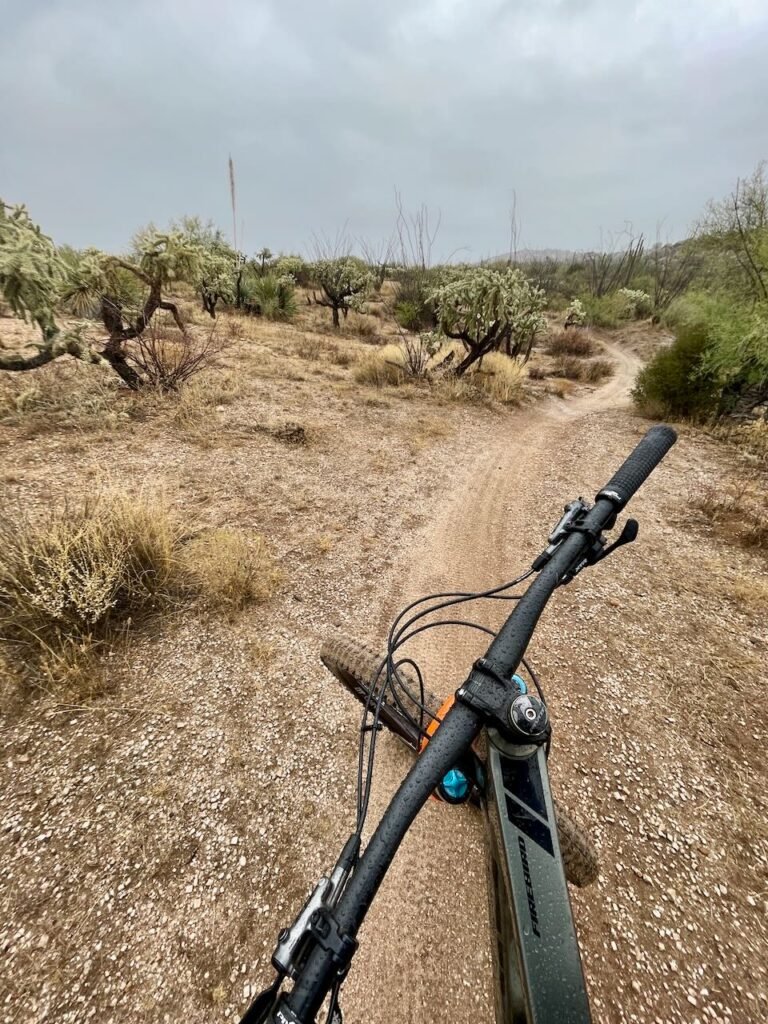
So why mountain bike Tucson? Because the desert here serves up its singletrack like it serves its food—bold, unforgiving, and way better than you expected.
Mountain Biking in Tucson by the Numbers
| TUCSON, ARIZONA | ||
| Founded | 1775 AD | The Spanish established a fort in 1775; Native Americans have been living in the Tucson basin and the region for millennia |
| Population | 543,242 people | The second largest city in Arizona, but by a long shot (Phoenix is millions and still growing fast) |
| #MTB trails | 172 | 8+ major trail networks |
| Miles of trail | 677 | The second most in the state, after Flagstaff |
| Altitude | 2,389 ft | Not low desert (< 1500 ft), not high desert (>5,000 ft)... maybe just right desert |
| Environment | Desert, Varied | Everything from cactus to pine trees, lots of cool critters too and--yes--water is precious |
| Vertical | 7,054 ft | Mt. Lemmon, the summit of the Santa Catalina Mountains, tops out over 9,000 ft and looms immediately north of town |
| Number of airlines | Six | Modest but efficient airport (and thousands of aircraft in the boneyards) |
| Lift service | No | There is a ski resort atop Mt. Lemmon, but no bike lift service |
| Shuttle service | Yes | Yes. Several companies offer shuttle services |
| Classic MTB destination | Yes | IMBA Ride Center, Silver designation; a longtime cycling hotbed especially in the winter months; and a UNESCO city of eating |
The Many MTB Zones of Tucson
Tucson on Trailforks.comWith over 800 miles of trails in the Tucson area, you're spoiled by choice. But like most places, all trails are not created equal.
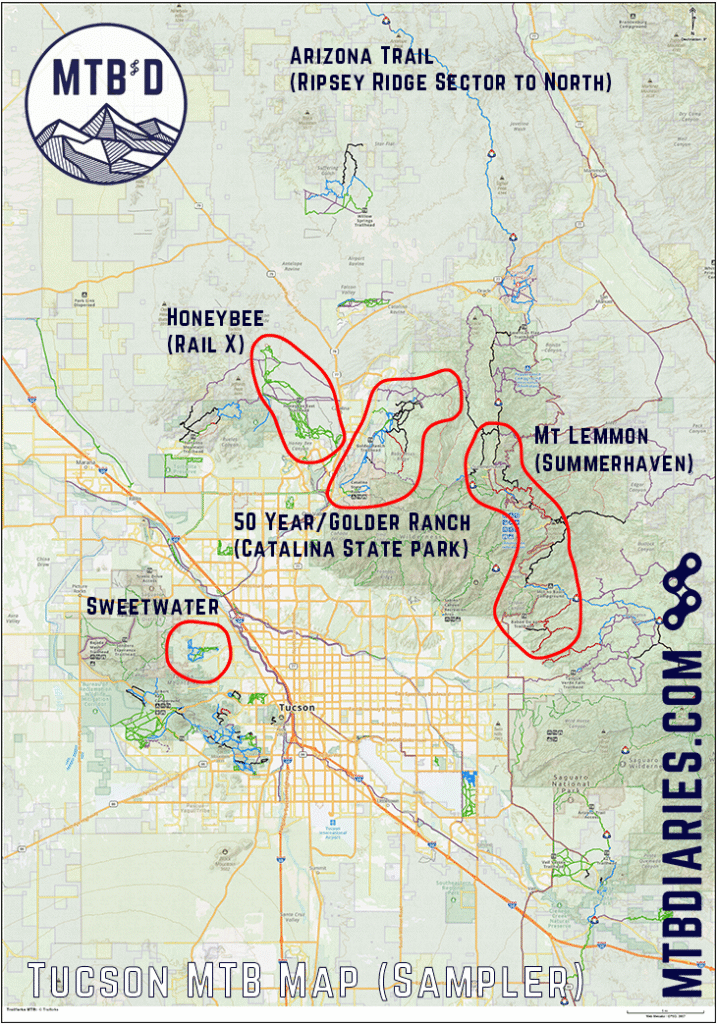
One man's dream is another man's misery, so choose carefully. The five areas highlighted above showcase a ton of variety, but still leave out some major networks (like Tucson Mountain Park). Check it out:
| Trail Network(s) | What to Expect | Best For |
|---|---|---|
| Honeybee | Miles of smooth desert singletrack with flowy turns and big loop options between the Catalinas and Tortolitas. | Endurance, fast rolling rides, beginners to intermediates. |
| Sweetwater | Approachable climbs and chunky volcanic rock tech near dense saguaros; photogenic and close to downtown. | Beginners, intermediate riders, half-day spins, quick access from town. |
| 50 Year Trail & Golder Ranch | Flow down low but then power climbs, rock rolls, slickrock, and technical desert terrain as you climb up into Coronado National Forest. | Intermediate to advanced riders, mid/long-travel bikes, skill progression. |
| Mount Lemmon | Epic alpine-to-desert descents (Lemmon Drop), mix of forest flow, hike-a-bike, and raw chunk with outrageous views. | Experts, shuttle missions, bragging rights rides (although everyone should go session Prison Camp). |
| AZT Mission & Ripsey Ridge | Remote backcountry Arizona Trail riding with dramatic ridgelines, desert river views, and long point-to-point potential. | Adventure seekers, one-way days, endurance epics. |
Where You Should Actually Ride (Start Here)
With all the variety on hand, what makes a trail “must-ride” depends entirely on what you’re chasing—flow, distance, adrenaline, bragging rights, or just a good story for the post-ride beer.
Our advice? Mix it up. Variety is the spice of life, and when it comes to Tucson mountain biking and trails, it’s a spice you should sprinkle liberally.
But you want specifics, now, right...
A Few Example Riding Styles in Tucson
Punchy and Techy – 50 Year Trail & Golder Ranch
Looking to jump right in? The 50 Year/Golder Ranch area delivers. From the bobsled berms of The Chutes to the granite playgrounds of Upper 50 Year, this network builds in intensity as you climb higher into Coronado National Forest and/or hit the B lines.
Expect a little of everything—desert flow, chunk, slickrock, and route-finding challenges that reward commitment. No trail signs out here. It’s the kind of ride where mid-travel bikes shine, skills sharpen, and finishing feels like an accomplishment (and may stir a deep desire to go back, because now you know the lines).
Scouting/sessioning is recommended as some of the bigger features can be consequential.
Fast Desert Miles – Honeybee/Rail X Ranch
You'll hear lots of references to Honeybee Canyon and there is such a canyon, but don’t expect towering walls on this ride—this is wide-open desert riding. Honeybee/Rail X Ranch is for the mileage junkies and fast movers: miles of buff singletrack that let you keep the throttle open as long as your legs hold.
You’ll pedal between two mountain ranges—the Catalinas on one side, the Tortolitas on the other—with endless ribbons of trail linking together into loops as big as you want. Keep it tight with a 10-mile sampler, or stitch it into a 30+ mile singeltrack desert epic.
(Pro Tip: If you climb higher into the Tortolitas to the west, into an area known as Tortolita Mountain Park, you’ll find a whole different flavor of riding.)
Introductory Chunk – Sweetwater
Want a taste of rocks without full-on gnarl? Sweetwater Preserve pairs approachable climbs with the Tucson Mountain's volcanic terrain—something of a rarity in the basin. It’s just technical enough to keep you honest, without punishing mistakes.
Add in dense stands of saguaros and killer desert views (points of interest in the Ride Guide) just minutes from downtown, and you’ve got one of the most photogenic, uniquely Tucson rides on the list.
Monster Day – Mount Lemmon
The Lemmon Drop is Tucson’s crown jewel ride—nearly 10,000 feet of descending (and a lot of climbing, and hike-a-bike, too) down Mt. Lemmon stitched together from alpine singletrack, exposed ridgelines, and desert gnar. It’s a rite of passage, the kind of ride you tell stories about long after your hands stop cramping from braking.
But it doesn’t have to be all-or-nothing. You can break the beast down into bite-size missions. Depending on the seasons and conditions, and your skills and fitness, consider these tasters:
- Prison Camp (Molino) → approachable and grin-inducing
- Bug Springs → spicy mix of tech and hike-a-bike
- Incinerator Ridge → gnarly, committing, not for the faint of heart
Expect changing ecosystems as you drop, and climb, and drop—from pine forest to cactus-studded desert. And don’t skip the pullout and taking a quick walk out to the edge at Windy Point whether driving up or down: world-class views and an unreal perspective on what you're riding.
Wildcard Backcountry Epic – Ripsey Ridge (AZT)
The Arizona Trail offers many flavors, but Ripsey Ridge is a too-often forgotten favorite: a sinuous spine of technical singletrack that rolls, drops, and dances high above the desert floor. Get a drop off and a pick-up, and you’re in for a point-to-point epic with reasonable climbing for maximum payoff.
The ride finishes on the riverbank, a perfect spot to crack something cold, soak the dust off, and bask in the glow of a day well spent. Bonus points if you pre-ordered a pizza to meet you in Kelvin—because yes, that’s how desert dwellers do it.
Note: Epic. This is remote country, so load up on water, snacks, and self-sufficiency. There’s no easy bail-out—just you, the trail, and miles of views across the Gila River Valley. Not a good choice for your first desert ride.
Mix and Match, or Get to Know It
Tucson isn't a place you ride once and understand. The desert keeps secrets.
You can sample. Four days, four networks, maximum variety. You'll leave with a sense of what Tucson offers: cactus gardens, granite domes, old-school trail character, and riding that skews harder than the stats suggest.
Or you can commit to one network and let it unfold. Ride the 50 Year trails three different ways. Session the slabs until you find the hidden lines. Learn which ridges catch morning light and which ones trap afternoon heat. Discover the unmarked spur that leads to a feature most riders pass within twenty feet of and never see.
This is how Tucson rewards route knowledge—not with flow or speed, but with layers that only reveal themselves when you take the time to explore.
Most people sample. Some people stay. The riding is different for each.
Tucson's Unique Geology & Trail Surface
Tucson's geology doesn't do "consistent." One minute you're carving granite slabs in the Catalinas, the next you're bouncing over volcanic chunk in the Tucson Mountains. The big ranges around town—Santa Catalinas, Rincons, Santa Ritas—were forged deep underground in geologic ovens, then thrust up and exposed. The result? Crushed granite, schist, feldspar, quartz, muscovite—basically a mineralogy field trip under your tires.
Most trails here are some combination of crushed rock over hardpack, embedded rock, or loose rock over embedded rock. (Yes, rock on rock. Welcome to the desert.)
Find loam? Write home. It exists, but you'll earn it.
What to Expect Undertire
Granite slabs – Tacky when dry, skating rink when wet. The Catalinas serve these up regularly. Commitment required.
Volcanic chunk – Angular, embedded, and unforgiving. The Tucson Mountains specialize in this. Pick your line or get bucked.
Hardpack – Fast, firm, and reliable. The desert's gift to XC riders. Enjoy it while it lasts.
Sand – Always lurking. Deep sections will swallow a rim if you're not carrying speed. Weight back, stay centered, power through.
Hero dirt – Rare but real. After a desert rain, trails firm up into tacky perfection—but only if you wait long enough for them to dry. Hit them too early and you're churning through voracious clay muck that sticks to everything.
Pro tip: Better trails avoid sand-filled arroyos (drainages) and stick to harder substrates. That's where the fast rolling happens.
The takeaway? Tucson's trails reward tire choice, line selection, and respect for what's underfoot. This isn't loamy forest flow—it's desert tech that keeps you honest.
Gear, Packing, and Desert Survival for Tucson Mountain Biking
You’re coming to the desert—might as well look like a stormtrooper, minus the Imperial agenda.
Tucson mountain biking calls for sleeves, shades, and enough gear to survive cactus slaps, baby-head descents, and the occasional rogue roadrunner. Here’s how to ride smart, stay sane, and actually enjoy yourself.
Clothing
Long sleeves. Counterintuitive? Maybe. But they save your arms from cactus spines, cholla pokes, and that desert sun that will turn you into a walking tomato. Bonus: you look mysterious and menacing, except... your helmet is tilted.
Bike
All-rounder trail bike is ideal—something that can tackle the mix Tucson will throw at you. Die-hard XC or gravity-only types, fine, stick to your guns.
Tires & Tubes
Fast rolling in the back (with some side knobs), chunkier up front. Before your first ride: fresh fill of Stans or equivalent, plug kit, patch kit, spare tube, all the goodies. Tucson flat tire gods are always looking to punish the unprepared.
Suspension
Check or overhaul your fork, and shock, before the trip. Well before the trip--this is not a last-minute checkbox. You'll appreciate buttery smooth performance more than ever, versus an accidental pogo party across rocky desert trails.
Shoes & Pedals
Scramble-friendly shoes + flats = can't go too wrong.
Clipless? Yes, if you're skilled in that department. Going flat-soled clipless shoes and clipless pedals with cages checks all the boxes—pedal all day, scramble when needed.
Because the best views are from the top of the rocks (as always).
Glasses
Big, reflective shades. Protection from sun, dust, and a mirror to check out your amazing post-ride hair.
Don't forget the micro-cloth to clean off the partially-evaporated stream of sweat that will inevitably mar the dead center of your massive lens 15 minutes into the ride.
Bonus: instant desert-pro vibes.
Lights
One big bright handlebar light unlocks morning and evening rides. Summer, shoulder season, or just a late-night craving for singletrack—do it.
Hydration & Survival
Water systems—yes. Comb & tweezers for cactus spine removal, yes. Nice-to-haves: insulated water bottle, dry chain lube, and... wait for it...
Search-and-Rescue Insurance
Because the desert doesn’t negotiate, and if you're in a tough spot you should call for help without a second thought.
Are we getting too dramatic? I mean—we said survival, after all...
Where to Stay, Eat, and Recover in Tucson
Stay
Tucson has accommodations for mountain bikers as varied as its trails. Want city energy after your ride? Downtown hotels or near the University of Arizona put you close to food, nightlife, and culture.
Need quiet and quick trail access? Oro Valley AirBnBs are perfect for easy mornings and laid-back evenings.
Gravity junkie? Base-of-Mt. Lemmon rentals put you on the doorstep of epic descents.
Prefer luxe with a side of relaxation? JW Marriott Tucson Starr Pass Resort and Spa offers pools, a lazy river, and trails out back, while Miraval Arizona puts you literally on the doorstep of the 50 Year Trails for full-on spa + pedal indulgence.
Mix and match depending on your style, or just plan to experience them all on a long weekend—you earned it.
Eat
Tucson isn’t just a mountain biking mecca—it’s a UNESCO City of Gastronomy, which means the food scene here is kinda a big deal. After a long ride, your stomach deserves a reward as epic as the trails.
For classic Sonoran flavor, grab a chile relleno (or three) at El Charro Café, the oldest Mexican restaurant north of the border—order early or risk a line that rivals a singletrack bottleneck.
If you’re after inventive Southwest dishes with a modern twist, Penca delivers the goods. Looking for casual bites after a dusty morning? Seis Kitchen keeps it fresh, fast, and utterly satisfying.
And for the full foodie experience, The Coronet offers farm-to-table delights in a charming historic spot, perfect for winding down after a day of riding. Or, test the "No Ties Allowed" rule at this Wild West establishment — have your buddy wear one and watch it get cut off!
From taco stands to fine dining, Tucson proves you can chase epic descents by day and epic meals by night. Mix it up depending on your vibe—or just follow your nose.
Recover
Riding Tucson’s trails is one thing—recovering like a pro is another. After hammering climbs on Lemmon or grinding through desert tech on Starr Pass, you’re going to want to treat your body (and your spirit). Luckily, Tucson has plenty of ways to recharge.
For culture and low-impact adventure, wander among native wildlife at the Sonoran Desert Museum, or climb a nearby peak for some stargazing with telescopes that make the Milky Way feel within arm’s reach.
Downtown and the University of Arizona are connected by a convenient streetcar, making hopping between 4th Avenue’s nightlife, local patios, and galleries a breeze after a long day on the dirt.
Pamper yourself: Tucson has plenty of spas beyond the resorts—think boutique day spas, wellness centers, and hot-stone massage spots ready to knead out every climb, turn, and tech section you rode that day.
Fuel up smart: Stretch in the desert air, hydrate, and snack strategically—because Tucson’s trails are generous, but they reward those who come back refreshed.
Recovery isn’t just about easing muscles; it’s about refueling for the next adventure. That could mean exploring southern Arizona’s wine country, poking around historic mining towns, or visiting wildlife reserves for a little slow-motion desert therapy.
What Others Say About Tucson Mountain Biking
One thing is clear: people don't forget their close encounters with cacti. But the desert and the town evoke sentiments that are, in the end, quite favorable to the place—despite its sharp edges.
- The Mountain Biker's Guide to Tucson, Arizona on Singletracks (updated Sep, 2023)
Overviews
50 Year Trail/Golder Ranch/Catalina State Park
TrailSage liked the slabs, still not sure about his suggestion to paint on them. But he has a point that the lack of trail markings makes navigation at 50 Year challenging, until you know the lines.
The Wrap-Up for Tucson
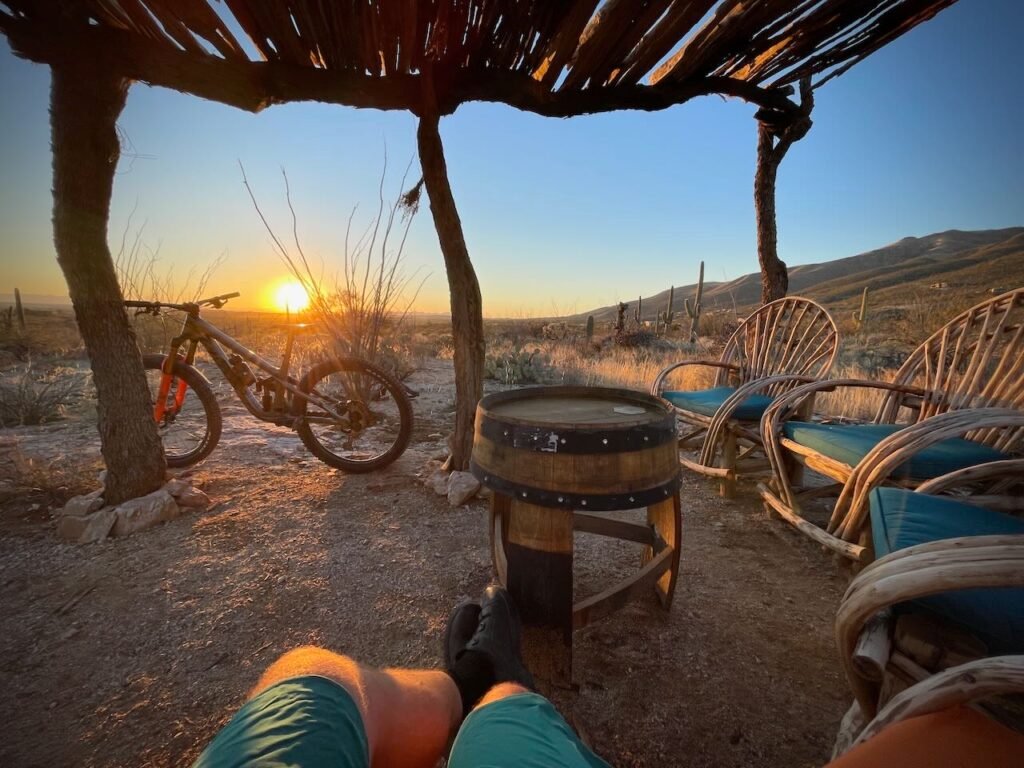
So—why Tucson for mountain biking? Because it’s not just a place you ride. It’s a place that can change the way you think about riding.
You come for the trails—the desert singletrack that makes you forget everything. You stay for the vibe—the food, the music, the saguaros as silent spectators to sketchy line choices.
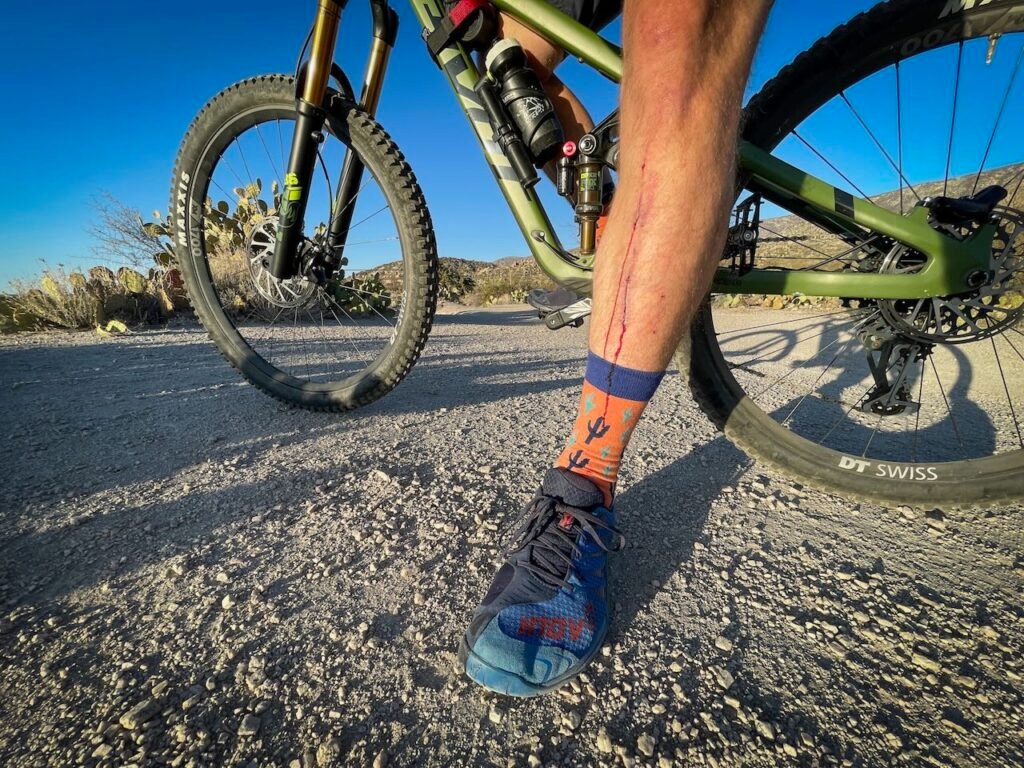
And when you leave? You don’t just leave with tired legs—you hopefully leave with a sense of place. And the memory of the time you pulled a cactus out of your shin with tweezers and decided that the vegetation back home has a lot going for it.
Tucson is tough, yes. Humbling, often. But it’s also truly unique—the second your tires hit Sonoran dirt you'll know you've found something just a little bit different. At that point just be sure to make the most of it!
If you’re planning a trip—or even just daydreaming about it—don’t stop here. Because the desert doesn’t hand out freebies, but if you show up decently prepared, it’ll give you the ride of your life.
Tucson Mountain Biking FAQ
Is Tucson good for mountain biking?
Absolutely, for the right rider. Tucson is a desert city wrapped in trails. You won’t run out of variety — you’ll run out of legs first. We recommend Tucson for intermediate to advanced riders.
What's the best time of year to mountain bike in Tucson?
Fall through spring (October to April) is prime. Tucson is known as a winter training mecca for pro and amateur endurance athletes — because it's an amazing place to be outside when elsewhere it is more amazing to be inside.
Where are the best trails for beginners in Tucson?
Sweetwater and Fantasy Island, because both have mellow singletrack and are relatively small, compact, trail networks. Then, Honeybee (from Big Wash trailhead), which has lots of mellow singletrack but you can get way out there. Tortolita Mountain Preserve is also a great beginner loop or place to get an initial taste for desert riding.
What's the most famous/epic ride in Tucson?
The crown goes to the Lemmon Drop — nearly 10,000 feet of descending from alpine forest into cactus country. It's a long, technical, gnarfest with a healthy amount of jank climbing thrown in for good measure, so don't count on gravity alone to get you down.
Do I need a full-suspension bike in Tucson?
If you want to sample more than the mellow, desert-floor trails, full suspension is recommended. That said, there are nearly infinite miles of (relatively) smooth singletrack, and there's also the Loop (urban trail system). So there's plenty of fun to be had on a hardtail or (gasp) fully rigid steed.
Can I rent a mountain bike in Tucson?
Yes. Multiple shops rent quality bikes — from brands you want to ride (Santa Cruz, Specialized, Pivot, etc.). Book ahead in peak season.
Are there mountain bike tours or shuttles in Tucson?
Yep. Local operators offer guiding you through trail networks. You’ll need a shuttle for big rides like the Lemmon Drop or certain AZT sections — commercial options are available in Tucson.
Is Tucson mountain biking dangerous?
No more than anywhere else — if you ride smart. The Sonoran desert does add a few twists: bring more water than you think, respect cacti and the creatures, and don’t underestimate how remote you can get on a bike.
Where should I stay for easy trail access?
Oro Valley or Catalina puts you near Honeybee and the 50 Year Trail, with a more suburban/rural feel. West Tucson has Starr Pass (Tucson Mountain Park) and Sweetwater, and is close to downtown and the university district — Tucson's best offering of restaurants and nightlife.
What's unique about Tucson mountain biking?
It's the contrast. One hour you're riding in a forest with pine needles under tire, and later that day you're railing through saguaros. Plus, the community is welcoming and the Mexican food is legit.
See What's Coming. Ride the Good Stuff.
Get on-the-ground updates as trails transform and conditions change.
Don't fly blind in Tucson.